Overview
BitPatrol was an AI-powered code security startup founded in 2024 by Christopher Lambert in New York, NY. The company participated in Y Combinator's Spring 2025 (X25) batch and built a GitHub App that scanned for exposed credentials — API keys, tokens, and passwords — on every code push, using a proprietary machine learning model rather than the regex-based pattern matching used by most competitors.[1]
BitPatrol failed to build a durable standalone business because its core product was a discrete, well-understood feature that GitHub could — and did — offer natively to over 100 million developers at near-zero marginal cost. No amount of ML sophistication could overcome that distribution asymmetry.
The company was acquired by an undisclosed buyer in 2025 — within roughly one year of founding — and the GitHub App was deprecated on October 6, 2025, confirming the product was not continued post-acquisition.[2] The rapid timeline, undisclosed acquirer, and product shutdown are consistent with an acqui-hire: the founder's credentials were the primary asset, not the product.

Founding Story
Christopher Lambert founded BitPatrol in 2024 with a founding story that was unusually well-matched to the problem he was solving. His background combined elite engineering experience — stints at Stripe, Tesla, Lyft, and Capital One — with a Columbia University computer science education and a side career as a competitive bug bounty hunter on HackerOne.[3][4]
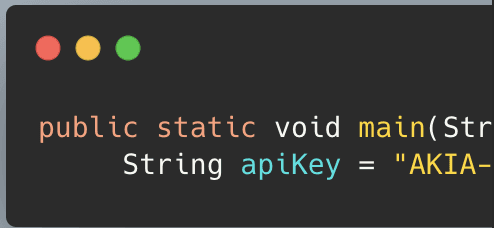
The founding insight came directly from that bug bounty work. Lambert rose to the top 2% of HackerOne's global rankings, and a significant portion of his findings involved exposed credentials — API keys, tokens, and passwords accidentally committed to source code by developers at large companies.[5] Crucially, many of the companies he reported vulnerabilities to were already using competing secret-scanning tools. The tools were missing real secrets in production. Lambert had firsthand, empirical evidence of a product-market gap: existing scanners generated too many false positives (crying wolf on test credentials and placeholder values) while missing genuine leaks that a skilled human could identify.
His HackerOne profile captures the transition explicitly: "Retired from bug bounties. Now building BitPatrol (YC X25): Secret detection that actually works."[6] This was a deliberate pivot, not an opportunistic one. Lambert was trading a successful side career for a company built on the exact knowledge that career had generated.
BitPatrol operated as a solo venture throughout its YC listing — team size of one.[7] Whether that was a strategic choice (move fast, stay lean, prove the model before hiring) or a constraint (difficulty recruiting co-founders or early engineers into a narrow security niche) is not publicly known. What is clear is that Lambert carried the product, sales, and engineering functions alone through the YC batch and into the market.
The company's messaging evolved to incorporate "vibe coding" — the wave of AI-assisted development that was flooding GitHub with code written by developers who may not fully understand what they're committing — as a key demand driver.[8] Whether this was the original thesis or a timely reframe during YC is unclear, but it was a credible and well-timed narrative: AI coding tools were genuinely accelerating the rate at which secrets appeared in repositories.
For Pro Subscribers
Unlock the full BitPatrol teardown
Read the complete post-mortem, the rebuild playbook, and the exact reasons BitPatrol is still worth studying now.