Overview
BlackOakTV was a subscription video-on-demand (SVOD) platform founded in 2020 by Uzo Ometu and Iyanu Obidele, designed to serve Black viewers and independent Black creators who were systematically underrepresented on mainstream streaming services. The company launched publicly on February 5, 2021, priced at $4.99 per month, and participated in Y Combinator's Summer 2021 batch. Despite a credible founding team, genuine market demand, and real execution against its content roadmap—ultimately licensing and producing over 200 titles—BlackOakTV quietly wound down without a formal announcement, with Ometu pivoting to a newsletter venture by 2025. The core thesis of failure is structural: $1.65 million in total funding was categorically insufficient to simultaneously build a content library deep enough to retain subscribers, acquire those subscribers at scale, and sustain operations in a streaming landscape where billion-dollar incumbents were competing for the same eyeballs. The company was caught in a permanent chicken-and-egg trap between content spend and subscriber growth that its capital base could never break.
Founding Story
Uzo Ometu's path to BlackOakTV was not a sudden pivot—it was the culmination of nearly two decades in media. After graduating from Columbia Business School in 2006,[1] Ometu launched Black Oak Enterprises, a digital media publishing company that serviced clients including ABC, The Economist, ESPN, and Ziff Davis, and began uploading webisodes on YouTube.[2] He then built a career spanning Inc. Magazine, ESPN, CBS Sports, and Disney before spending seven years at YouTube and Google, where he most recently helped grow YouTube's news vertical in North America.[3]
That YouTube tenure provided the direct market insight that motivated the venture. Ometu observed that Black millennials used YouTube more than any other millennial demographic, yet frequently described the platform as an uncomfortable environment—one where hostile comments were common and Black creators rarely received the same algorithmic and promotional support as their mainstream counterparts.[4] He saw a documented gap: over 75% of the 46 million Black Americans in the U.S. said they wanted more content targeting them, while only approximately 8% of original scripted streaming shows had Black leads.[5]
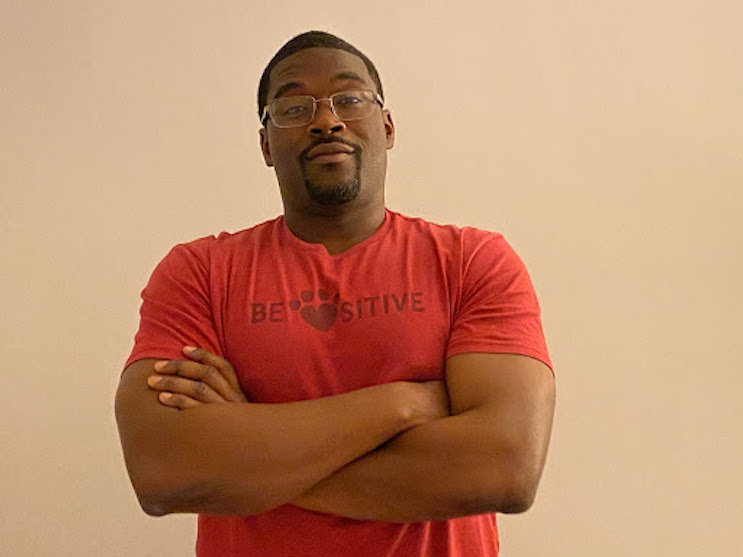
Co-founder Iyanu Obidele brought technical depth to the partnership. He had worked at Intel and Facebook, where he built custom cloud orchestration systems and products that served over 120 million small businesses.[6] Together, the two founders combined rare domain expertise—Ometu's media industry relationships and platform-building experience, Obidele's engineering and product background—in a pairing that looked credible on paper.
The company was formally incorporated in 2020, though press coverage and product activity began in earnest in early 2021, suggesting the 2020 date reflects incorporation rather than active operations.[7] The company was headquartered in Harlem, New York—a deliberate choice that signaled cultural alignment with its audience.[8] The name itself carried meaning: "OAK" was an acronym for Ownership, Ability, and Knowledge,[9] positioning BlackOakTV as a cultural institution rather than a simple content aggregator.
Ometu's long-term vision was explicit: "Long-term, whether it's through BlackOakTV or otherwise, I want there to be a cultural hub—a place like BET was in its heyday."[10] That framing—BET in its heyday—acknowledged both the aspiration and the enormous scale gap between where BlackOakTV was starting and where it needed to go.

How Ometu and Obidele met and the origin of their co-founder relationship were never publicly disclosed. Pre-YC funding amounts were also withheld at launch—Ometu declined to state the total raised, a detail that in retrospect may have reflected awareness that the capitalization level could undermine investor and creator confidence.[11]
Timeline
-
2006 — Uzo Ometu graduates from Columbia Business School and launches Black Oak Enterprises, a digital media publishing company serving ABC, The Economist, ESPN, and Ziff Davis.[2]
-
2006–2013 — Ometu works at Inc. Magazine, ESPN, CBS Sports, and Disney before joining YouTube/Google, where he spends seven years growing the news vertical in North America.[3]
-
2020 — BlackOakTV formally incorporated (per PitchBook). Ometu raises early funding from Backstage Capital, The W Fund, and individual angels; total pre-YC amount not disclosed.[7][11]
-
February 5, 2021 — BlackOakTV officially launches at the outset of Black History Month with three exclusive series (Dormtainment, Nuanse Entertainment, DGA Award-winner Talibah Newman), priced at $4.99/month with a 7-day free trial. Available on web, mobile, Roku, AndroidTV, and Amazon Firestick. Company has two employees.[12]
-
April 13, 2021 — UrbanGeekz publishes a detailed profile of BlackOakTV and Ometu, one of the earliest major press features.[2]
-
August 2021 — BlackOakTV participates in Y Combinator's S21 batch. Ometu posts the Launch HN thread; Hollywood industry contacts surface concern about the platform's funding and competitive position.
-
August 22, 2021 — YC S21 batch launches publicly; BlackOakTV's Hacker News Launch post published.[13]
-
November 24, 2021 — Wealth Noir publishes an in-depth interview with Ometu; he articulates the systemic capital inequality affecting Black creators and consumers as context for BlackOakTV's mission.[14]
-
July 12, 2022 — BlackOakTV relaunches with a press release announcing 18 original Black shows distributed and 200+ episodes available. This is the last major public milestone for the company.[15]
-
2022–2024 — BlackOakTV expands to YouTube, Instagram, TikTok, and Snapchat for short-form content distribution. Ometu describes the company as being "in a period of transition" and pivoting toward community-building and platform partnerships. No follow-on funding round is raised.[16]
-
January 2025 — Uzo Ometu listed as SXSW 2025 speaker; bio describes BlackOakTV in the past tense as a venture that "raised venture capital to launch a streaming platform... licensing and producing over 200 titles."[17]
-
April 2025 — Ometu launches The Culture Economy, a newsletter focused on the Black creator ecosystem. His LinkedIn lists this as his primary role, indicating BlackOakTV is no longer his active focus.[18]
-
June 13, 2025 — Ometu publishes a post on The Culture Economy reflecting on past mistakes in his "first pseudo-creator journey," including writing content no one read and asking for money from people who couldn't give it.[19]
-
August 26, 2025 — Ometu writes: "At BlackOakTV, I saw cultural identity turn casual viewers into loyal fans"—framing BlackOakTV explicitly as a past experience and source of lessons.[20]
What They Built
BlackOakTV was a subscription streaming service—functionally similar to Netflix or Hulu in its mechanics—but built exclusively around content by and for Black audiences. A subscriber paid $4.99 per month (with a 7-day free trial) and gained access to a library of original series, dramas, sitcoms, stand-up specials, and thrillers produced by independent Black creators.[21]

The platform launched on February 5, 2021—the first day of Black History Month—with three exclusive series: a comedy from Dormtainment (a YouTube collective with 1.1 million subscribers), a series from Nuanse Entertainment, and a project from DGA Award-winning director Talibah Newman.[12] The launch timing was deliberate, maximizing cultural resonance and press attention in a single calendar moment.
Distribution was broad from day one. The platform was accessible via a website, iOS and Android mobile apps, Roku, AndroidTV, and Amazon Firestick.[22] The Amazon Appstore listed the app under developer name "Black oak Media Corp."[23] This multi-platform approach prioritized reach over depth—a reasonable choice for a platform trying to minimize friction for new subscribers.
The content licensing model was the most structurally distinctive element of the product. BlackOakTV did not commission or own original content outright. Instead, it licensed content from independent creators for a defined period, with creators retaining full ownership of their work.[24] Ometu was candid about the financial terms: "No one is retiring off the deals we're making."[25] This creator-friendly approach was ethically differentiated—it gave independent Black filmmakers a revenue stream and a platform without surrendering their intellectual property—but it also meant BlackOakTV could never build a proprietary content moat.
The company planned to debut 18 shows throughout 2021,[26] an ambitious slate for a two-person team. By July 2022, the platform had delivered on that promise, announcing a relaunch with 18 original Black shows distributed across genres and over 200 episodes of content available.[15] That execution—building a 200-episode library on a shoestring budget—was a genuine operational achievement.
Beyond the subscription product, BlackOakTV expanded its content distribution to YouTube, Instagram, TikTok, and Snapchat, sharing short-form scenes and skits to reach broader audiences.[16] The team also hosted in-person events as a community-building differentiator. Ometu explained: "We do in-person events in part because we want to be more than just a streaming service."[27]
What distinguished BlackOakTV from mainstream alternatives was not technology—the platform was functionally standard—but curation and cultural specificity. The thesis was that Black viewers would pay a premium for a curated environment where the content, the creators, and the community were all centered on their experience, rather than navigating a vast general-audience library where Black-led content was a small fraction of the catalog.
Market Position
Target Customers
BlackOakTV's primary target was Black millennials and Black Gen Z viewers in the United States. Ometu articulated this directly: "We believe there's a huge audience out there that's being underserved, particularly Black millennials and Black Gen Z-ers, that we think is looking for amazing content that's catered to them."[28]
The secondary target was independent Black creators—filmmakers, comedians, directors, and writers who had content to distribute but lacked access to mainstream streaming platforms or the capital to self-distribute effectively. The creator-ownership licensing model was designed specifically to attract this group, offering a revenue stream without requiring creators to surrender their intellectual property.
The Harlem headquarters, the OAK acronym, and the in-person events all reinforced a positioning aimed at a culturally engaged, community-oriented audience—viewers who wanted not just content but a sense of belonging to a platform that reflected their identity.
Market Size
The market opportunity was real and documented. Over 75% of the 46 million Black Americans in the U.S. said they wanted more content targeting them, while only approximately 8% of original scripted streaming shows had Black leads at the time of launch.[5] At 46 million potential viewers and a $4.99/month price point, even a 1% paid conversion rate would represent roughly $27.5 million in annual recurring revenue—a number that looks attractive on a slide deck.
The practical addressable market, however, was considerably smaller. Ometu himself acknowledged a structural constraint that standard TAM calculations miss: "If black people had the capital resources and were socially enabled to take risks on their creative ideas and businesses in the same way that most Americans are, we probably wouldn't need a service like BlackOakTV or one like it."[29] Systemic wealth inequality meant that the willingness-to-pay and ability-to-pay within the target demographic were constrained in ways that raw demographic numbers obscured. Simultaneously, free alternatives—YouTube, TikTok, Instagram—were actively improving their Black creator ecosystems, raising the bar for what a paid subscription needed to offer to justify the cost.
Competition
BlackOakTV launched into the peak of the streaming wars. In 2021, Netflix, Disney+, HBO Max, Amazon Prime Video, Peacock, and Paramount+ were simultaneously spending billions on content and marketing to acquire subscribers. Each of these platforms also carried Black-led content—Bridgerton, Lovecraft Country, Insecure, Atlanta—reducing the exclusivity argument for a niche platform.
The most relevant historical precedent was BET, the most successful Black-focused media brand in U.S. history. BET had been acquired by Viacom in 2001 for $3 billion and was built on cable distribution infrastructure—guaranteed carriage fees, advertising revenue, and a captive audience—that BlackOakTV could not replicate in a streaming-first environment.[10]
The Hacker News community surfaced the competitive problem bluntly. A commenter relaying feedback from Hollywood contacts wrote that BlackOakTV was "trying to be BET for indies but without backing it up with the funding, marketing, audience, mentorship opportunities, or industry connections."[30] That critique was not wrong. The niche SVOD model required either deep content exclusivity (expensive), massive marketing spend (expensive), or a distribution partnership that guaranteed audience access (unavailable to an independent startup). BlackOakTV had none of the three at sufficient scale.
Business Model
BlackOakTV operated as a direct-to-consumer subscription video-on-demand service at $4.99 per month, with a 7-day free trial.[21] Revenue was generated entirely from subscriber fees; no advertising model was publicly disclosed.
On the cost side, the primary expense was content licensing—paying independent Black creators for time-limited rights to distribute their work on the platform, with creators retaining full ownership.[24] Ometu's comment that "no one is retiring off the deals we're making" suggests licensing fees were below market rate, which kept content costs low but also constrained the quality and exclusivity of available titles.[25]
The unit economics were structurally challenging. At $4.99/month per subscriber, the platform needed a large and retained subscriber base to cover content licensing, platform infrastructure, marketing, and team costs. With no disclosed subscriber numbers and no follow-on funding round, there is no public evidence that the model ever reached a self-sustaining scale. The later pivot toward distributing content on free social platforms and pursuing partnerships with other distributors suggests the subscription revenue alone was insufficient to sustain operations.
Traction
No subscriber counts or revenue figures were ever publicly disclosed by BlackOakTV, making it impossible to assess the platform's paid traction with precision.
The available operational metrics tell a partial story. The company launched with two employees in February 2021[31] and grew to four employees at peak (per PitchBook).[32] By July 2022, the platform had distributed 18 original Black shows across genres and accumulated over 200 episodes of content[15]—demonstrating real execution against the content roadmap announced at launch.
Ometu's SXSW 2025 speaker bio described the venture as having "raised venture capital to launch a streaming platform dedicated to amplifying Black stories, licensing and producing over 200 titles and building a thriving community of creators and fans."[17] The phrase "thriving community" is qualitative and unverified, but the 200-title figure is consistent with the July 2022 press release.

Ometu's own reflection—"At BlackOakTV, I saw cultural identity turn casual viewers into loyal fans"[20]—suggests the platform did generate genuine audience engagement. But engagement and paid subscription retention are different metrics, and the absence of any disclosed subscriber data, combined with the failure to raise a follow-on round, strongly implies that paid traction never reached a scale that would justify continued institutional investment.
Post-Mortem
BlackOakTV did not fail in a single dramatic moment. It wound down quietly, without a public announcement, as its founder gradually shifted focus to a new venture. That quiet exit is itself diagnostic: the company did not run out of money in a crisis, nor did it suffer a catastrophic product failure. It simply could not break the structural trap that constrained it from the beginning.
Primary Cause: Structural Undercapitalization for a Content Business
The central failure was financial. BlackOakTV raised a total of $1.65 million across all rounds.[33] For a software-as-a-service business, $1.65 million can fund meaningful product development and early customer acquisition. For a content-dependent SVOD platform, it is categorically insufficient.
Content businesses have high variable costs per title. Licensing fees, even below-market ones, accumulate across 18 shows and 200+ episodes. Platform infrastructure across web, mobile, Roku, AndroidTV, and Amazon Firestick requires ongoing engineering and maintenance. Marketing to acquire subscribers in a crowded streaming market requires sustained spend. And subscriber retention requires continuous content refreshes—a library that does not grow loses subscribers to platforms that do.
BlackOakTV's investor base—Backstage Capital, The W Fund, Bungalow Capital, Global Founders Capital, True Capital Management, XRM Media, Y Combinator, and individual angels[34]—was diverse and mission-aligned, but skewed toward early-stage generalist capital rather than media-specialist growth investors who understand content economics. Y Combinator's model is optimized for software businesses with scalable unit economics; the standard YC check (historically $125K–$500K) is meaningful for a two-person software team but marginal for a content platform.
The critical signal is the absence of a follow-on round. No Series A was ever raised after the YC batch. This means one of three things: the subscription metrics were insufficient to justify institutional investment; media-focused investors did not believe the unit economics could scale; or the company did not attempt to raise. The most likely explanation, given the pattern of events, is the first two. Without a follow-on, the company was operating on a fixed and declining runway from the moment it left YC.
Secondary Cause: The Content Licensing Model Prevented a Moat
The creator-ownership licensing model was BlackOakTV's most ethically distinctive feature and its most significant strategic liability. By licensing content for a limited period rather than commissioning or owning it outright, BlackOakTV could not build the content exclusivity that drives subscription conversion and retention in the SVOD model.[24]
Netflix's competitive advantage is not its technology—it is the fact that Stranger Things and Squid Game exist nowhere else. Disney+'s competitive advantage is not its interface—it is the Marvel and Star Wars libraries. BlackOakTV's content, licensed for a limited period from creators who retained ownership, could theoretically appear on other platforms simultaneously or after the license expired. A subscriber who finished a series had no guarantee that the next season would remain on BlackOakTV, or that the platform would still exist.
Ometu acknowledged the financial reality of the licensing terms directly: "No one is retiring off the deals we're making."[25] Below-market licensing fees kept costs low, but they also signaled to creators that BlackOakTV was not a primary distribution partner—it was a supplementary one. The best independent Black content, created by filmmakers with options, would flow toward platforms that could pay competitive rates or offer meaningful audience scale.
The team attempted to address this by expanding the content slate aggressively—18 shows planned for 2021, 200+ episodes by July 2022—but volume without exclusivity does not create the subscriber lock-in that sustains an SVOD business.
Tertiary Cause: Free Alternatives Raised the Willingness-to-Pay Bar
BlackOakTV launched in February 2021, the same period when YouTube, TikTok, and Instagram were all actively investing in their Black creator ecosystems. YouTube's Black Voices Fund, launched in 2021, directed resources toward Black creators on the platform. TikTok's algorithm was surfacing Black creators to massive audiences at no cost to viewers. Instagram Reels was competing for the same short-form content.
These free platforms did not offer the same curated, subscription-based experience as BlackOakTV. But they offered something more powerful: scale. A Black creator on TikTok could reach millions of viewers for free. A subscriber to BlackOakTV was paying $4.99/month for access to a library that, however curated, was orders of magnitude smaller than what was available for free on YouTube.
BlackOakTV's response—expanding to YouTube, Instagram, TikTok, and Snapchat for short-form content distribution[16]—was a rational attempt to build audience awareness. But it also implicitly acknowledged that the subscription product alone was not generating sufficient organic growth. Distributing content for free on competitor platforms is a marketing strategy; it is also a signal that the paid product is struggling to stand on its own.
Compounding Factor: Strategic Diffusion at a Critical Stage
The pivot toward in-person events, social media expansion, and platform partnerships—all described by Ometu as part of a "period of transition"[16]—may have diluted focus from the core subscription product at the stage when the company most needed to prove paid unit economics.
In-person events build community and brand affinity. Social media distribution builds awareness. Platform partnerships can extend reach. But none of these activities directly converts a casual viewer into a paying subscriber, and none of them reduces the fundamental cost structure of running an SVOD platform. For a company operating on $1.65 million in total funding, every dollar and hour spent on community-building was a dollar and hour not spent on subscriber acquisition or content quality.
Ometu's own reflection on his "first pseudo-creator journey" captures the pattern: "I wrote long-form posts that no one read. I asked for money from people who couldn't give it to me."[19] While this quote was not explicitly about BlackOakTV, it describes a founder who has processed the experience of building for an audience that was not yet ready to pay at the scale required.
The July 2022 relaunch—18 months after the initial launch—was framed as a milestone but reads in retrospect as a reset. Relaunches are common when an initial product has not achieved sufficient traction to sustain momentum. The fact that the July 2022 press release was the last major public milestone, and that no follow-on funding was raised in the 12 months following, suggests the relaunch did not materially change the company's trajectory.
Key Lessons
-
Content businesses require category-appropriate capital, and YC's model is not optimized for them. BlackOakTV's $1.65 million total raise[33] was appropriate for a software startup but structurally inadequate for a platform that needed to simultaneously license content, acquire subscribers, and sustain multi-platform infrastructure. Founders building content-dependent businesses should seek media-specialist investors who understand content economics, not generalist early-stage funds whose check sizes and return expectations are calibrated for software.
-
Creator-friendly licensing terms and subscriber retention are in direct tension. BlackOakTV's decision to let creators retain full ownership of their content[24] was ethically admirable and differentiated the platform from extractive mainstream alternatives. But SVOD retention depends on content exclusivity—the reason a subscriber renews is that the content they want exists nowhere else. A licensing model that does not create exclusivity cannot create the subscriber lock-in that sustains a subscription business. Founders in this space must choose between creator-friendliness and competitive moat, or find a hybrid model that achieves both.
-
Documented demand does not automatically translate to willingness to pay, particularly in markets affected by structural wealth inequality. The 75% of Black Americans who said they wanted more targeted content[5] were expressing a preference, not a purchase intent. Ometu himself identified the constraint: systemic capital inequality affects both Black creators' ability to produce content and Black consumers' ability to pay for it.[29] TAM calculations that treat demographic size as a proxy for addressable paying market will systematically overestimate opportunity in underserved communities.
-
The quiet wind-down is a diagnostic signal, not just an outcome. BlackOakTV made no formal shutdown announcement and published no post-mortem.[18] This pattern—common among undercapitalized startups that run out of runway without a catastrophic failure event—reflects a company that exhausted its resources gradually rather than hitting a single breaking point. For founders and investors, the absence of a clear shutdown moment makes it harder to extract lessons and easier to rationalize continued drift. Setting explicit decision gates (subscriber targets, revenue milestones, fundraising deadlines) before they become urgent is a structural safeguard against this pattern.
-
Niche SVOD platforms need a distribution wedge that mainstream platforms cannot replicate. BET succeeded because cable carriage guaranteed audience access before the platform had to earn it.[10] BlackOakTV had no equivalent wedge—no guaranteed distribution, no exclusive content, no marketing budget sufficient to build awareness at scale. Niche streaming platforms that have succeeded (e.g., Crunchyroll for anime, MUBI for arthouse film) typically had either a deeply passionate and underserved audience with no free alternatives, a content library unavailable elsewhere, or a distribution partnership that provided initial scale. BlackOakTV had the audience thesis but not the structural advantages to act on it.
Sources
- Columbia University Entrepreneurship – BlackOakTV
- UrbanGeekz – Ivy League Grad Launches BlackOakTV (April 2021)
- Wealth Noir – Quality Black Content: Uzo Ometu & BlackOakTV (November 2021)
- Best of Show HN – BlackOakTV YC S21
- Yahoo Finance / PR Newswire – Black-Focused Streamer Relaunches (July 2022)
- Y Combinator – BlackOakTV Company Profile
- PitchBook – BlackOakTV Company Profile
- Tubefilter – Former YouTube Employee Launches BlackOakTV (February 2021)
- BlackPRWire – Black Streaming Service Launches with Original Content (February 2021)
- Bypass Hollywood – The Secret to Building a Streaming Platform for Black Creators
- Hacker News – Launch HN: BlackOakTV (YC S21) (August 2021)
- Amazon Appstore – BlackOakTV App
- SXSW 2025 – Uzo Ometu Speaker Profile
- The Culture Economy – Uzo Ometu Author Page
- The Culture Economy – The 5 Biggest Mistakes Black Creators Make (June 2025)
- The Culture Economy – Creators Need More Than Passion and Trust (August 2025)
- Crunchbase – BlackOakTV Organization Profile
- Blavity – The Table: Black Oak TV Series
- Hacker News Discussion Thread (via nuxt.space mirror)
- Uzo Ometu – LinkedIn Profile
- BlackOakTV Beta Site