Included with Pro$20/mo
Technical Specs are included with Pro
Upgrade to Pro to get implementation-ready specs for every company, the full report library, and 5 on-demand report requests per month.
- Implementation-ready specs for every company
- Full report and rebuild playbook library
- 5 on-demand report requests per month
Overview
Escher Reality was a Y Combinator Summer 2017 company that built backend infrastructure for cross-platform, multi-user, and persistent mobile augmented reality experiences.Founded in early 2016 by MIT roboticist Ross Finman and computer vision engineer Diana Hu, the company identified a genuine gap in the emerging AR developer ecosystem: platforms like Apple's ARKit and Google's ARCore gave developers single-user, single-device AR, but offered no tools for shared or persistent experiences.
Escher delivered those capabilities as a Unity plug-in SDK with a usage-based pricing model.The company never failed in the conventional sense.
Instead, it succeeded so rapidly at solving a technically validated problem that Niantic — the dominant player in location-based AR — acquired it in February 2018, roughly 18 months after the founders went full-time.Escher's technology became the foundation for Niantic's AR Platform, later rebranded as Lightship, one of the most widely deployed AR developer platforms in the world.
Founding Story
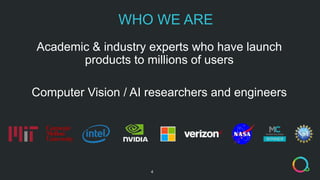
Ross Finman and Diana Hu first met as undergraduates studying artificial intelligence and computer vision at Carnegie Mellon University.[1] Their paths diverged after graduation: Finman pursued a master's and PhD in robotics at MIT's Computer Science and Artificial Intelligence Laboratory, where he worked on 3D perception and mapping in the Marine Robotics Group.[2] Hu joined Intel as an engineer, building experience in computer vision and data science.[3] When they reconnected to start a company, they brought complementary depth that few consumer AR teams could match.

The company began in early 2016 as a bootstrapped side project in Finman's MIT dorm room, initially operating under the name AR Spirit before rebranding as Escher Reality — a name drawn from M.C. Escher, the Dutch graphic artist whose impossible structures served as a metaphor for AR's ability to overlay the unreal onto the real.[4][5]
The founding thesis was explicitly contrarian. In early 2016, the overwhelming majority of capital and engineering talent in immersive technology was chasing virtual reality. Finman later described the decision plainly: "We decided to be contrarian."[6] The founders believed mobile AR — not headset VR — would reach mass consumers first, and that the infrastructure layer for that market was entirely unbuilt.
In the summer of 2016, Escher Reality was accepted into the MIT Sandbox Innovation Fund Program's inaugural summer cohort, with what the program described as only a vague idea for advancing AR capabilities.[7] Then, in July 2016, Pokémon Go launched and became a global phenomenon. The founders watched the game's success and immediately reframed their question. Finman recalled: "That's when things really took off. We said, 'How do you take this to the next level?'"[8]
The answer was infrastructure. Pokémon Go had proven that consumers would engage with location-based AR at scale, but the experience was fundamentally solitary — players couldn't see each other's actions in the same physical space, and digital objects didn't persist between sessions. Finman and Hu decided to build the backend that would make those experiences possible for any developer.
The founders went full-time on Escher Reality in November 2016, supported by a non-equity grant from MassChallenge and early backing from Autodesk Build and MassDigi.[9] In May 2017, Finman presented the company at the Augmented World Expo in Santa Clara — one of the earliest public pitch artifacts of the company's positioning.
One month later, Escher Reality joined Y Combinator's Summer 2017 batch.[10] The YC program accelerated the company's move toward Silicon Valley and gave it access to the investor network that would close its seed round in August 2017.
Timeline
-
Early 2016 — Ross Finman and Diana Hu co-found Escher Reality (then AR Spirit) as a bootstrapped side project in Finman's MIT dorm room.[11]
-
June 2016 — Accepted into MIT Sandbox Innovation Fund Program's inaugural summer cohort with only a vague AR concept.[12]
-
July 2016 — Pokémon Go launches globally, validating mass-market mobile AR and sharpening the founders' product thesis.[13]
-
November 2016 — Founders go full-time on Escher Reality. Company receives non-equity grant from MassChallenge.[14]
-
May 2017 — Ross Finman presents Escher Reality at AWE USA 2017 in Santa Clara, CA — one of the earliest public pitch artifacts of the company.
-
June 2017 — Escher Reality joins Y Combinator's Summer 2017 batch and raises $120,000 seed from YC.[15]
-
August 2017 — Apple launches ARKit, making the limitations Escher was solving (no multiplayer, no persistence, no cross-platform) immediately visible to developers. Finman calls it "the best thing ever for us."[16]
-
August 6, 2017 — TechCrunch profiles Escher Reality at YC Demo Day, naming it a standout from the S17 class.[17]
-
August 20, 2017 — Seed round closes with investors including Uncork Capital, Founders Fund, Liquid 2 Ventures, Webb Investment Network, iRobot Ventures, and Presence Capital.[18]
-
September 18, 2017 — Both co-founders appear on stage at TechCrunch Disrupt SF 2017 alongside Niantic's CTO — the most significant public appearance of the founders and an early signal of Niantic's interest.[19]
-
February 1, 2018 — Niantic acquires Escher Reality. All six employees join Niantic. Financial terms undisclosed. Multiplayer SDK was still in beta at time of acquisition.[20]
-
February 21, 2018 — MIT News publishes feature on Escher Reality as the first MIT Sandbox company to be acquired.[21]
-
November 2018 — Ross Finman named to Forbes 30 Under 30.[22]
-
2022 — Escher Reality's technology, developed further by Finman's team at Niantic, becomes the foundation for Niantic's AR Platform, rebranded as Lightship.[23] Finman leaves Niantic after 4.5 years.
-
2023 — Ross Finman founds Augmodo, applying spatial AI and computer vision to retail inventory management.[24]
What They Built
Escher Reality's core product was a backend SDK for mobile augmented reality developers. To understand what made it distinctive, it helps to understand what it was solving around.
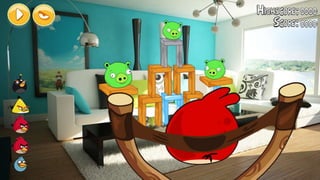
When Apple launched ARKit in August 2017 and Google launched ARCore shortly after, both platforms gave developers the ability to place digital objects in the real world as seen through a phone camera. A user could put a virtual lamp on their coffee table and walk around it. That was genuinely impressive. But both platforms had three hard limitations: experiences were single-user (only the person holding the phone could see the AR content), single-session (the virtual lamp disappeared when the app closed), and single-platform (an ARKit app wouldn't run on Android). Finman described the gap directly: "Think of us more as the backend for augmented reality. What we offer is the cross-platform, multiuser and persistent experiences — so those are three things that Apple and ARKit doesn't do."[25]
Escher Reality's SDK addressed all three limitations simultaneously.
Cross-platform support meant a developer could write one AR application and deploy it on both iOS and Android, with Escher's backend handling the differences between ARKit and ARCore under the hood.
Multi-user shared experiences meant that two people standing in the same room, each holding their own phone, could see and interact with the same digital objects in the same physical space in real time. If one user moved a virtual chess piece, the other user saw it move.
Persistence was the most technically ambitious feature. The system used computer vision and 3D mapping — drawing directly on Finman's MIT robotics research in the Marine Robotics Group — to build a spatial understanding of a physical environment.[26] When a user placed a digital object in a room, the system remembered its position relative to the physical geometry of that room. The next time any user opened the app in the same space, the object was still there. The AR system recognized the environment and restored the digital layer on top of it.[27]

The SDK was delivered as a Unity plug-in — a deliberate distribution choice. Unity was already the dominant game engine for mobile developers. By packaging the SDK as a plug-in rather than a standalone platform, Escher met developers in their existing workflow. A developer didn't need to learn new tools; they added the Escher plug-in to their existing Unity project and gained the three capabilities immediately.
To demonstrate what the SDK could do, the team built a demo multiplayer AR game called Volley, which was still in beta at the time of acquisition.[28] The game served as a proof-of-concept for the SDK's capabilities and a recruiting tool for beta developers.
Escher Reality also developed AR Human Interface Guidelines — a set of design principles for building AR experiences — indicating that the company's ambitions extended beyond infrastructure into shaping developer norms for the emerging medium.[29]
The company filed one patent, suggesting the core technology had some defensibility, though the portfolio was thin for an infrastructure play.[30]

Market Position
Target Customers
Escher Reality's primary customers were mobile AR developers — specifically, game studios and app developers building on Unity who wanted to create experiences that went beyond what ARKit and ARCore natively supported. The company was explicitly targeting developers rather than end consumers; its product was infrastructure, not an application.
The beta partner list included what the company described as "some of the top AR studios," though their identities were not disclosed publicly.[31] The thousands of developers who joined the SDK waiting list represented a broader pool of potential customers across indie developers, game studios, and enterprise AR teams.[32]
The secondary customer segment — which the company had not yet reached at the time of acquisition — was enterprise. Persistent, shared AR has obvious applications in industrial training, retail, architecture, and field service. Escher's infrastructure could theoretically serve those use cases as well, though the company's public positioning was focused on game developers.
Market Size
The mobile AR developer tools market in 2017 was nascent and difficult to size with precision. The relevant frame was the broader AR/VR developer tools market, which analysts were projecting to grow substantially on the back of ARKit and ARCore adoption. Apple's ARKit launched to 300 million compatible iOS devices in August 2017 — the largest AR platform deployment in history at that point — creating an immediate addressable market for developer tools.[33]
Pokémon Go had demonstrated that a single location-based AR application could generate over $1 billion in annual revenue. The infrastructure layer enabling the next generation of such applications — shared, persistent, cross-platform — represented a plausible toll-road business if the market developed as expected.
Competition
At the time of Escher Reality's acquisition in February 2018, there were no established competitors offering equivalent shared and persistent AR backend services as a standalone developer product. The competitive landscape broke into three categories:
Platform incumbents (Apple, Google): Both offered native AR frameworks but explicitly did not support multiplayer, persistence, or cross-platform experiences. These were the limitations Escher was solving around, not competing with.
Game engines (Unity, Unreal): Unity was Escher's distribution channel, not a competitor. Unity's own AR Foundation framework, which would eventually add some cross-platform capabilities, was not yet available.
Other AR startups: Companies like 8th Wall (web-based AR), Wikitude, and Vuforia were active in the AR developer tools space but focused on different problems — marker-based AR, web AR, and enterprise image recognition respectively. None offered the shared/persistent backend capabilities Escher was building.
The absence of direct competition was both an opportunity and a risk. It validated that Escher was building something genuinely new, but it also meant the company was educating the market rather than competing for existing demand.
Business Model
Escher Reality's business model was usage-based and explicitly modeled on Unity's approach to developer monetization. Diana Hu described it directly: "It's a very similar model to Unity."[34]
Developers could integrate the SDK and build with it at no cost during development and at low user counts. Charges only triggered when an application started generating revenue — meaning Escher's revenue was structurally tied to its customers' success. This design removed the primary friction point for developer adoption: a developer building a speculative AR game had no reason to avoid integrating Escher's SDK, because they wouldn't pay anything until the game succeeded.
The model had clear scaling logic. As the AR developer ecosystem grew and applications built on Escher's SDK reached commercial scale, Escher's revenue would grow proportionally. The company was acquired before this model could be stress-tested at any meaningful scale — it is unknown whether the company had any paying customers at the time of the Niantic deal.
The usage-based structure also aligned Escher's incentives with its customers' incentives, which was important for an infrastructure company trying to establish itself as a trusted platform in an emerging ecosystem.
Traction
At the time of the YC Demo Day in August 2017, Escher Reality had five full-time and two part-time employees.[35] By acquisition six months later, the team had grown to six full-time employees.[36]
TechCrunch described Escher Reality as "one of the clear standouts from its Y Combinator class" at the time of the acquisition announcement.[37] The company had been highlighted in TechCrunch's YC S17 favorites list at Demo Day — significant credibility for a pre-revenue infrastructure startup.
Developer demand was strong but unmonetized. At the time of acquisition, the founders wrote: "We thank the thousands of developers who signed up for our waiting list — such overwhelming response is the dream of any start-up."[38] The SDK was in beta with "some of the top AR studios" as partners,[39] but the product had not yet converted the waiting list into active paying integrations.
Escher Reality became the first company to exit from the MIT Sandbox Innovation Fund Program — a milestone that validated both the founders' execution speed and the program's model.[40] Ross Finman was subsequently named to Forbes 30 Under 30.[41]
The most significant traction signal was the TechCrunch Disrupt SF 2017 appearance in September 2017, where both founders shared a stage with Niantic's CTO Phil Keslin — four months before Niantic would acquire the company.[42]
Post-Mortem
Escher Reality did not fail. It was acquired by Niantic on February 1, 2018, with all six employees joining the acquirer and the technology becoming the foundation for one of the most widely deployed AR developer platforms in the world.[43] The conventional post-mortem framework — identifying what went wrong — does not apply cleanly here. Instead, the more instructive analysis examines the structural forces that made a rapid acquisition the optimal outcome, and what the company's arc reveals about building infrastructure for emerging platforms.
The Acquisition Was Strategically Driven, Not a Talent Grab
Niantic CEO John Hanke's public statement at acquisition was specific: "The addition of the Escher AR technology is incredibly exciting to us at Niantic as it significantly accelerates our work on persistent, shared AR as part of the Niantic real-world application platform."[44] The word "accelerates" is the operative one. Niantic was already building toward persistent shared AR — the capability that would eventually become Lightship — but Escher had already solved the core technical problems. Acquiring the team and technology was faster than building it internally.
The subsequent career arc of Ross Finman confirms the technology transfer was genuine. He spent 4.5 years at Niantic, founding the AR mapping and Visual Positioning System (VPS) effort — the spatial mapping infrastructure that underpins Lightship — before serving as AR Strategy Lead and General Manager of the AR Headset group.[45] Escher's technology did not sit on a shelf. It became the core of Niantic's platform business.
ARKit's Launch Was the Catalytic Event
The most important external event in Escher Reality's history was not its own product launch or its YC acceptance — it was Apple's release of ARKit in August 2017. ARKit made the limitations Escher had been solving for 18 months suddenly legible to every iOS developer and every AR investor simultaneously. Finman described the effect directly: "Everyone thought we were crazy at that time, and now this summer it's the summer for mobile augmented reality… ARKit has been the best thing ever for us."[46]
ARKit also accelerated Niantic's urgency. Niantic's entire business — Pokémon Go, Ingress, and the platform it was building — depended on mobile AR remaining a compelling medium. ARKit validated that Apple was committed to AR at the platform level. Niantic needed persistent shared AR capabilities to stay ahead of what Apple and Google would eventually build natively. Escher had those capabilities. The acquisition followed six months after ARKit's launch.
The Unresolved Commercial Risk
The one genuine strategic vulnerability in Escher Reality's position — which the acquisition resolved before it became a crisis — was the risk of platform commoditization. Apple and Google had both demonstrated willingness to build developer capabilities natively into their AR frameworks. If either company added shared or persistent AR support to ARKit or ARCore, Escher's core value proposition would have been commoditized overnight.
This risk was not hypothetical. Apple has a documented history of adding third-party developer tool capabilities to its native frameworks, a pattern developers call "Sherlocking." Escher's SDK was exactly the kind of capability Apple might have added to ARKit in a future release. The company had no contractual protection against this outcome and a patent portfolio of one filing — insufficient to deter a platform giant.
The Niantic acquisition removed this risk entirely. Inside Niantic, Escher's technology was no longer competing with Apple and Google — it was building on top of their platforms while adding capabilities those platforms would not replicate (planet-scale spatial mapping, cross-game persistence, multi-user coordination at Niantic's scale).
The Commercial Model Was Unproven at Scale
Escher Reality's usage-based pricing model was well-designed in theory but untested in practice. At the time of acquisition, the SDK was still in beta, the waiting list numbered in the thousands but had not been converted to active integrations, and there is no public evidence of any paying customers.[47]
This was not a fatal flaw — the company was 18 months old and had spent most of that time building the technology rather than selling it. But it meant the acquisition happened before the business model could be validated. VentureBeat reported $3 million in total pre-acquisition funding,[48] a figure that likely includes an undisclosed seed round beyond the YC $120,000 check. Even at $3 million raised, the company had limited runway to prove out revenue before needing to raise again — and the AR developer tools market in early 2018 was not yet generating the application revenue that would have triggered Escher's usage-based charges.
The acquisition was, in this sense, well-timed for the founders and investors. It captured the value of the technology and team before the commercial model needed to perform.
Founders' Framing: Continuity of Mission
Both founders described the acquisition in terms of mission continuity rather than exit. Diana Hu said: "Part of it for us why Niantic was a good fit is that the vision of what Escher Reality started us, we are still building it."[49] Finman added: "[Niantic] has been a trailblazer of AR and getting people excited about AR. That's why it's such a good match for us."[50]
The framing was accurate. Escher's technology did not get shelved or pivoted away from — it became the foundation for Lightship, Niantic's AR developer platform, which was publicly released in 2022 and is now used by thousands of developers building location-based AR experiences.[51] The company's mission — building the backend for shared, persistent, cross-platform AR — was fulfilled at a scale that would have been impossible as an independent startup.
Key Lessons
-
Infrastructure timing requires building before the market arrives, but not too far before. Escher Reality began building shared AR infrastructure in early 2016, when the market for mobile AR developer tools did not yet exist. ARKit's August 2017 launch created that market almost overnight. The founders had roughly 18 months of technical head start — enough to build credible technology, not so much that they ran out of money waiting for customers. Infrastructure founders who start too early burn through capital educating a market that isn't ready; Escher's timing was close to optimal.
-
Deep technical credentials are a prerequisite for infrastructure plays in emerging platforms. Finman's MIT robotics PhD and Hu's Intel computer vision engineering were not incidental to Escher's success — they were the reason the company could build credible shared AR infrastructure before anyone else. The core technology (3D spatial mapping, real-time environment understanding, cross-device state synchronization) required genuine depth in computer vision and robotics. Generalist founders could not have built it. For infrastructure companies in technically complex emerging markets, founder credentials function as a form of early defensibility.
-
Platform commoditization risk is the existential threat for developer tool companies, and acquisition can be the optimal hedge. Escher Reality's core value proposition was solving limitations in ARKit and ARCore. Both Apple and Google had the capability and incentive to add those features natively — which would have eliminated Escher's market. The Niantic acquisition converted this existential risk into a strategic advantage: inside Niantic, Escher's technology was building capabilities that Apple and Google would not replicate, rather than competing with capabilities they might add.
-
A usage-based model aligned with developer success is the right structure for an AR infrastructure play, but requires patience to monetize. Escher's decision to charge only when customers generated revenue removed adoption friction and aligned incentives correctly. The limitation is that this model requires customers to reach commercial scale before generating revenue — a timeline that may not fit a startup's funding runway. Escher was acquired before this tension became acute, but founders building similar infrastructure businesses should plan for 24–36 months of pre-revenue developer adoption before usage-based charges become meaningful.
-
The acqui-hire is not a consolation prize when the acquirer's platform becomes the distribution channel for the acquired technology. Escher Reality's six-person team joined Niantic and spent the next four years building the technology into a platform used by thousands of developers worldwide. The acquisition price was never disclosed, but the technology's impact — Niantic Lightship — is traceable and significant. Founders evaluating acquisition offers should assess not just the financial terms but whether the acquirer's platform will amplify or bury the technology they built.
Sources
- MIT News — MIT Sandbox first acquired augmented reality startup Niantic (Feb 21, 2018)
- CityBiz — Q&A with Ross Finman, CEO and Founder of Augmodo
- TechCrunch — Escher Reality is building the backend for cross-platform mobile AR (Aug 6, 2017)
- CBInsights — Escher Reality company profile
- Fifth Revision — Escher Reality brand design project
- TechCrunch — Niantic buys Escher Reality AR startup (Feb 1, 2018)
- Crunchbase — Escher Reality funding signals and news
- Crunchbase — Escher Reality company financials
- VentureBeat — Pokémon Go creator Niantic acquires AR firm Escher Reality (Feb 1, 2018)
- Next Reality News — Niantic acquires Escher Reality to add multiplayer capabilities (Feb 1, 2018)
- Tracxn — Escher Reality company profile
- Variety — Pokémon Go maker Niantic acquires Escher Reality (Feb 1, 2018)
- Y Combinator — Escher Reality company page
- The AR Show Podcast — Ross Finman Part 2 (Oct 17, 2023)
- Y Combinator — Diana Hu profile
- YC Blog — Diana Hu on augmented reality and building a startup in a new market
- DICE Summit — Ross Finman speaker profile
- Spotify / YC Podcast — Diana Hu episode
- Fifth Revision — Archived Escher Reality AR HIG documentation
Included with Pro$20/mo
Ready to rebuild Escher Reality?
Implementation-ready specs, every report, and 5 on-demand requests each month.
- Implementation-ready specs for every company
- Full report and rebuild playbook library
- 5 on-demand report requests per month