Overview
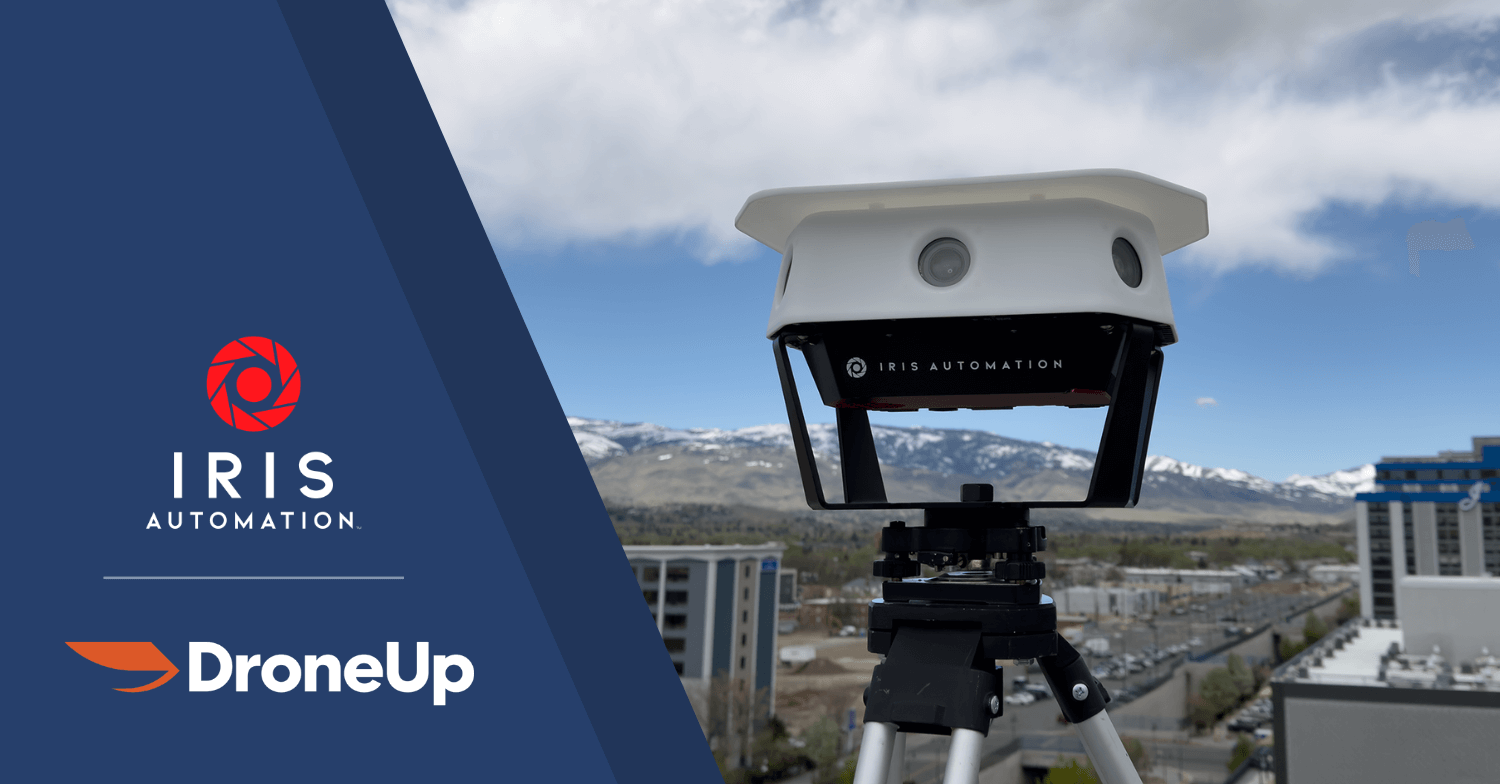
Iris Automation was a drone safety software company founded in 2015 by Alexander Harmsen and James Howard in Vancouver, Canada. The company built Casia, a computer vision-based detect-and-avoid (DAA) system that allowed drones to sense and evade non-cooperative aircraft — the critical missing piece for commercial beyond visual line of sight (BVLOS) drone operations. Backed by Bessemer Venture Partners, Sony Innovation Fund, Verizon Ventures, and Y Combinator, Iris raised between $23M and $35M across five rounds and achieved regulatory approvals in nine countries before being acquired by uAvionix in October 2023.[1]
The company built genuinely superior technology and accumulated more regulatory credibility than almost any peer in the drone safety space. It failed not because the product didn't work, but because the FAA's BVLOS rulemaking process moved far slower than the market required — keeping the addressable commercial market artificially small for the entirety of Iris Automation's independent life. When the 2023 venture capital contraction closed off the Series C runway, the company had no path to profitability at its constrained scale.
The October 2023 acquisition by uAvionix — at an undisclosed price, following a ~46% headcount reduction — was a strategic soft landing rather than a venture-scale exit.[2] CEO Jon Damush became CEO of the combined entity, and Casia's non-cooperative detection capability was absorbed into uAvionix's broader airspace safety stack — validating the technology while confirming it was worth more as a feature than as a standalone company.


Founding Story
Alexander Harmsen and James Howard founded Iris Automation in Vancouver, Canada in 2015, bringing an unusually credentialed technical pedigree to what was then a nascent commercial drone market.[3] Both founders had worked on computer vision and drone-related projects at institutions that sit at the intersection of aerospace and machine learning: NASA's Jet Propulsion Laboratory, Boeing R&D, Matternet (the drone delivery pioneer), and Spire Global (the satellite data company).[3] This background gave them direct exposure to both the technical complexity of autonomous flight and the regulatory machinery that governs it — a combination rare among early-stage founders.
The problem they identified was specific and commercially consequential. Drone operators could fly within visual line of sight (VLOS) under existing FAA rules, but the high-value commercial applications — infrastructure inspection, precision agriculture, package delivery at scale — all required BVLOS operations. The legal barrier to BVLOS was not primarily technical; it was safety certification. Regulators required proof that drones could detect and avoid other aircraft, including small general aviation planes and helicopters that do not broadcast ADS-B transponder signals. No commercially available system solved this for non-cooperative aircraft. As co-founder James Howard put it: "This is the biggest problem facing the industrial drone market today, we're solving that with cutting edge computer vision technology."[4]
The founders' answer was to apply computer vision and machine learning — the same techniques advancing autonomous cars — to airborne collision avoidance. Rather than relying on radio signals from other aircraft, Casia would use cameras and 3D environmental reconstruction to detect any moving object in the flight path, regardless of whether it was broadcasting anything.
For Pro Subscribers
Unlock the full Iris Automation teardown
Read the complete post-mortem, the rebuild playbook, and the exact reasons Iris Automation is still worth studying now.