NeoWize was a Tel Aviv-based e-commerce personalization startup that applied behavioral machine learning to help small and mid-size online retailers surface relevant products to new visitors faster than existing solutions. Founded in 2016 by three IDF intelligence veterans and backed by Y Combinator's Summer 2016 batch, the company built a neural network-based engine that reduced the number of user interactions needed to infer preferences from roughly 50 to 5. NeoWize did not fail in the conventional sense — it was acquired by beauty brand IL MAKIAGE in November 2019, reached profitability before the exit, and retained its entire team. The more precise diagnosis is that the company built a technically credible product in a market that was simultaneously validating and commoditizing the same capability. The team's ML talent ultimately proved more valuable to a vertically integrated acquirer than the independent SaaS business could justify sustaining at scale.
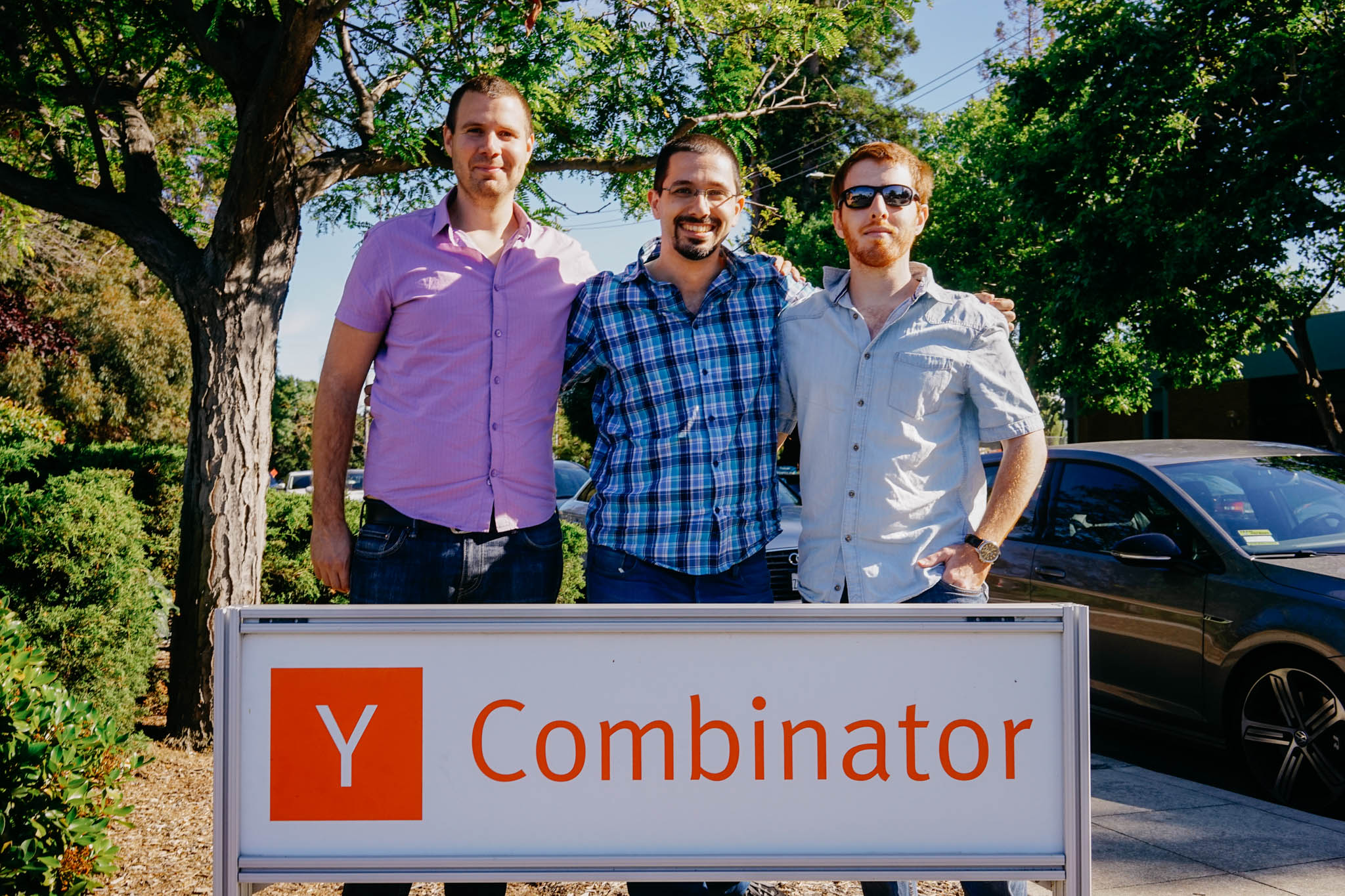
NeoWize emerged from a decade of machine learning research inside one of the world's most technically demanding institutions. Omer Nevo, the company's CEO, spent 12 years developing ML algorithms at Unit 8200, the IDF's elite signals intelligence unit that has produced a disproportionate share of Israel's technology founders.[1] Co-founder and CMO Yoav Cafri served in the IDF's Center for Encryption and Information Security, then moved into the private sector — running IT operations for a large American retailer and co-founding KitLocate, a location technology startup that was acquired by Yandex.[2] The third co-founder, Ronen Ness, served as CTO; his background and technical contributions are not documented in available sources.
The founding insight did not come from a whiteboard. It came from a conference floor. After attending Israel's largest e-commerce conference, Nevo and Cafri heard store owners repeatedly complain about the same problem: existing personalization tools were too slow, too complex, and too dependent on large datasets to work for smaller merchants.[3] Earlier customer discovery attempts had failed to surface a problem worth solving; the conference provided the specific, repeated signal the team needed.
Nevo described the founding motivation in direct terms: "I had been doing machine learning algorithms research for over a decade, and we wanted to find an application that would help e-commerce site owners."[4] The team had previously operated under the name Shoptimally before rebranding to NeoWize — a shift that signaled a repositioning from narrow conversion optimization toward a broader intelligence platform.[5]
The company was accepted into Y Combinator's Summer 2016 batch, providing $120,000 in seed capital, the YC network, and a structured path to the US market.[6] YC partner Justin Kan articulated the investment thesis with unusual specificity: "NeoWize appealed to us because it is an obvious revenue generator for any ecommerce website and it is very easy to prove value to ecommerce operators: simply offer a free trial running on a percentage of traffic and observe revenue lift. We also loved the team's deep experience in the space."[7]
The combination of Nevo's deep algorithmic research background and Cafri's prior exit experience gave the team a credibility profile that was unusual for an early-stage seed company. The founding story is one of technical expertise finding a commercial application — a pattern common in Israeli deep tech, where military R&D pipelines produce founders with genuine research depth but limited prior consumer or SaaS distribution experience.
2016 — NeoWize founded in Tel Aviv by Omer Nevo, Yoav Cafri, and Ronen Ness; company previously operated as "Shoptimally" before rebranding.[8]
2016 — Founding insight crystallized at Israel's largest e-commerce conference, where store owners expressed frustration with existing personalization solutions.[9]
August 2016 — NeoWize accepted into Y Combinator Summer 2016 batch.[10]
August 1, 2016 — NeoWize closes $120K seed round from Y Combinator.[11]
August 5, 2016 — VentureBeat publishes detailed product profile; NeoWize reports 260+ affiliated stores and 280,000 weekly active users, up from 60 stores and 130,000 users two weeks prior.[12]
August 8, 2016 — NeoWize closes $620K angel round with Viola Group participation; YC publishes founder blog post; total disclosed funding reaches $740K.[13]
August 8, 2016 — YC partner Justin Kan publicly endorses NeoWize, citing the free-trial revenue-lift proof model and team's domain depth.[14]
August 23, 2016 — NeoWize presents at YC S16 Demo Day 2; TechCrunch reports the company is "growing 70 percent week over week" and is "now in 1,300 active stores."
November 22, 2019 — IL MAKIAGE (subsidiary of Oddity) acquires NeoWize. All employees retained; Omer Nevo becomes VP R&D, Yoav Cafri becomes Chief Data Scientist. Terms undisclosed. NeoWize stated to continue serving customers independently.[15]
April 2021 — Omer Nevo departs IL MAKIAGE to become Engineering Manager at Google, working on wildfire detection and prediction research.[16]
April 2021 — NeoWize estimated at approximately $197,600 in annual revenue with a 3-person team (low-confidence figure, likely reflects post-acquisition wind-down state).[17]
NeoWize built a behavioral personalization engine for e-commerce stores — specifically designed to work on the small and mid-size merchants that dominant personalization platforms had largely ignored.
The core problem it solved. Most personalization systems of the era relied on collaborative filtering: they recommended products based on what similar users had bought or browsed. This approach required large datasets to work well. A store with 500 monthly visitors had no meaningful "similar users" pool. NeoWize attacked this cold-start problem directly.
How the technology worked. Rather than waiting for purchase history to accumulate, NeoWize's engine analyzed micro-behaviors in real time: clicks, cursor hovers, and scroll-bys across a product page.[18] These signals — which a user generates within seconds of landing on a page — were fed into a neural network that inferred preferences without requiring any prior purchase data. The company claimed this reduced the number of user interactions needed to determine preferences from approximately 50 to 5.[19] The underlying technique was described as "active machine learning" — a method where the model actively selects which data points to learn from, improving predictive accuracy with smaller datasets than passive approaches require.[20]
What made it architecturally distinct. Nevo was explicit about the system's deliberate genericism: "Our technology doesn't need to know products, product placement, or revenue. It's incredibly generic in that it just needs to know indications and goal."[21] This design choice had a strategic logic: by requiring no catalog integration, no revenue data feed, and no configuration, NeoWize could deploy in minutes rather than weeks. The tradeoff was that the system could not leverage the richer contextual signals that a deeper integration would provide.
The product suite. NeoWize offered two products: a personalization engine that dynamically reordered or surfaced products for each visitor, and a dashboard called "NeoWize Analytics and Insights" that gave merchants visibility into behavioral patterns across their store.[22] The analytics product's role in the overall strategy — whether it was a standalone revenue line or a retention tool for the personalization engine — is not documented in available sources.
Distribution. The company distributed via plugins for Shopify and Magento, the two dominant e-commerce platforms for small and mid-size merchants at the time.[23] Zero configuration was required. A merchant could install the plugin and have the personalization engine running on their store within minutes. This frictionless onboarding was central to the early growth story.
Stated performance claims. NeoWize claimed its product surfaced relevant products to new users up to 10x faster than competing solutions, and that merchants using the platform saw revenue increases of 10–30%.[24] No independent third-party validation of these figures exists in available sources.
Broader vision. The founders described the technology as applicable beyond e-commerce — to education, transportation, and other domains where behavioral inference could drive personalization.[25] They chose e-commerce deliberately because revenue impact was immediately measurable, making the value proposition easy to prove. The company also announced plans to expand from web to mobile app personalization, though no evidence of that expansion exists in available sources.
NeoWize's primary target was small and mid-size e-commerce merchants — specifically those operating on Shopify and Magento who lacked the engineering resources to implement custom personalization or the traffic volume to make data-heavy enterprise solutions effective.[26] This was a deliberate positioning choice. The cold-start problem NeoWize solved was most acute for stores with limited visitor data — a segment that enterprise personalization vendors like Dynamic Yield and Certona had little incentive to serve at low price points.
The plugin-based distribution model reinforced this focus. Shopify's app marketplace in 2016 was already a well-established channel for reaching SMB merchants at scale, with low customer acquisition costs relative to direct sales. The zero-configuration install further lowered the barrier for non-technical store owners.
The implicit assumption in this targeting was that SMB merchants would pay meaningfully for a tool that demonstrably lifted revenue. That assumption — which proved partially correct in adoption but potentially insufficient in monetization — is central to understanding the company's eventual outcome.
The e-commerce personalization market was growing rapidly during NeoWize's operating years. The broader market for personalization software was estimated at several billion dollars globally by the late 2010s, driven by the rapid expansion of online retail and the increasing expectation among consumers for relevant product discovery experiences.
The SMB segment of that market — NeoWize's specific focus — was large in terms of merchant count but fragmented in terms of willingness-to-pay. Shopify alone had hundreds of thousands of active merchants by 2016, but average revenue per merchant was modest, and the economics of serving SMBs via low-touch SaaS required either high volume or meaningful per-seat pricing to generate venture-scale revenue. The Shopify app ecosystem had demonstrated that SMB merchants would pay for tools that showed clear ROI, but average app revenue per merchant in the ecosystem was typically in the range of tens to low hundreds of dollars per month — a ceiling that constrained how large a personalization SaaS business could grow without moving upmarket.
The e-commerce personalization space in 2016 was populated by well-funded competitors operating at different segments of the market.
Enterprise tier. Dynamic Yield (founded 2011, raised over $80M before its $300M acquisition by McDonald's in 2019) and Certona (acquired by Teradata in 2018) served large retailers with deep integration, A/B testing infrastructure, and dedicated customer success teams. These platforms required significant implementation effort and were priced accordingly — effectively out of reach for SMB merchants.
Mid-market tier. Nosto (founded 2011, raised over $30M) and Barilliance targeted mid-market e-commerce with more accessible pricing and Shopify integrations. Nosto in particular was a direct competitive analog to NeoWize: a Shopify-native personalization tool with a plugin-based install model and a focus on product recommendations. The key difference NeoWize claimed was its cold-start performance on small datasets — a genuine technical differentiator, but one that Nosto and others were actively working to close.
Commoditization pressure. By 2018–2019, Shopify itself had begun integrating basic product recommendation features natively into its platform, and the app marketplace had become crowded with lower-cost personalization tools. The technical moat that NeoWize's active machine learning approach provided in 2016 was narrowing as the broader ML tooling ecosystem matured and competitors adopted similar techniques. This dynamic — a real but eroding technical advantage in a market where the platform itself was absorbing basic functionality — is the structural backdrop against which NeoWize's acquisition should be understood.
NeoWize operated as a SaaS business, charging e-commerce merchants a recurring subscription fee for access to its personalization engine and analytics dashboard. The company distributed primarily through the Shopify and Magento plugin marketplaces, which provided organic discovery but also imposed marketplace norms around pricing — most successful Shopify apps in 2016 were priced between $20 and $200 per month for SMB tiers.
The go-to-market strategy relied on a free trial model: merchants could run NeoWize on a percentage of their traffic and observe revenue lift directly, with no upfront commitment.[27] This approach minimized sales friction and allowed the product to prove its value before asking for payment — a model that YC's Justin Kan explicitly cited as a key investment rationale.
The company reached profitability before its acquisition,[28] which suggests the business was generating more revenue than it was spending — a meaningful operational achievement for a startup that raised only $740K in total external capital.[29] However, profitability at small scale and venture-scale growth are different objectives, and the evidence suggests NeoWize achieved the former without approaching the latter.
NeoWize's early growth metrics were striking in their velocity. As of August 5, 2016 — during YC Demo Day week — the company reported 260+ affiliated stores and 280,000 weekly active users, up from 60 stores and 130,000 users just two weeks prior.[30] By Demo Day on August 23, TechCrunch reported the company had reached 1,300 active stores and was growing 70% week over week. Mattermark ranked NeoWize among the top 25 fastest-growing startups from the entire YC S16 cohort, assigning it a Growth Score of 213.
Omer Nevo claimed that merchants using NeoWize saw revenue increases of 10–30%.[31] No independent verification of this figure exists in available sources, but the free-trial model meant merchants could observe the lift directly — making the claim at least structurally testable.
The central tension in the traction narrative is the gap between the 2016 growth signals and the company's apparent scale at acquisition. A low-confidence estimate from Getlatka places NeoWize's annual revenue at approximately $197,600 as of April 2021, with a three-person team.[32] This figure almost certainly reflects a post-acquisition wind-down state rather than peak independent revenue, and should be treated with caution. Nevertheless, the absence of any Series A fundraise — and the modest acquisition terms implied by the company's size — suggests the business did not sustain the 70% week-over-week growth rate beyond the Demo Day period. The 1,300 stores figure from August 2016 almost certainly included free-tier users; the conversion rate to paying customers is unknown.
The company reached profitability before acquisition,[33] which is a meaningful signal: on $740K in total funding, the team built a product that covered its own costs. That is a real operational achievement. It is also consistent with a business that grew to a stable but modest scale and then plateaued.
NeoWize's outcome was not a shutdown — it was an acqui-hire at modest scale, approximately 3.5 years after founding. The company built a real product, reached profitability, and exited with its team intact. But it did not achieve the venture-scale growth that the early metrics suggested was possible. Understanding why requires examining four interconnected dynamics.
The most consequential strategic choice NeoWize made was targeting small and mid-size e-commerce merchants via Shopify and Magento plugins. This decision was tactically sound — it enabled fast adoption, low-friction onboarding, and rapid early growth. But it embedded a structural constraint into the business model.
SMB merchants on Shopify in 2016 had limited budgets for third-party apps. The typical Shopify app in the personalization category was priced between $20 and $100 per month. Even at 1,300 active stores — the Demo Day figure — and assuming a $50 average monthly subscription, NeoWize's theoretical monthly recurring revenue would have been approximately $65,000, or $780,000 annualized. That ceiling assumes full conversion of all 1,300 stores to paid tiers, which is implausible given that the figure almost certainly included free-trial users. The actual paying customer base was likely a fraction of the reported store count.
To reach venture-scale revenue in this segment, NeoWize would have needed either tens of thousands of paying merchants or a significant move upmarket to enterprise accounts with larger contract values. There is no evidence the company pursued either path aggressively after Demo Day.
NeoWize's core differentiator — active machine learning that performed well on small datasets — was a genuine technical advantage in 2016. The cold-start problem was a real pain point for SMB merchants, and the company's approach to solving it was more sophisticated than most competitors offered at the time.
But the ML tooling landscape was evolving rapidly. By 2018, open-source libraries and cloud ML services had made it substantially easier for competitors to implement similar behavioral inference techniques without the years of research investment that Nevo had accumulated at Unit 8200. Nosto, Barilliance, and newer entrants were actively improving their cold-start performance. Simultaneously, Shopify was absorbing basic product recommendation functionality into its native platform — reducing the addressable problem space for third-party personalization tools at the low end of the market.
The generic, domain-agnostic architecture that made NeoWize easy to deploy also made it harder to build the kind of deep vertical integration that creates switching costs. A merchant who had integrated NeoWize's plugin could switch to a competitor's plugin in an afternoon. The product's ease of adoption was also its ease of replacement.
NeoWize raised a total of $740K across two rounds, both closed within days of each other in August 2016.[34] The company did not raise a subsequent Series A. This is the most significant structural signal in the funding history.
Moving upmarket to enterprise e-commerce — where personalization budgets are larger, switching costs are higher, and contract values can support a venture-scale business — requires a different go-to-market motion: direct sales, customer success, deeper integrations, and longer sales cycles. All of these require capital. With $740K in total funding and a lean team operating out of Tel Aviv, NeoWize did not have the resources to execute an enterprise pivot even if the founders had identified it as the right path.
Whether the company attempted to raise a Series A and was rejected, or chose to remain lean and profitable rather than pursue institutional growth capital, is not documented in available sources. The outcome — profitability at small scale, followed by an acqui-hire — is consistent with either scenario.
IL MAKIAGE acquired NeoWize in November 2019 explicitly to deepen its AI and data science capabilities for its own e-commerce beauty platform.[35] Omer Nevo became VP of R&D; Yoav Cafri became Chief Data Scientist. The framing of the acquisition — talent and technology, not customer base or revenue — is the clearest signal that the product itself was not the primary asset being purchased.
Nevo's public statement at the time of acquisition was carefully worded: "We founded NeoWize to innovate at the cutting edge of AI, technology and e-commerce. We are excited to join the leading next generation digitally native beauty brand that shares the same tech-first approach."[36] The statement emphasizes shared values and technical ambition rather than product synergies or customer overlap.
The retention was relatively short-lived. Nevo departed IL MAKIAGE for Google in April 2021 — approximately 18 months after the acquisition — where he moved into wildfire detection research, a domain entirely disconnected from e-commerce personalization.[37] This trajectory suggests the acqui-hire served its purpose for both parties: IL MAKIAGE got the ML talent it needed to build its own personalization infrastructure, and Nevo got a bridge to a larger platform with more ambitious research problems.
The Globes article covering the acquisition noted that CTO Ronen Ness had left NeoWize approximately 18 months before the acquisition — meaning he departed around mid-2018, roughly two years after founding. A co-founder CTO departure at that stage typically signals either a strategic disagreement, a technical direction change, or personal circumstances. The impact of this departure on the company's technical trajectory and its ability to compete in an increasingly crowded market is unknown, but it is a data point that the available US press coverage omits entirely.
Frictionless adoption and defensible moats are in tension for SMB SaaS. NeoWize's zero-configuration plugin model drove rapid early adoption — 1,300 stores in weeks — but the same ease of installation that attracted merchants also made switching trivially easy. Products that require no integration to install also require no integration to uninstall. Building switching costs in the SMB Shopify ecosystem requires either deep workflow integration or network effects, neither of which NeoWize appears to have pursued.
Measurability of value is a double-edged sword. Justin Kan's investment thesis — that NeoWize's value was easy to prove via traffic-split free trials — was correct. But if value is instantly measurable, so is competitive parity. Once a competitor could demonstrate equivalent revenue lift in a free trial, NeoWize's advantage collapsed to price and brand. The same property that made the product easy to sell made it easy to commoditize.
Undercapitalization forecloses strategic optionality. With $740K in total funding, NeoWize could sustain a lean team and reach profitability, but could not execute the upmarket pivot that the competitive dynamics eventually required.[38] The absence of a Series A — whether by choice or circumstance — meant the company had no capital to invest in enterprise sales, deeper integrations, or the customer success infrastructure needed to move beyond the SMB plugin market.
Technical depth is a founding asset but not a sufficient moat. Nevo's 12 years of ML research at Unit 8200 gave NeoWize a genuine head start on the cold-start problem.[39] But as ML tooling democratized between 2016 and 2019, the research advantage that required a decade to build could be approximated by a well-funded competitor in months. Technical depth is a founding advantage; it becomes a moat only when combined with distribution, switching costs, or data network effects that compound over time.
The acqui-hire is a legitimate outcome, not a consolation prize — but it requires honest accounting. NeoWize reached profitability, retained its team through acquisition, and placed its founders in senior roles at a company that subsequently went public.[40] For the founders, this was a reasonable outcome. For YC and Viola Group as investors, the return on $740K in capital was almost certainly modest. The lesson is not that the acqui-hire was a failure, but that the gap between strong early growth signals and modest exit scale deserves explanation — and that explanation lies in the structural constraints of the SMB market segment, not in the quality of the technology.