Exec Briefing
Actionable insights
If you only have a few minutes to spare, here’s what investors, operators, and founders should know about RethinkDB (S09).
- The product — RethinkDB built an open-source distributed document database designed for the real-time web. It replaced inefficient polling with push-based changefeeds, streaming query results to clients instantly. Developers used ReQL to build collaborative apps, live dashboards, and chat platforms with low latency.
- The failure — The company died because it could not convert strong developer adoption into sustainable revenue. It fell into the open-core monetization trap, lacking enterprise features or managed services. Cloud giants like Firebase and AWS absorbed its core functionality, offering integrated, managed alternatives that developers preferred.
- Why now — Edge compute commoditization and standardized HTTP/3 now enable sub-50ms global push delivery without heavy cluster maintenance. Developer spending has shifted decisively toward managed, usage-based APIs. Platforms like Supabase prove real-time sync sells as a service, solving the historical distribution and billing friction RethinkDB faced.
- The rebuild — Ship a managed changefeed API that decouples real-time synchronization from persistent storage, allowing developers to stream query deltas via WebSocket endpoints without managing infrastructure.
Overview
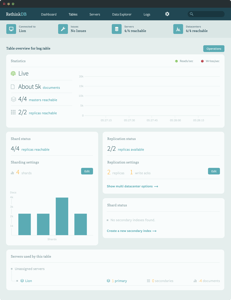
RethinkDB operated from 2009 to 2016 as an open-source database engineered specifically for the real-time web. The company built a distributed document store that replaced traditional polling architectures with a push-based model, automatically streaming query results to clients whenever underlying data changed. It attracted significant attention from developers building collaborative applications, live dashboards, and chat platforms.[3]
The company failed because it could not convert strong developer adoption into a sustainable revenue model. Despite building a technically elegant product that earned widespread community praise, RethinkDB struggled to monetize open-source software while competing against well-funded incumbents and cloud-native platforms that absorbed its core functionality.[6]
In October 2016, RethinkDB shut down its commercial operations and transferred its assets to the Cloud Native Computing Foundation for approximately $25,000 to cover legal and administrative costs.[1] The acquisition preserved the codebase as an open-source project but marked the end of the company’s attempt to build a standalone database business.

Founding Story
RethinkDB was founded by Slava Akhmechet, Chris Anderson, and Daniel Mewes.[3] The trio entered Y Combinator’s Summer 2009 batch with a clear technical thesis: traditional relational databases were fundamentally mismatched for modern web applications that required live, bidirectional data synchronization.[4] Akhmechet and Mewes brought deep systems programming and database engineering backgrounds, while Anderson contributed expertise in distributed systems and developer tooling. They met through open-source communities and shared a frustration with the polling-heavy architectures that dominated early web development.
The founding insight emerged from observing how developers built real-time features. At the time, applications relied on frequent HTTP requests to check for database changes, creating unnecessary network overhead, latency, and server load. The founders envisioned a database that natively supported push notifications. Instead of clients asking for updates, the database would monitor active queries and stream results to connected applications the moment data changed. This architectural shift promised to simplify real-time development and reduce infrastructure complexity.
RethinkDB’s initial vision centered on a modern, developer-first database that prioritized query expressiveness and live data synchronization. The team spent their first two years refining the core engine, building a custom query language, and designing a distributed architecture capable of horizontal scaling. They avoided early commercialization to focus on technical excellence and community building. The product remained open-source throughout its lifecycle, with the founders betting that widespread developer adoption would eventually create enterprise demand for support, hosting, and advanced features.
The company never executed a major strategic pivot. Instead, it doubled down on its original architecture while attempting to layer monetization mechanisms on top of a free product. This commitment to technical purity shaped both its strengths and its eventual constraints. As Akhmechet later reflected, the team prioritized building a system developers loved over designing a business model that could sustain itself.[6]
Timeline
- 2009: RethinkDB founded by Slava Akhmechet, Chris Anderson, and Daniel Mewes.[3]
- Summer 2009: Company joins Y Combinator’s accelerator program.[4]
- 2010–2015: Raises $13.3 million in venture funding from Index Ventures, Greylock Partners, and Y Combinator.[5]
- 2012–2015: Releases multiple major versions, introduces changefeeds, and expands distributed clustering capabilities.
- October 2016: Shuts down commercial operations after failing to achieve sustainable revenue.[6]
- October 5, 2016: Assets acquired by the Cloud Native Computing Foundation for approximately $25,000 to cover legal and administrative costs.[1]
- October 2016: Project donated to CNCF to ensure continued open-source maintenance.[1]
- October 2016: Founders publish a public post-mortem detailing monetization challenges and competitive pressures.[6]
For Pro Subscribers
Unlock the full RethinkDB teardown
Read the complete post-mortem, the rebuild playbook, and the exact reasons RethinkDB is still worth studying now.