Exec Briefing
Actionable insights
If you only have a few minutes to spare, here’s what investors, operators, and founders should know about Segment (S11).
- $3.2B infrastructure exit. Segment proved that decoupling data collection from application logic creates immense value. By routing events to hundreds of tools via one API, they solved SaaS fragmentation and reached $100M ARR.
- Pivot to plumbing. Founders abandoned their consumer classroom app to build developer infrastructure. This risky shift targeted an underlying technical need rather than a vertical feature, securing early adoption among YC peers facing similar integration headaches.
- Developer-led moat. Bottom-up adoption created a defensible network effect. As more engineers installed the SDK, more third-party tools built native integrations, making the platform indispensable without directly competing with established marketing or analytics vendors.
- Context beats collection. Raw event streaming is now a commodity. The new bottleneck is semantic enrichment for LLMs. Founders should build AI agents that automatically tag sentiment and resolve identity, turning opaque JSON into actionable customer profiles.
- Natural language activation. Legacy CDPs require complex SQL for segmentation. The next opportunity allows non-technical users to query data and trigger actions using plain English. This shifts value from engineering-heavy setup to immediate business utility.
Overview
Segment, founded in 2011 by Peter Reinhardt, Calvin French-Owen, and Ilya Volodarsky, emerged from Y Combinator’s Summer 2011 batch as a critical piece of modern data infrastructure. Initially conceived as a consumer-facing classroom analytics tool called "Classroom," the company pivoted to build a universal API for customer data. This infrastructure allowed developers to collect, clean, and route user data to hundreds of third-party analytics and marketing tools with a single integration, solving the fragmentation problem inherent in the growing SaaS ecosystem.[1][2]
Contrary to the typical startup failure narrative, Segment did not fail; it achieved one of the most successful exits in Y Combinator history. The company’s core thesis—that data infrastructure should be decoupled from specific applications to empower engineering teams—proved robust. By standardizing how companies handle customer data, Segment became indispensable to thousands of businesses, growing to approximately $100 million in annual recurring revenue (ARR) and serving over 25,000 customers.[13][14]
The outcome was a landmark acquisition by Twilio in October 2020 for $3.2 billion in stock and cash.[3] This deal validated the strategic importance of the Customer Data Platform (CDP) category and cemented Segment’s role as the backbone of customer data operations. For founders and investors, including Accel and Thrive Capital, the exit represented a massive return on investment and a definitive proof point for the value of developer-first infrastructure tools.

Founding Story
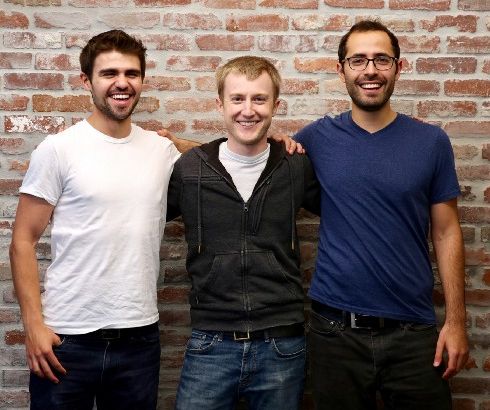
Segment was founded by Peter Reinhardt, Calvin French-Owen, and Ilya Volodarsky, three friends who met while studying at the Massachusetts Institute of Technology (MIT).[1] The founders shared a background in computer science and a strong interest in building tools that simplified complex technical problems. Their collaboration began not in a boardroom, but through shared academic and hacking experiences at MIT, where they developed a rapport based on technical rigor and a willingness to challenge conventional software development practices.
In 2011, the trio applied to Y Combinator’s Summer 2011 batch with a project called "Classroom."[2] Classroom was designed as an analytics tool for teachers, allowing them to track student engagement and performance in real-time. The idea stemmed from a desire to bring data-driven insights to education, a sector that was increasingly looking toward technology for improvement. However, as they built Classroom, the founders encountered a recurring technical hurdle: integrating with various analytics and data tools was cumbersome, fragmented, and error-prone.

The pivotal moment came when the founders realized that the code they had written to handle data collection and routing for Classroom was not just a feature of their app, but a general-purpose infrastructure tool. Peter Reinhardt later explained this insight in a 2015 post: "We realized that the analytics code we had written for Classroom was actually a general-purpose data infrastructure tool that any company could use."[10] This realization triggered a fundamental pivot. Instead of continuing to build a vertical application for education, they decided to extract the data infrastructure layer and productize it as a standalone service.
This pivot was not immediate nor without risk. The founders had to abandon their initial vision and user base to focus on a broader, more abstract problem: how to make customer data portable and usable across the entire software stack. They renamed the company Segment and began building a platform that would allow developers to send data to any tool via a single API. This shift from a consumer-facing app to a developer-focused infrastructure play defined Segment’s identity and set the stage for its future growth. The decision to pivot was driven by the founders' recognition that the pain point they experienced was universal among developers, not unique to education technology.
For Pro Subscribers
Unlock the full Segment teardown
Read the complete post-mortem, the rebuild playbook, and the exact reasons Segment is still worth studying now.