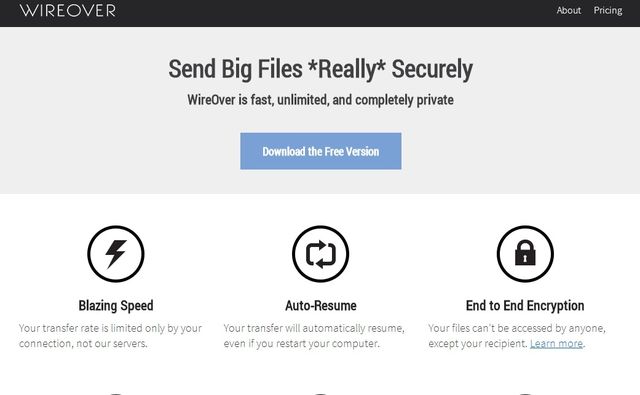
WireOver was a peer-to-peer file transfer startup that emerged from Y Combinator's Winter 2012 batch with an ambitious vision to solve large file sharing problems through desktop P2P technology[1]. Founded by quantitative finance veteran Trenton Ashburn and Amit Bansil, the company raised $270K from prestigious investors including Andreessen Horowitz, Bessemer Venture Partners, and SV Angel[2][3]. Despite strong investor backing and a solid technical product, WireOver shut down in April 2015 after failing to achieve meaningful market traction[4]. The company's failure illustrates the challenges of building desktop-first solutions in an increasingly mobile world and the difficulty of monetizing P2P infrastructure without network effects.
WireOver was born from personal frustration. Trenton Ashburn, who had spent several years building computational models for quantitative hedge funds before becoming a semi-professional cyclist, was struggling with existing file transfer solutions[5]. He found that available options were inadequate for sharing large, secure files—a pain point that would become WireOver's core value proposition[6].
Ashburn partnered with co-founder Amit Bansil to tackle this problem in 2011[7]. The two-person team based themselves in Cambridge, Massachusetts, positioning themselves within the region's robust tech ecosystem[8]. Their vision was straightforward: create a desktop application that would make large file transfers as simple as possible while maintaining security and privacy through peer-to-peer technology.
The founding team's technical background proved valuable in securing acceptance into Y Combinator's competitive Winter 2012 batch[9], providing them with both funding and mentorship to refine their approach.
2011 — WireOver founded by Trenton Ashburn and Amit Bansil[10]
January 2012 — Participated in Y Combinator Winter 2012 batch[11]
August 2012 — Completed final funding round[12]
January 2014 — Emerged from stealth with TechCrunch coverage[13]
April 1, 2015 — Company shut down[14]
WireOver developed a desktop application that leveraged peer-to-peer technology for private file sharing[15]. The team went through multiple failed prototypes before settling on a Python-based desktop client that supported both Windows and Mac platforms[16][17].
The core product addressed a genuine market need: enabling users to send large files easily without the limitations of email attachments or the security concerns of cloud-based solutions. By using P2P technology, WireOver could theoretically handle files of any size while maintaining user privacy through direct connections between sender and recipient.
The application's architecture bypassed traditional cloud storage bottlenecks, potentially offering faster transfer speeds for large files. However, this approach also meant that both parties needed to be online simultaneously and have the WireOver client installed—a significant friction point that would later prove problematic for adoption.
WireOver entered a crowded file sharing market that included established players like Dropbox, Google Drive, and WeTransfer, as well as emerging P2P solutions. The company positioned itself as the secure, unlimited alternative for users who needed to transfer large files without cloud storage limitations.
The desktop-first approach differentiated WireOver from web-based competitors but also limited its addressable market. By 2012-2014, the tech industry was rapidly shifting toward mobile-first and web-based solutions, making desktop applications feel increasingly outdated.
WireOver's P2P architecture offered theoretical advantages in speed and privacy, but these benefits came with significant usability trade-offs. Unlike cloud-based competitors that allowed asynchronous file sharing, WireOver required both parties to be online simultaneously with the application running.
WireOver implemented a freemium pricing strategy with three tiers. Basic file transfers were free and unlimited, addressing the core pain point of large file sharing[18]. Pro accounts cost $10 per month and added end-to-end encryption for enhanced security[19]. Enterprise accounts were priced at $40 per month, targeting business users with additional features[20].
This pricing structure faced several challenges. The free tier provided the core value proposition without requiring payment, making conversion to paid plans difficult. The $10 monthly Pro fee was relatively high compared to cloud storage alternatives that offered broader functionality. Enterprise pricing at $40 per month positioned WireOver as a specialized tool rather than a comprehensive file management solution.
The freemium model also meant that WireOver needed to achieve significant scale to generate meaningful revenue, but the desktop-only approach and synchronous transfer requirements limited viral growth potential.
We could not find comprehensive user growth or revenue metrics for WireOver. The company did acquire some enterprise clients, including music streaming service Grooveshark and Lightswitch[21], suggesting the product found some market fit among businesses with specific large file transfer needs.
However, the timeline reveals concerning traction signals. The nearly two-year gap between Y Combinator participation (January 2012) and public launch (January 2014) suggests the team struggled with product-market fit during development. Additionally, the company's final funding round occurred in August 2012, with no subsequent fundraising despite operating until April 2015—indicating difficulty attracting follow-on investment.
The limited public information about user metrics or growth milestones, combined with the eventual shutdown, suggests WireOver never achieved the scale necessary to sustain its business model.
WireOver shut down on April 1, 2015, approximately four years after founding[22]. The company provided no public explanation for the closure, and we could not find founder statements or detailed post-mortems explaining the specific reasons for failure.
The timing suggests runway exhaustion as a primary factor. With only $270K raised total and the last funding round in August 2012, the company likely burned through its capital over the subsequent 2.5 years without achieving sufficient traction to raise additional funding[23].
The failure appears to stem from a combination of product-market fit challenges and market timing issues. While WireOver solved a real problem, the desktop-first approach became increasingly misaligned with market trends toward mobile and web-based solutions. The synchronous transfer requirement created significant user experience friction compared to asynchronous cloud-based alternatives.
Desktop-first strategies require exceptional value propositions. WireOver's desktop application approach worked against broader industry trends toward web and mobile solutions. Founders building desktop applications today must offer compelling advantages that justify the additional friction of software installation and platform-specific development.
Synchronous requirements limit viral growth. WireOver's peer-to-peer architecture required both sender and recipient to be online simultaneously with the application installed. This created significant friction for user acquisition and sharing, limiting the viral growth potential that successful file sharing services typically rely on.
Strong investor backing doesn't guarantee success without traction. Despite raising from prestigious investors including Andreessen Horowitz and SV Angel, WireOver couldn't overcome fundamental product-market fit challenges. Investors can provide capital and guidance, but they cannot substitute for genuine user demand and sustainable unit economics.
Freemium models need clear conversion paths. WireOver's free tier provided the core value proposition without requiring payment, making it difficult to convert users to paid plans. Freemium strategies work best when the free tier creates demand for premium features, not when it satisfies the primary use case.
Market timing matters more than technical superiority. WireOver's P2P approach offered theoretical advantages in speed and privacy, but these benefits couldn't overcome the market's shift toward cloud-based, asynchronous file sharing solutions. Technical excellence must align with market trends and user behavior patterns to succeed.