Included with Pro$20/mo
Technical Specs are included with Pro
Upgrade to Pro to get implementation-ready specs for every company, the full report library, and 5 on-demand report requests per month.
- Implementation-ready specs for every company
- Full report and rebuild playbook library
- 5 on-demand report requests per month
Overview
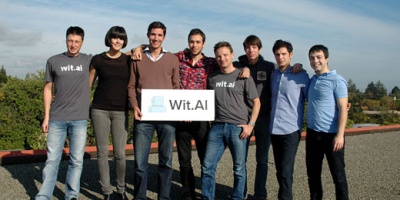
Wit.ai was a natural language processing (NLP) infrastructure company founded in Palo Alto, California in 2013 by Alexandre Lebrun, Laurent Landowski, and Willy Blandin. The company built a free, open API that converted natural language — speech or text — into structured, machine-readable data, enabling any developer to add voice or conversational interfaces to apps and devices. It participated in Y Combinator's Winter 2014 batch, raised a $3M seed round from Andreessen Horowitz in October 2014, and was acquired by Facebook in January 2015 — just 21 months after founding.[1]
Wit.ai did not fail. It succeeded precisely as designed: by positioning itself as infrastructure for the developer ecosystem — the "Twilio for natural language" — it attracted rapid adoption and became an acquisition target before it needed to solve the harder problems of monetization or platform competition. The acquisition was the intended outcome of the model, not an escape from failure.
The post-acquisition story is more instructive. Inside Facebook, Wit.ai launched Bot Engine in 2016, grew its developer community from 20,000 to 100,000+, then deprecated Bot Engine in July 2017 when Facebook integrated Wit.ai's core NLP directly into Messenger Platform 2.1.[2] The standalone product became redundant — not because it failed, but because it worked well enough to be absorbed. Lebrun and Landowski went on to co-found Nabla, a healthcare AI company, in 2019.

Founding Story
Alexandre Lebrun did not stumble into natural language processing. By the time he started Wit.ai in April 2013, he had already built and sold a company in the space.[3]
His first company, VirtuOz, was an enterprise virtual assistant startup — effectively "Siri for enterprise" — that Nuance Communications acquired in January 2013. The VirtuOz experience gave Lebrun both deep domain expertise and a clear set of lessons about what not to do the second time around. Educated at École Polytechnique and Télécom Paris,[4] Lebrun brought unusual technical credibility to a space that was still largely academic. His co-founders were Willy Blandin, who served as CTO,[5] and Laurent Landowski, whose specific background at founding is not documented in public sources.
The founding philosophy was a direct inversion of VirtuOz's approach. Lebrun's stated lesson from his first company was to avoid overhead entirely: no paperwork, no office, no fundraising before product. "With Wit.ai, he and his co-founder spent 6 months coding only."[6] When the company applied to Y Combinator, it was not yet incorporated, had no office, and had no money.[7] This was not naivety — it was a deliberate choice to compress the time between idea and product.
The conceptual model was equally deliberate. Lebrun described Wit.ai as "a fully open API for voice recognition and language understanding, based on machine learning, and inspired by open models like Stripe and Twilio."[8] The insight was that Stripe and Twilio had each created massive businesses by abstracting away complex infrastructure — payments and telephony respectively — so that developers could integrate them with a few lines of code. Lebrun believed NLP was the next infrastructure layer waiting to be commoditized. The target customer was not an enterprise buyer; it was every developer who wanted to add a voice or conversational interface to an app or device.
This framing had a second-order implication that Lebrun made explicit: if you want your product to be used by the many, you cannot sign the big enterprise contracts. "If you can afford to say no to big clients and partnerships...and if you want your product to be used by the many, I'd say don't sign the big contracts and focus on building a scalable startup."[9] VirtuOz had been an enterprise product with enterprise sales cycles and enterprise overhead. Wit.ai would be the opposite.
The company formally incorporated in Palo Alto in 2013, entered Y Combinator's Winter 2014 batch, and was named one of the top 8 startups from that class by TechCrunch.[10] By March 2014, the YC blog was describing it as "Twilio for natural language" — a framing that would define the company's positioning through its acquisition.
Timeline
- January 2013 — Alexandre Lebrun's prior company VirtuOz is acquired by Nuance Communications, freeing him to start Wit.ai.[3]
- April 2013 — Lebrun and Willy Blandin begin coding Wit.ai. The company is not yet incorporated, has no office, and has no money.[6]
- 2013 — Wit.ai formally founded in Palo Alto by Lebrun, Landowski, and Blandin.[11]
- January 2014 — Wit.ai participates in Y Combinator's Winter 2014 batch; TechCrunch names it one of the top 8 startups from the class.[10]
- March 2014 — YC publishes a profile describing Wit.ai as "Twilio for natural language"; Lebrun articulates the Stripe/Twilio infrastructure model publicly.[12]
- October 2014 — Wit.ai raises a $3M seed round led by Chris Dixon at Andreessen Horowitz. The platform already powers hundreds of apps, wearables, and home automation systems.[13]
- October 2014 — Hacker News discussion surfaces the structural risk for NLP startups: platform incumbents may absorb the functionality directly into the OS.[14]
- January 5–6, 2015 — Facebook acquires Wit.ai for undisclosed terms, approximately 21 months after founding. At acquisition, Wit.ai has 6,000 developers on its platform.[15] Facebook commits to keeping the platform open and free.[16]
- 2015 — Lebrun remains head of Wit.ai inside Facebook with 10 engineers; the team contributes to Facebook's "M" assistant.[17]
- January 2016 — Wit.ai launches Bot Engine to help developers build text-based conversational bots. Developer community stands at ~20,000.[18]
- July 27, 2017 — Wit.ai announces deprecation of Bot Engine and Stories UI. More than 90% of API calls are already going to the core NLP endpoint. Developer community has grown to 100,000+.[19] Wit.ai's NLP is simultaneously integrated into Messenger Platform 2.1.[20]
- February 1, 2018 — Bot Engine and Stories UI fully shut down; developers required to have migrated their apps.[21]
- 2019 — Alexandre Lebrun and Laurent Landowski co-found Nabla, a healthcare AI company, after Lebrun's ~4 years leading Facebook AI Research engineering.[22]
What They Built
Wit.ai's core product was a free, open API that took natural language — either spoken audio or typed text — and returned structured, machine-readable data. A developer building a smart home app, for example, could send the phrase "turn off the lights in the kitchen" to Wit.ai's API and receive back a structured JSON object identifying the intent ("turn off"), the entity ("lights"), and the location ("kitchen"). The developer's app could then act on that data without needing to build or train any NLP models itself.[23]
The machine learning layer was what made the product defensible, at least in theory. Every interaction processed by the API fed back into the model, improving its accuracy over time.[24] This created a data flywheel: more developers meant more interactions, which meant better models, which attracted more developers. The platform supported an unusually broad range of environments — RaspberryPi, Python, Ruby, JavaScript, Rust, and C — signaling an intent to be infrastructure for the entire developer ecosystem rather than a vertical product targeting one platform or use case.[25]
The user experience for a developer was deliberately simple. Sign up, define the "intents" and "entities" relevant to your app (e.g., "play music," "artist name"), provide a few example phrases, and the API would generalize from those examples to handle novel inputs. The platform handled the underlying model training, inference, and continuous improvement. Developers did not need machine learning expertise.
The product evolved in two distinct phases. Pre-acquisition (2013–2015), Wit.ai focused exclusively on the core NLP API — the infrastructure layer. Post-acquisition, in early 2016, the team launched Bot Engine, an expansion into dialog management that allowed developers to build multi-turn conversational bots, not just single-turn NLP queries.[18] Bot Engine included a visual "Stories" interface for designing conversation flows. This was a meaningful product expansion — moving up the stack from raw NLP into the application layer.
Bot Engine's deprecation in July 2017 is instructive about the limits of that expansion. The product had been designed for text-only interactions, but by 2017 the major messaging platforms — including Facebook Messenger itself — had introduced GUI elements: quick replies, persistent menus, web views, and carousels. These elements made purely text-driven conversational flows feel clunky and limited. The market had moved toward hybrid interfaces that combined NLP with visual components, and Bot Engine was not built for that world.[26]
The usage data confirmed the verdict. By July 2017, more than 90% of Wit.ai API calls were going to the core /message NLP endpoint, not to Bot Engine.[19] Developers were using Wit.ai as infrastructure — exactly as originally designed — and largely ignoring the higher-level abstraction. The team's own conclusion was direct: "By testing and learning from our Bot Engine beta, we determined that it made the most sense to refocus on pure NLP to make it accurate, reliable and scalable for everybody."[27]
What distinguished Wit.ai from alternatives at the time was the combination of openness, breadth of platform support, and the self-improving ML model. Competing approaches either required significant ML expertise to deploy or were locked to specific platforms. Wit.ai's free, open model lowered the barrier to entry to near zero.
Market Position
Target Customers
Wit.ai's primary customer was the individual developer or small development team building apps, devices, or services that needed to understand natural language. The product was explicitly not designed for enterprise buyers. Lebrun's stated philosophy — refusing large contracts in favor of scalable developer adoption — defined the customer profile as much as any product decision.[9]
In practice, this meant developers building across a wide range of categories: mobile apps, wearable devices, home automation systems, and — after 2016 — conversational bots on messaging platforms. By October 2014, the platform already powered hundreds of apps across these categories.[28] The breadth of supported languages and platforms (RaspberryPi, Python, Ruby, JavaScript, Rust, C) reflected a deliberate choice to serve the entire developer ecosystem rather than optimize for any single vertical.
Market Size
In 2013–2014, the market for developer-facing NLP infrastructure was nascent. The broader NLP and conversational AI market was real but fragmented — dominated by enterprise vendors (Nuance, IBM Watson) on one end and raw academic toolkits on the other. The developer-facing API layer that Wit.ai was building did not yet exist as a defined category.
The framing of "Twilio for natural language" was both a product positioning and a market sizing argument. Twilio had demonstrated that abstracting complex infrastructure into a simple API could create a large, durable business. If NLP was the next infrastructure layer, the addressable market was every developer building any application that involved human language — which, as voice interfaces and chatbots became mainstream, was an increasingly large share of all software development.
The bot platform wave of 2016 — triggered by Facebook's Messenger Platform launch and the subsequent explosion of chatbot development tools — validated the market thesis. Wit.ai's developer community grew from 20,000 to 100,000+ in roughly 18 months following the Bot Engine launch.[29] Whether that growth would have translated into a sustainable independent business is unknowable; the company was inside Facebook before it needed to answer that question.
Competition
The competitive landscape for developer-facing NLP APIs in 2014–2015 included several direct competitors: API.ai (founded 2010, acquired by Google in September 2016), Microsoft's Language Understanding Intelligent Service (LUIS, launched 2016), and Amazon Lex (launched 2016). All four companies were building roughly the same product — a developer API for intent recognition and entity extraction — at roughly the same time.
The structural dynamic that mattered most was not product differentiation but platform ownership. The companies best positioned to win the NLP infrastructure layer were the ones that already owned the platforms where NLP would be consumed: Google (Android, Search, Assistant), Microsoft (Azure, Cortana, Teams), Amazon (Alexa, AWS), and Facebook (Messenger). Each of these companies had a natural advantage that no independent NLP startup could replicate: distribution through their existing developer ecosystems, data from their existing user bases, and the ability to integrate NLP directly into their platforms at zero marginal cost to developers.
A Hacker News commenter identified this dynamic precisely in October 2014, the same month Wit.ai closed its seed round: "if you do something too close to [Google/Apple's] core competency, eventually Google/Apple will build the same feature directly into the operating system."[14] The comment was prescient. By 2016, every major platform had either acquired an NLP startup or built the capability natively.
Wit.ai's competitive position along the axes that mattered — distribution reach versus product depth — was strong on product depth and weak on distribution. The free, open model maximized developer adoption but created no moat against platform incumbents who could offer the same capability for free, bundled with their existing developer tools. The acquisition by Facebook was, in this light, the only viable long-term outcome for an independent NLP infrastructure company: get acquired by a platform before the platforms build it themselves.
Business Model
Wit.ai had no revenue model at the time of its acquisition. The platform was free and open, and no public statements from the company indicate that paid tiers or enterprise pricing were planned in the near term.[16] The absence of a revenue model is itself a signal: the company was explicitly optimizing for developer adoption over monetization, consistent with the Stripe/Twilio analogy Lebrun invoked repeatedly.
The Twilio/Stripe analogy, however, is imperfect in one important respect. Both Stripe and Twilio monetized through usage-based pricing — a percentage of each transaction or a per-API-call fee — which aligned revenue with the value delivered to developers. Wit.ai's free model created no equivalent mechanism. Whether the team intended to introduce usage-based pricing at scale is not documented in public sources.
With total funding of $3.12M across two rounds[30] and a team of approximately 10 engineers at the time of acquisition,[17] the company's burn rate was almost certainly low. A rough inference: at $150K–$200K per engineer per year (fully loaded, Palo Alto, 2014), a 10-person team would burn approximately $1.5M–$2M annually. At that rate, the $3.12M in total funding would have provided 18–24 months of runway — consistent with the timeline from founding to acquisition. The company was acquired before it needed to raise a Series A or generate revenue.
The acquisition price was never disclosed. No credible public estimate exists.
Traction
Wit.ai's developer adoption metrics tell a consistent story of rapid, compounding growth.
At the time of its October 2014 seed round — roughly 18 months after founding — the platform already powered hundreds of apps, wearable devices, and home automation systems.[28] Three months later, at the time of the Facebook acquisition in January 2015, the developer count had reached 6,000.[31]
Post-acquisition growth was faster. By the time Bot Engine launched in early 2016, the developer community had grown to approximately 20,000. By July 2017 — 18 months after the Bot Engine launch — it had grown to more than 100,000.[29] That 5x growth in 18 months coincided with the broader bot platform wave of 2016–2017, suggesting that Wit.ai benefited significantly from the tailwind of Facebook Messenger's developer ecosystem expansion.
The usage composition data is equally telling. By July 2017, more than 90% of API calls were going to the core NLP endpoint (/message), not to Bot Engine.[19] This means that of the 100,000+ developers on the platform, the vast majority were using Wit.ai as a pure NLP infrastructure layer — exactly the use case the company was originally built for. Bot Engine, despite driving the headline developer count growth, was not the primary value driver.
Post-Mortem
Wit.ai is not a conventional post-mortem subject. The company did not fail — it was acquired at a premium valuation (undisclosed, but by one of the world's largest technology companies) after 21 months of operation, with $3.12M in total funding. The founders went on to lead significant work inside Facebook and later co-founded another company together. By any conventional measure, this is a success story.
The more instructive analysis concerns what happened after the acquisition: why Bot Engine was deprecated, what that reveals about the structural limits of NLP infrastructure as an independent business, and what the Wit.ai trajectory tells us about the dynamics of developer-facing AI infrastructure companies more broadly.
The Bot Engine Overreach: Moving Up the Stack Into the Wrong Layer
The deprecation of Bot Engine in July 2017 is the central analytical event of the post-acquisition period. Bot Engine was launched in early 2016 to help developers build multi-turn conversational bots — an expansion from pure NLP (understanding a single utterance) into dialog management (managing a conversation across multiple turns). The product included a visual "Stories" interface for designing conversation flows.
The timing was not arbitrary. Facebook had launched its Messenger Platform in April 2016, triggering an explosion of chatbot development. Wit.ai was well-positioned to capture that wave, and the developer community growth from 20,000 to 100,000+ suggests it did. But the product assumption underlying Bot Engine — that conversational bots would be primarily text-driven — was invalidated by the platforms themselves. Facebook Messenger, Slack, and other messaging platforms introduced quick replies, persistent menus, carousels, and web views throughout 2016–2017. These GUI elements made purely text-driven conversation flows feel limited and awkward. Bot Engine was designed for a world that the platforms were actively moving away from.[26]
The team's response was to deprecate Bot Engine and refocus on pure NLP — a retreat to the original thesis. The usage data supported this decision: 90%+ of API calls were already going to the core NLP endpoint, not Bot Engine.[19] The market had already voted. But the deprecation also meant that 100,000+ developers who had built on Bot Engine needed to migrate their applications by February 1, 2018 — a significant disruption to the developer community that Wit.ai had spent years building.
Platform Absorption: The Feature Becomes the Infrastructure
The deeper structural dynamic is that Wit.ai's core NLP capability was absorbed directly into Facebook's platform. When Messenger Platform 2.1 launched in July 2017, it included built-in NLP powered by Wit.ai, integrated directly into the Send/Receive API.[20] Developers building on Messenger no longer needed to call Wit.ai's API separately — the NLP was already there.
This is the logical endpoint of the "Twilio for NLP" model when the acquirer is also the platform. Twilio succeeded as an independent company because the telecom infrastructure it abstracted was not owned by any single platform. Wit.ai's NLP infrastructure, once inside Facebook, could be integrated directly into the platform it served — making the standalone API redundant for the largest segment of its developer community.
The Hacker News commenter who flagged this risk in October 2014 — the same month Wit.ai closed its seed round — was describing exactly this dynamic: "if you do something too close to [Google/Apple's] core competency, eventually Google/Apple will build the same feature directly into the operating system."[14] In Wit.ai's case, the acquirer was Facebook, not Google or Apple, but the mechanism was identical.
The Governance Footnote: A Connected Acquisition
One structural detail of the acquisition warrants acknowledgment. The $3M seed round was led by Chris Dixon at Andreessen Horowitz in October 2014.[13] Marc Andreessen, the firm's co-founder, sits on Facebook's board of directors.[32] Three months after the a16z investment, Facebook acquired Wit.ai. No direct evidence exists that Andreessen's board position influenced the acquisition — the deal was initiated by David Marcus, Facebook's Messenger lead, who contacted Lebrun directly after Lebrun had been declining meetings with corporate development teams from other potential acquirers.[33] The governance connection is noted; its causal significance is unknown.
The Independent Scaling Problem: What Acquisition Avoided
The acquisition also foreclosed a harder question that Wit.ai never had to answer: how does a free, open NLP infrastructure company generate revenue at scale?
The Twilio/Stripe analogy that defined Wit.ai's positioning was always incomplete. Twilio and Stripe monetize through usage-based pricing — a percentage of each transaction or a per-API-call fee — which creates revenue that scales with adoption. Wit.ai's free model created no equivalent mechanism. At 6,000 developers and $3.12M in funding, the company could operate lean. At 100,000+ developers, the infrastructure costs would have been substantially higher, and the path to monetization — introducing paid tiers to a developer community that had adopted the product specifically because it was free — would have been a significant strategic challenge.
The acquisition by Facebook meant Wit.ai never had to navigate that transition. Whether the team had a credible monetization plan is not documented in public sources. The absence of any public discussion of revenue or pricing is itself a signal that monetization was not the near-term priority.
What Worked: The Infrastructure Thesis Validated
The core thesis — that NLP could be delivered as developer infrastructure on the Stripe/Twilio model, and that developer adoption at scale would create acquisition value — was validated completely. The company raised $3.12M, reached 6,000 developers in 21 months, and was acquired by Facebook. The founders remained together, contributed to significant work inside one of the world's largest technology companies, and went on to co-found another company. By the metrics that mattered for the model Lebrun was executing, Wit.ai was a success.
Key Lessons
-
Deliberately lean founding can compress the timeline to acquisition value. Lebrun's explicit decision to spend six months coding before incorporating, raising money, or signing clients — a direct lesson from VirtuOz — meant Wit.ai reached product-market fit with minimal overhead. The company raised only $3.12M total and was acquired 21 months after founding. The constraint was the strategy: by refusing to build enterprise overhead, the team forced itself to build a product that scaled without it.
-
The "Twilio for X" model works best when the infrastructure layer is not owned by a platform incumbent. Twilio succeeded as an independent company because no single platform owned the telecom infrastructure it abstracted. Wit.ai's NLP infrastructure, once acquired by Facebook, was integrated directly into Messenger Platform 2.1 in July 2017 — making the standalone API redundant for the largest segment of its developer community. The infrastructure thesis was correct; the independence thesis was not.
-
Usage data is the most honest product feedback. When Wit.ai announced Bot Engine's deprecation in July 2017, the decision was supported by a single data point: more than 90% of API calls were already going to the core NLP endpoint, not Bot Engine. The market had voted with its usage patterns before the team made the formal decision. Wit.ai's willingness to act on that signal — deprecating a product that had driven 5x developer community growth — reflects a discipline that is rare and instructive.
-
Moving up the stack from infrastructure to application layer requires a different product assumption. Bot Engine was designed for text-only conversational flows at a moment when messaging platforms were actively introducing GUI elements (quick replies, menus, web views). The product assumption — that bots would be primarily text-driven — was invalidated by the platforms Wit.ai's developers were building on. The lesson is not that Wit.ai made a bad product decision; it is that application-layer products are more exposed to platform shifts than infrastructure-layer products, and Wit.ai's original infrastructure positioning was more durable than its Bot Engine expansion.
-
Saying no to large enterprise contracts is a viable strategy only if the alternative path to value creation is credible. Lebrun's explicit philosophy — refusing big clients and partnerships in favor of scalable developer adoption — was validated by the acquisition outcome. But this strategy works only if developer adoption creates acquisition value before the company needs to generate revenue. Wit.ai's timeline (21 months to acquisition) made the strategy viable. A company executing the same strategy over five years, without an acquisition, would face a much harder monetization transition.
Sources
- The Perfect Startup Story of Wit.ai — Medium/Unexpected Token
- Wit.ai Blog: Sunsetting Stories (July 27, 2017)
- TechCrunch: Facebook Acquires Wit.ai (January 5, 2015)
- Alexandre Lebrun Profile — GetProg.ai
- Wit.ai Company Profile — Tracxn
- Wit.ai Company Profile — Golden
- YC Blog: Wit.ai is Twilio for Natural Language (March 18, 2014)
- Wit.ai Seed Round Announcement — Medium/Wit.ai (October 15, 2014)
- Hacker News: Wit.ai Seed Round Discussion (October 2014)
- Wit.ai Acquisition — Crunchbase
- Wit.ai Company Profile — Crunchbase
- TechCrunch: Wit.ai Shutting Down Bot Engine (July 27, 2017)
- Lessons from Alexandre Lebrun — Pear Healthcare Playbook (June 28, 2023)
- Money Morning: Facebook Buys Wit.ai (January 6, 2015)
- Alexandre Lebrun LinkedIn Profile
- France Alumni: Facebook Buys Out Wit.ai
Included with Pro$20/mo
Ready to rebuild Wit.ai?
Implementation-ready specs, every report, and 5 on-demand requests each month.
- Implementation-ready specs for every company
- Full report and rebuild playbook library
- 5 on-demand report requests per month