Overview
MilkRun was a Portland, Oregon-based food delivery startup founded in 2018 by Julia Niiro. The company built a hyper-local grocery logistics network connecting small farms directly to urban consumers, operating from 2018 until approximately 2022–2023. Its model was structurally distinctive: farmers brought goods to a neighborhood micro-depot, MilkRun staff aggregated orders, and the farmers themselves completed last-mile delivery on their way home — turning a cost center into a farmer income stream. The company passed through three accelerators in rapid succession — PIE (2019), Techstars (Spring 2020), and Y Combinator (Summer 2020) — before raising a $6M Series A from Spark Capital in November 2021.[1][2]
MilkRun failed because its operationally intensive, city-by-city model could not scale fast enough to justify venture returns, and the COVID-19 demand spike that fueled its 2020 growth masked unit-economics fragility that became fatal when the company attempted to raise a Series B in 2022.
The planned Series B never materialized. No funding announcements, expansion news, or company communications appeared after November 2021.[3] Crunchbase lists MilkRun as "permanently closed" and YC lists it as "Inactive." The broken local food supply chain Niiro set out to fix remains unsolved.
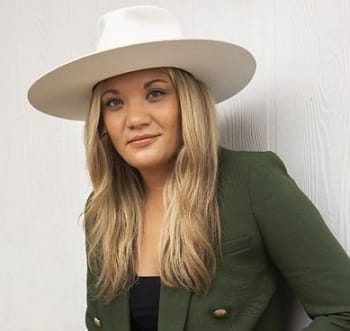

Image 1 / 2
Founding Story
Julia Niiro did not follow a conventional path to startup founder. In 2014, she left a digital marketing director role to become a farmer — a decision she later described with characteristic understatement: "I never really set out to become a farmer or really a startup founder, for that matter."[4] That detour proved foundational. Niiro went on to take over a USDA meat processor, Revel Meat Co., and then launched a wholesale company delivering meat to local Portland restaurants.[5] By the time she founded MilkRun, she had lived the supply chain problem from multiple angles — as a producer, a processor, and a distributor — giving her operational credibility that few food-tech founders could claim.
The company's origin was deliberately low-tech. In 2017, Niiro printed a paper order sheet listing items from four farms and handed it to ten preschool teachers. Word spread. By the end of 2017, over 1,000 customers had signed up in the Portland area.[6] She enlisted her uncle — a retired software engineer — to build the first platform, bought a refrigerated van off Craigslist, and made her first deliveries herself.[7] The company formally incorporated in 2018.
Crunchbase lists co-founders John Zeller and Robert Galanakis alongside Niiro,[8] though their specific roles and tenure are not documented in available sources. The operational leadership team that emerged included Jon DeMone as COO, Amy Glick as Head of Product and Merchandising, and Janette Kwan as Head of Technology.[9]
MilkRun's acceleration through three programs in roughly eighteen months — PIE in March 2019,[10] Techstars in Spring 2020,[11] and YC in Summer 2020[1] — reflected aggressive pursuit of capital and validation. It also reflected a persistent headwind: from the beginning, investors questioned whether the model could scale. Niiro later acknowledged that she "struggled to gain traction with the investment community because many thought the concept wasn't scalable."[12] That skepticism, it turned out, was prescient — not about the model's social value, but about its compatibility with venture-scale return expectations.
Niiro's 2019 TEDx Portland talk, "How To Save Farmers From Extinction," became a key part of MilkRun's public identity and helped attract both customers and investors.[13] She was also recognized as a 2019 INC Magazine Female Founder.[14] The public profile she built was genuine — rooted in lived agricultural experience — but it also positioned MilkRun as an impact company at a moment when impact-oriented framing would complicate the financial narrative with investors.
Timeline
- 2014 — Julia Niiro leaves digital marketing career to become a farmer; later takes over Revel Meat Co. and starts a wholesale restaurant delivery business[5]
- 2017 — MilkRun proto-launch: paper order sheet from 4 farms, 10 preschool teacher customers; over 1,000 Portland-area signups by year-end[6]
- 2018 — MilkRun formally founded in Portland, OR; uncle builds first platform; Craigslist refrigerated van purchased for first deliveries[7]
- December 2018 — MilkRun launches out of beta in Portland[15]
- March 2019 — MilkRun presents at Portland Incubator Experiment (PIE) accelerator demo day[10]
- May 2019 — ~3,000 consumers and 11 restaurants served in Portland; farmer-as-deliverer model publicly described[16]
- June 2019 — 300% growth in monthly orders and revenue, 500% growth in monthly signups since December 2018 beta launch[15]
- 2019 — Julia Niiro delivers TEDx Portland talk: "How To Save Farmers From Extinction"; recognized as INC Magazine Female Founder[13][14]
- Spring 2020 — MilkRun participates in Techstars accelerator[11]
- March 2020 — COVID-19 lockdowns begin in Oregon; March 2020 sales equal all of 2019 combined; 11x growth over six weeks[17]
- Summer 2020 — MilkRun participates in Y Combinator Summer 2020 batch; full-year 2020 growth reported as 15x[1]
- November 2020 — MCJ newsletter features MilkRun; expansion to Seattle and Austin noted; plans for Dallas, Atlanta, Denver, Chicago, Detroit, and New York described[9]
- November 5, 2021 — MilkRun announces $6M Series A led by Spark Capital; 300+ farm partners reported[2]
- November 8, 2021 — Julia Niiro publicly states plans to raise a Series B in 2022 and expand to the East Coast[18]
- 2022 — Planned Series B does not materialize; no company communications found after November 2021[3]
- 2023 — Crunchbase lists MilkRun as "permanently closed"; YC lists company as "Inactive"; exact closure date unknown[1][3]
What They Built
MilkRun's core product was a weekly local grocery delivery service — but its real innovation was logistical, not technological.
The Consumer Experience
Customers signed up online and received a weekly window to browse and order from a curated selection of local produce, meat, dairy, eggs, and bread. There was no subscription fee, no delivery fee, and no minimum order requirement.[19] Orders were delivered contactlessly to the doorstep on a fixed weekly schedule. Each delivery included recipe suggestions and cooking videos from a team of chefs — a content layer designed to drive repeat engagement and reduce churn.[20] Niiro framed the ambition simply: "I want to make it as easy to buy from local farmers as it is to book a stay in someone's house or call a ride."[21]
The Logistics Model
The structural innovation was in the supply chain. Rather than building a conventional warehouse-and-driver delivery operation, MilkRun inverted the model. Farmers drove their goods into the city and dropped them at a neighborhood micro-depot. MilkRun staff aggregated products to fulfill individual orders. The farmers then completed last-mile delivery to consumers on their way back out of the city — a route they were already driving.[16] This turned delivery from a cost center into supplemental income for farmers, while eliminating the need for MilkRun to hire and manage a dedicated driver fleet.
The Technology Stack
MilkRun built proprietary software to manage micro-hub inventory and calculate farmer delivery routes, and provided farmers with a navigation app for drop-offs.[22] The consumer-facing platform was built on a custom Shopify implementation, with Klaviyo handling CRM and email marketing.[23] This was a pragmatic, not bespoke, tech stack — the proprietary investment was concentrated in the logistics layer, where the real differentiation lived.
The Farmer Value Proposition
MilkRun paid farmers 50% of every consumer dollar spent — compared to approximately 10% in the conventional supply chain.[24] Inc. Magazine reported the figure as 70% when delivery compensation was included.[25] The discrepancy likely reflects different cost accounting methods or time periods, but the directional claim — that MilkRun dramatically improved farmer economics relative to wholesale — was central to both the farmer recruitment pitch and the investor narrative.
Product Evolution
MilkRun launched in Portland in December 2018 as a single-city operation.[15] By late 2021, it had expanded to Seattle and Austin, with plans for seven additional cities including Dallas, Atlanta, Denver, Chicago, Detroit, and New York.[9] The stated ambition — to become "the largest farmer's market in the country"[26] — implied a national marketplace model. The operational reality was a city-by-city, relationship-by-relationship build that required deep local knowledge in every market.
What made MilkRun different from alternatives was the combination: no fees for consumers, dramatically better economics for farmers, and a delivery model that used existing farmer travel rather than dedicated logistics infrastructure. The question was never whether the model worked. It did. The question was whether it could work at venture scale.
Market Position
Target Customers
MilkRun targeted two distinct customer groups simultaneously, and the success of the model depended on both.
On the consumer side, MilkRun's primary customer was the urban professional willing to pay a premium for locally sourced, farm-direct food — a segment that overlapped with farmers market shoppers, CSA (community-supported agriculture) subscribers, and Whole Foods regulars. The no-fee, no-minimum structure was designed to lower the barrier relative to CSA boxes (which typically require upfront seasonal commitments) and to compete on convenience with conventional grocery delivery. The weekly cadence and recipe content layer were retention mechanisms targeting households that wanted to cook with seasonal ingredients but lacked the time to visit a farmers market.
On the supply side, MilkRun targeted small and mid-sized farms — specifically those within driving distance of urban micro-depots — that were underserved by conventional wholesale channels. The pitch was straightforward: higher revenue share, direct consumer relationships, and delivery income on routes farmers were already driving.
Market Size
The U.S. local food market is real but structurally fragmented. USDA data has consistently shown that direct-to-consumer food sales — farmers markets, CSAs, farm stands — represent a small fraction of total food spending, though the segment grew meaningfully through the 2010s. The online grocery delivery market, by contrast, expanded dramatically during COVID-19, with U.S. online grocery sales reaching an estimated $95–100 billion by 2022. MilkRun sat at the intersection of these two trends — local food and online grocery delivery — which gave it a compelling narrative but also meant it was competing for a subset of a subset: consumers who wanted both local sourcing and delivery convenience.
The company's own framing — "the largest farmer's market in the country" — implied a TAM defined by the full farmers market and local food economy, which USDA estimated at roughly $12 billion in direct farm sales annually. Whether MilkRun could capture a meaningful share of that market through a city-by-city logistics build was the central unanswered question.
Competition
MilkRun's competitive position was genuinely differentiated along one axis — farmer economics and supply chain authenticity — but vulnerable along several others.
Direct competitors in the local food delivery space included Imperfect Foods, Misfits Market, and a wave of CSA-adjacent startups. These companies competed on price and convenience but sourced from larger distributors rather than individual farms, giving them supply chain efficiency that MilkRun's model deliberately sacrificed. Good Eggs, the closest structural analog, built a similar farm-direct delivery model in San Francisco and raised over $50M before pivoting toward a broader grocery assortment — a cautionary data point that MilkRun's investors would have known.
Conventional grocery delivery — Instacart, Amazon Fresh, Whole Foods delivery — competed on selection, speed, and price. MilkRun could not match selection or speed, and its premium positioning meant it was not competing on price. Its differentiation was authenticity and farmer relationships, which are real but difficult to defend at scale.
The structural competitive problem was that MilkRun's model required building a two-sided marketplace from scratch in every city — recruiting farms, establishing micro-depot infrastructure, calibrating routing software, and acquiring consumers — without the distribution advantages that incumbents possessed. Instacart had existing consumer relationships and retailer integrations. Amazon had Prime. Whole Foods had physical stores. MilkRun had a logistics innovation that worked in Portland and needed to be rebuilt, relationship by relationship, in every new market.
The competitive landscape did not shift because of a platform move or a feature absorption by an incumbent. It shifted because the capital environment that had funded growth-at-all-costs food delivery companies tightened sharply in 2022, and MilkRun's operationally intensive model was among the least defensible in a capital-constrained environment.
Business Model
MilkRun's revenue model was straightforward in structure and challenging in practice: the company earned a margin on food sales, with no delivery fees, no subscription fees, and no minimum order requirements.[19] The consumer paid a premium over conventional grocery prices; MilkRun retained the spread between consumer price and farmer payout.
The farmer payout structure was the defining constraint. MilkRun committed 50–70% of every consumer dollar to farmers (including delivery compensation),[24][25] leaving 30–50% to cover micro-depot operations, software, customer acquisition, and corporate overhead. For a company with 38 employees[27] operating in three cities on approximately $8.5–10M in total funding,[28] the implied annual burn rate was almost certainly in the range of $4–6M — a figure that would have consumed the $6M Series A within 12–18 months without meaningful revenue growth.
MilkRun never disclosed revenue figures in any available public source. The absence of revenue data is itself a signal: companies with strong unit economics typically surface those numbers in fundraising announcements. The Series A press materials emphasized growth multiples (15x in 2020) and mission framing rather than revenue, margin, or path to profitability — a pattern consistent with a company whose financial fundamentals were not yet investor-ready for a Series B in a tightening market.
The no-fee model eliminated the revenue levers — subscription fees, delivery fees, surge pricing — that competitors used to improve unit economics. Product margin was the only lever, and that margin was structurally committed to farmers.
Traction
MilkRun's pre-COVID growth was strong in percentage terms but modest in absolute scale. After launching out of beta in December 2018, the company reported 300% growth in monthly orders and revenue, and 500% growth in monthly signups by June 2019.[15] By May 2019, it served approximately 3,000 consumers and 11 restaurants in Portland.[16]
COVID-19 produced an extraordinary demand spike. In the six weeks following Oregon's March 2020 lockdown orders, MilkRun grew 11x.[17] MilkRun employee Keith Bidwell stated: "In the month of March [2020], our sales were the same as what we'd done in the entire previous year."[29] Full-year 2020 growth was reported as 15x.[30]
By November 2021, MilkRun had expanded to Seattle and Austin, was working with 300+ farm partners, and was planning expansion to seven additional cities.[9][31]
No traction data exists for 2022 or beyond. No retention or cohort data is available to assess whether COVID-acquired customers remained active as pandemic-era grocery anxiety normalized. The 15x growth figure was the headline metric used to raise the Series A — but whether that growth reflected durable product-market fit or a temporary demand shock driven by grocery store anxiety is impossible to determine from available data.
Post-Mortem
Primary Cause: The Scalability Trap Was Real
The investors who initially passed on MilkRun because the model "wasn't scalable"[12] were likely correct in a venture-returns sense, even if wrong about the model's social value. Niiro herself identified the core tension: "Can you scale locally in every market fast enough? Yes and no. So the art of it now is how do we generate that demand on a national level without compromising and only adding to our ability to localize."[32] That question was never answered.
Each new city required rebuilding the farmer network from scratch — identifying farms within delivery range, negotiating revenue-share agreements, onboarding farmers onto the routing software, and establishing micro-depot infrastructure. It required local consumer acquisition with no network effects from existing markets. And it required calibrating the logistics model to local geography, farm density, and consumer demand patterns. Portland's success did not transfer to Seattle or Austin; it had to be recreated.
This is a structurally different problem from software scaling. A SaaS product deployed in a new city costs approximately zero in marginal infrastructure. A MilkRun city launch required capital, local relationships, and operational expertise that could not be replicated by writing code. The company's own insight — that "food is based primarily in distribution and logistics, and that's a much different problem than other types of scalable B2B software"[33] — applied with equal force to MilkRun itself.
Secondary Cause: COVID Demand Masked Unit-Economics Fragility
The 15x growth in 2020 was real. It was also almost certainly misleading as a signal of sustainable product-market fit. The March 2020 demand spike — when a month of sales equaled all of the prior year — was driven by grocery store anxiety, not by MilkRun's product differentiation. Consumers who signed up because they feared crowded supermarkets were not the same as consumers who would maintain weekly local food delivery habits at a premium price point once grocery stores reopened.
The Series A, raised in November 2021, was priced on the strength of 2020 growth metrics. By the time MilkRun was attempting to raise a Series B in 2022, the COVID tailwind had subsided, and the company needed to demonstrate that its customer base was durable and its unit economics were improving. No evidence suggests it could make that case. The absence of any Series B announcement, combined with the complete silence from the company after November 2021, strongly implies the fundraise failed.
Tertiary Cause: The No-Fee Model Eliminated Financial Flexibility
MilkRun's consumer value proposition — no subscription fee, no delivery fee, no minimum order — was a genuine competitive advantage for customer acquisition. It was also a structural constraint on the business. Every revenue lever that competitors used to improve unit economics was deliberately removed.
Instacart charges delivery fees and a membership subscription. CSA boxes charge upfront seasonal commitments. Even Imperfect Foods introduced a delivery fee. MilkRun's model left product margin as the only revenue source, and that margin was structurally committed to farmers at 50–70% of consumer spend. The remaining 30–50% had to cover micro-depot operations, software development, customer acquisition, and a 38-person team across three cities. The math was tight in the best of circumstances and likely negative at the company's actual scale.
Niiro's "thousand true fans" philosophy — building advocates among customers, farmers, and employees rather than chasing pure growth[34] — was philosophically coherent. It was also strategically insufficient for a venture-backed company that had accepted capital from Spark Capital, Rise of the Rest, and Y Combinator, all of which required returns that "thousand true fans" cannot generate.
Structural Cause: The 2022 Venture Market Contraction
The macro environment that MilkRun encountered in 2022 was among the most hostile in a decade for its specific profile. Rising interest rates triggered a flight from growth-at-all-costs investing. Impact-oriented companies — which MilkRun was, by any reasonable characterization — faced particular skepticism as investors demanded clearer paths to profitability. Capital-intensive, operationally complex food logistics companies with no disclosed revenue and a COVID-inflated growth story were precisely the category that 2022 venture investors were avoiding.
The investor framing at the Series A is instructive. Spark Capital's Kevin Thau emphasized Niiro's "great story, vision and passion" and her uniqueness as a founder.[35] Revolution's Anna Mason emphasized "reimagining a new supply chain infrastructure."[36] Neither quote mentioned unit economics, margin structure, or path to profitability. In a 2021 market, mission framing could carry a Series A. In a 2022 market, it could not carry a Series B.
The $6M Series A was a relatively small round for a company planning national expansion across seven additional cities. With 38 employees and operations in three markets, the implied burn rate would have consumed that capital within 12–18 months — placing the Series B raise squarely in the 2022–2023 window when the market had turned.
What Was Not Tried (Or Not Documented)
No public record exists of MilkRun attempting to pivot its model, reduce headcount, contract geographically, or introduce fees to improve unit economics before closing. No shutdown announcement, founder post-mortem, or acquisition record has surfaced. The wind-down mechanism is entirely undocumented. It is possible the company attempted some of these remedies; it is equally possible the runway simply ran out before any structural change could take effect.
Key Lessons
-
The farmer-as-deliverer model worked operationally but could not be replicated at venture speed. MilkRun proved in Portland that turning farmers into last-mile delivery agents was logistically viable and economically superior for producers. But each new city required rebuilding the farmer network, micro-depot infrastructure, and local consumer base from scratch — a process that took months, not weeks. When MilkRun attempted to expand to Seattle and Austin simultaneously while planning seven additional cities on ~$10M in total funding, it was attempting to compress a relationship-intensive, city-by-city build into a venture timeline that assumed software-like scaling. The model worked; the timeline didn't.
-
COVID-era growth multiples are a dangerous basis for a Series A valuation when the underlying demand driver is external. MilkRun's 15x growth in 2020 and its 11x six-week spike in March 2020 were real numbers driven by a real external shock — grocery store anxiety during lockdowns. The Series A raised in November 2021 was priced on those metrics. By 2022, when the Series B needed to be raised, the COVID tailwind had normalized and MilkRun needed to demonstrate durable retention among customers acquired during a period of unusual demand. No evidence suggests it could. Companies that raise on COVID-era growth without cohort data showing post-COVID retention are building on a foundation that the next fundraise will expose.
-
Eliminating all consumer fees creates a customer acquisition advantage and a unit-economics trap simultaneously. MilkRun's no-fee, no-minimum model was a genuine differentiator against CSA boxes and subscription grocery services. It also removed every revenue lever — delivery fees, membership fees, surge pricing — that competitors used to improve margins. With 50–70% of consumer spend committed to farmers, the remaining margin had to cover all operating costs. This was a deliberate philosophical choice, consistent with Niiro's "thousand true fans" ethos, but it left the company with no financial flexibility when growth slowed and investors demanded a credible path to profitability.
-
Impact-oriented investor framing can obscure financial fundamentals until the next fundraise. The Series A press materials for MilkRun emphasized mission, supply chain reimagination, and founder story. None of the investor quotes referenced unit economics or profitability timelines. This framing was sufficient to close a $6M round in November 2021. It was insufficient to close a Series B in 2022, when the venture market shifted from rewarding mission to demanding margin. Startups that allow impact framing to substitute for financial transparency in early rounds may find that the gap becomes unfillable when market conditions change.
-
Niiro's own diagnosis of why food-tech competitors fail applied directly to MilkRun. In a 2019 press release, Niiro wrote that competitors "eventually realize that food is based primarily in distribution and logistics, and that's a much different problem than other types of scalable B2B software. That realization often comes too late."[33] MilkRun understood this problem better than most — it built real logistics infrastructure rather than a software layer over an existing supply chain. But understanding the problem did not exempt MilkRun from it. The distribution and logistics challenge that killed competitors also constrained MilkRun's ability to scale fast enough to justify the venture capital it had accepted.
Sources
- Y Combinator — MilkRun Company Profile
- BusinessWire — MilkRun Announces $6 Million Series A Funding Round Led by Spark Capital (November 5, 2021)
- Crunchbase — MilkRun Organization Profile
- Snowshoe.io — Julia Niiro Founder Profile
- LinkedIn Pulse — MilkRun 2017 Review, Julia Niiro (March 9, 2018)
- MilkRun — About Us Page
- MCJ Newsletter — CTSS Episode 17: MilkRun (November 12, 2020)
- GeekWire — Portland Incubator Experiment Demo Day (March 18, 2019)
- Grasshopper Bank / Medium — Founder Spotlights: Julia Niiro, CEO & Founder of MilkRun (June 17, 2020)
- MilkRun — About Founder Page
- Inc. Magazine — Julia Niiro Profile
- MilkRun Blog — Press Release (June 12, 2019)
- The Spoon — At Portland's MilkRun, Groceries Get Dropped Off by a Farmer (May 7, 2019)
- Willamette Week — The Founder of MilkRun Is Awash in Demand for Eggs and Berries (May 9, 2020)
- Built In Austin — MilkRun Raises $6M (November 8, 2021)
- TechCrunch — MilkRun Lands New Capital to Deliver Farm-Fresh Groceries (November 5, 2021)
- Organic Produce Network — In Their Words: MilkRun's Keith Bidwell