
Noble
Winter 2021InactiveRisk decisioning platform
Pressure-test this opportunity
Turn this teardown into a decision-ready prompt for ChatGPT, Claude, or your agent.
Risk decisioning platform
Turn this teardown into a decision-ready prompt for ChatGPT, Claude, or your agent.
Noble (legal entity: Benga Inc.) was a Tel Aviv-based risk decisioning and credit underwriting infrastructure platform founded in January 2021 by Tomer Biger and Moran Mishan. [1] The company participated in Y Combinator's Winter 2021 batch and raised $18.1 million across a seed round and a $15 million Series A led by Insight Partners. [2] Noble's product offered modular, no-code components for KYC/KYB identity verification, credit underwriting, and portfolio risk monitoring — targeting fintechs, B2B marketplaces, and vertical SaaS companies building embedded finance products.
Noble's core thesis was directionally sound, but the company was caught in a compounding trap: its primary customers were fintechs and embedded-finance builders, a segment that collapsed in valuation and spending power in 2022–2023 precisely as Noble was trying to scale. Better-capitalized incumbents with broader platform reach could absorb credit decisioning as a bundled feature, leaving Noble without a defensible wedge.
Noble ceased operations sometime after October 2023 without a public shutdown announcement, post-mortem, or founder statement. [3] YC lists the company as "Inactive" and PitchBook as "Out of Business." No acquisition or acqui-hire has been reported. [4]
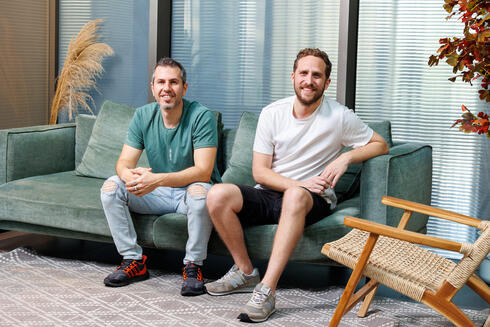
Image 1 / 1
Tomer Biger and Moran Mishan did not meet at a hackathon or through a warm introduction. They met on the job, building credit infrastructure from scratch inside WeWork.
Biger had spent four years before WeWork at Behalf, a B2B lender, working as both a Risk & Fraud Analyst and a Product Manager. [5] That experience gave him a ground-level view of how painful it was to build underwriting systems: assembling data pipelines, configuring decisioning logic, wiring together compliance checks, and then maintaining all of it as the business evolved. When he joined WeWork in May 2018, he found himself doing it again — this time to screen and assess the creditworthiness of prospective tenants. [6]
Mishan was the engineer on the other side of that problem. Before WeWork, he had worked as a software engineer at Woo.io. At WeWork, he and Biger built the underwriting infrastructure together — and both came away with the same conclusion: this work should not have to be done from scratch by every company that wants to extend credit. [6]
The founding thesis was explicitly autobiographical. As Biger later put it: "We wanted to create the infrastructure I wish I had when I was building lending products." [7] The broader vision was ambitious: "Noble's mission is to remove these barriers and enable the inevitable movement of lending experiences from offline to online in the same way that payment processing platforms built the new payment rails that enabled the explosive growth in online payments witnessed over the past decade." [8]
The Stripe analogy was deliberate and investor-friendly. Biger was positioning Noble not as a point solution but as foundational infrastructure — the layer that would sit beneath every company that wanted to offer credit. The company incorporated as Benga Inc. and joined Y Combinator's Winter 2021 batch, which provided early validation, network access, and the seed of the investor syndicate that followed. [9]
At the time of YC, Noble had 12 employees listed on its profile — a small but focused team with complementary domain expertise. [9] Biger brought the risk and product credibility; Mishan brought the engineering execution. The founding team's shared experience building the exact problem they were now solving gave them a credibility advantage in early sales conversations that pure-infrastructure founders often lack.
Read the complete post-mortem, the rebuild playbook, and the exact reasons Noble is still worth studying now.