
Piggy
Summer 2017InactiveApp for Indians to make investments in mutual funds, manage their…
Pressure-test this opportunity
Turn this teardown into a decision-ready prompt for ChatGPT, Claude, or your agent.
App for Indians to make investments in mutual funds, manage their…
Turn this teardown into a decision-ready prompt for ChatGPT, Claude, or your agent.
Piggy was an Indian fintech startup that offered commission-free direct mutual fund investing through a mobile app, positioning itself as the "mobile-first Vanguard for India." Founded in 2016 by two ex-Nomura investment bankers and an ex-Amazon technologist, the company entered Y Combinator's S17 batch and spent nearly nine years building a real product with real users—reaching 100,000+ customers and $250M in assets under management at its peak.Yet Piggy never raised meaningful institutional capital beyond its YC batch, and the Indian direct mutual fund distribution market it pioneered quickly attracted far better-funded competitors: Groww, Kuvera, and Zerodha Coin all offered the same commission-free model with orders of magnitude more capital behind them.
Piggy's core failure was structural: it built a thin intermediary business in a commoditizing market, where UX quality and a first-mover advantage in commission-free distribution proved insufficient moats against capitalized rivals.The platform shut down on June 30, 2025, with 30 days' notice and no public explanation.
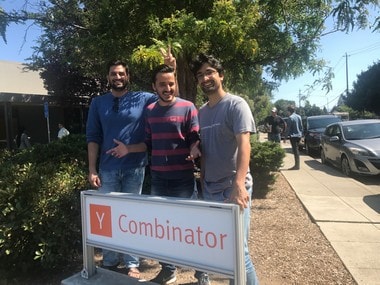
Image 1 / 1
Nikhil Mantha and Ankush Singh spent their early careers in fixed income analytics at Nomura, one of Japan's largest investment banks. They understood financial products from the inside—how funds were structured, how commissions flowed, and how the distribution system was designed to benefit intermediaries rather than retail investors. Kunal Sangwan brought a different perspective: a product and engineering background from Amazon, where he had worked on consumer-facing technology at scale. The three co-founders came together around a shared frustration that was personal before it was professional.
"When we did learn about mutual funds, there was nothing out there that was easy to sign up and use, that didn't charge a bomb or hidden commissions," the founders wrote in their 2017 Hacker News launch post. "We got together over many late night conversations and decided to build it ourselves." [1]
The founding insight was straightforward: India's mutual fund market was growing roughly 40% year-over-year toward $300 billion in assets, driven by a new smartphone-equipped middle class that had money to invest but no accessible, trustworthy way to do it. [2] Traditional distributors earned trail commissions—ongoing fees paid by fund houses for directing investor money—which created a structural conflict of interest. Distributors recommended funds that paid them more, not funds that performed better. The 2013 introduction of "direct plans" by SEBI (India's securities regulator) had created a legal pathway to bypass distributors entirely, but no consumer-friendly product had been built on top of it.
Mantha, Singh, and Sangwan incorporated the company as Valuevest Technologies Private Limited in 2016, initially operating out of Powai, Mumbai—India's financial capital and a natural base for a fintech startup with banking roots. [3] [4] They raised a $19,900 angel round in March 2016 to get started. [5]
The framing they chose—"mobile-first Vanguard for India"—was deliberate and sharp. Vanguard had built its reputation in the United States by eliminating fund manager conflicts of interest through a mutual ownership structure and passing cost savings to investors. Piggy could not replicate Vanguard's ownership model, but it could replicate the ethos: no commissions, no hidden fees, investor interests first.
Acceptance into Y Combinator's Summer 2017 batch validated the concept and prompted a relocation from Mumbai to Bengaluru, India's technology hub, where engineering talent was more accessible. [6] The move signaled a deliberate shift from a finance-first to a technology-first operating posture—a necessary evolution for a company that would need to compete on product quality.
Read the complete post-mortem, the rebuild playbook, and the exact reasons Piggy is still worth studying now.