
Playmaker
Winter 2021InactiveCommunity for fantasy sports players
Pressure-test this opportunity
Turn this teardown into a decision-ready prompt for ChatGPT, Claude, or your agent.
Community for fantasy sports players
Turn this teardown into a decision-ready prompt for ChatGPT, Claude, or your agent.
Playmaker was a Copenhagen-based mobile app founded in 2019 by Neil Murray and Helder Almeida, targeting the 7–8 million players of Fantasy Premier League (FPL). [1] The app offered league-specific group chats, live match updates, and player statistics — a social layer designed to sit on top of the existing FPL platform. Accepted into Y Combinator's Winter 2021 batch, Playmaker raised $125,000 from YC as its sole institutional round. [2]
Playmaker failed because it built a thin social layer on top of a third-party platform without a defensible product moat or a credible path to monetization. The features it offered — group chat, live scores, league standings — were already approximated for free by WhatsApp, Twitter, and Reddit, and the FPL platform itself could have absorbed them natively at any time.
Playmaker entered liquidation proceedings around August 2021, approximately six to seven months after completing YC W21. [3] No acquisition, acqui-hire, or public post-mortem followed. Neil Murray subsequently returned to full-time angel investing through The Nordic Web Ventures, the fund he had originally launched in 2017. [4]
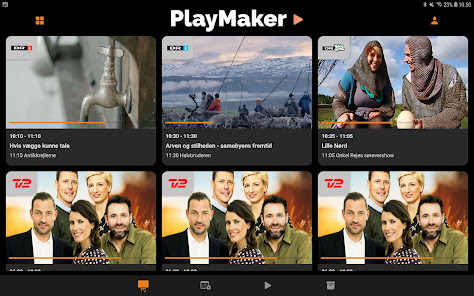
Image 1 / 1
Neil Murray is a British entrepreneur who relocated to Copenhagen in 2013. [5] Before Playmaker, he founded The Nordic Web, a media publication covering the Nordic startup ecosystem, which gave him both a platform and a network in the region's tech community. He was also a committed Fantasy Premier League player — and it was that personal obsession that seeded the Playmaker idea.
Murray's validation method was straightforward: he built a dedicated FPL Twitter account and grew it to nearly 20,000 followers within a year. [6] The audience signal was real. FPL players were hungry for community content, commentary, and real-time discussion. Murray interpreted this as evidence of a product gap — a centralized social home for fantasy sports players that didn't yet exist.
The founding announcement, published on Medium on February 12, 2020, captures the moment the idea became a company: "I called Helder (who I've worked with on multiple projects over the last six years) and a week later we founded Playmaker." [7] Helder Almeida, the co-founder Murray called, was a designer and product lead with experience at Shape, GoMore, and Linkfire — a complementary profile to Murray's media and community background. [8] Two engineers, Aksel and Anders, completed the founding team of four. [9]
The founding narrative was driven by personal passion rather than a discovered market gap — a distinction that matters. Murray knew the FPL audience intimately, but his primary evidence of demand was a content following, not a product user base. Content audiences consume; product users engage, retain, and pay. The two behaviors are structurally different, and conflating them is a common early-stage trap.
The initial vision was ambitious: Playmaker would be the "social infrastructure layer" for all fantasy sports, starting with FPL and expanding across major games globally. [10] The long-term aspiration — enabling full-time fantasy sports play, creator monetization, and prize pools — positioned the company closer to an eSports ecosystem than a simple community app. [11] Whether that vision was achievable with a five-person team and $125,000 in institutional capital is the central tension of the company's short life.
Pre-YC, Playmaker was backed by an undisclosed group of angel investors described as "a mixture of fantasy sports enthusiasts, individuals who were instrumental in the rise of eSports into the mainstream and experienced consumer tech angels." [12] The amounts raised from angels were never disclosed publicly.
Read the complete post-mortem, the rebuild playbook, and the exact reasons Playmaker is still worth studying now.