Posterous was a blogging service that let people publish by email. Twitter acquired the company in March 2012, and Posterous shut down on April 30, 2013. (YC; Twitter announcement; Archived shutdown notice)
Founder Sachin Agarwal said the shutdown would let the team focus its work on Twitter. The acquisition kept the team working at Twitter; it did not keep Posterous available as a blogging service. (Archived shutdown notice; Twitter announcement)
Pressure-test this opportunity
Explore the risks and possibilities with a prompt for ChatGPT, Claude, or your agent.
AI-researched. Check the sources before making a decision.
Familiar input expands participation. Email let people contribute without learning a publishing dashboard or registering. Preserve that advantage when adding organizer tools.
Test each audience separately. New users confronted accumulated choices, while established users learned them gradually. A redesign must test both groups.
Count the distribution loop. Private groups reached unregistered email participants. Website visitors alone miss part of the product’s usage and cannot establish retention.
Acquisition changes service incentives. Twitter benefited from the team’s work while customers lost their archives’ host. Posthaven’s paid sequel makes continuity an explicit product commitment.
Overview
Posterous made publishing feel like sending an email. Founded in 2008, the Summer 2008 YC company hosted attachments, created posts, and distributed them to other services. Twitter acquired it in March 2012. The service closed on April 30, 2013. [1][2]
Its story has two distinct problems: an expanding interface confused new users, and the acquisition shifted the team's work toward Twitter. Product complexity is documented. The surviving evidence cannot quantify its effect on retention or establish acquisition as the only financial option.
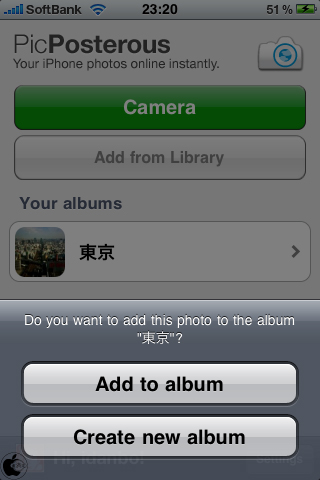
PicPosterous brought photo posting to the iPhone.
Garry Tan discusses Posterous on This Week in Startups.
Image 1 / 2
Founding Story
YC identifies Sachin Agarwal and Garry Tan as the original founders. Tan credited Agarwal with the initial prototype. His reaction was: “Email had a certain elegance to it”. Publishing through a familiar tool removed the need to learn another editor before sharing anything. [1][3]
Agarwal's background was backend engineering on Apple's Final Cut Pro. He wanted easier photo sharing from his iPhone. The shared posting address and automatic blog creation emerged from implementation choices, then became onboarding advantages. [4]
Brett Gibson's route into the company matters. Contemporary acquisition reporting places his full-time arrival with Slinkset in June 2009. Posthaven later describes him as a Posterous cofounder. These accounts support his importance without placing all three founders together at the original launch. [5][6]
Garry Tan discusses Posterous on This Week in Startups
Timeline
2008: Agarwal and Tan founded Posterous and joined YC's summer batch. [1]
June 2009: Acquired Slinkset; Gibson joined full-time. [5]
January 2010: Coke Zero's Department of Fannovation used Posterous for a fan-idea contest. [7]
February 2011: Posterous disclosed substantial private-group and email usage. [9]
June 2011: YC announced Tan as a part-time partner. [10]
September 2011: Launched Spaces; raised $5 million, bringing reported total funding to $10.14 million. [11]
March 12, 2012: Twitter announced the acquisition and initially promised uninterrupted service. [12]
February 2013: Announced an April 30 closure and export period. [2]
What They Built
Email was both a publishing interface and a distribution channel. Tan described hosting and converting photos, music, video, and documents; sending content to friends by email; and posting to connected networks and existing blogs. A person could contribute from devices that already supported email. [3]
The distinction from aggregation tools was useful. Posterous accepted a post first, then sent it outward. Contemporary user Mark Krynsky contrasted this with tools that collected activity from separate services. He also described duplication problems when experimenting with connected posting workflows. [13]
Groups let multiple people contribute to one archive. Spaces unified sites and groups around controlled sharing. Agarwal acknowledged accumulated code and design debt, a long rebuild, and delayed user testing. He also acknowledged insufficient testing with existing users. “There was no one call to action” captured the interface problem. The redesign sought to repair that confusion; it was not proof that the group-sharing use case lacked demand. [4]
Market Position
Posterous served casual publishers and people distributing media across several networks. Steve Rubel's migration from his established blog attracted attention to this workflow. Krynsky's contemporary account links that endorsement to growing interest while distinguishing publishing outward from collecting a lifestream. [13]
It also supported organized publishing. Participant Mike Maddaloni described the3six5, a collaborative daily journal created by Daniel Honigman and Len Kendall. The project's stated reason for choosing Posterous was easy contribution and distribution. This was a concrete use beyond personal status updates. [14]
Coke Zero's Department of Fannovation demonstrates a brand application: fans submitted ideas to improve NCAA basketball cheering, with email-based moderation and promotion through Facebook and Twitter. Coca-Cola’s March announcement confirms a 64-idea voting bracket. Neither account establishes a repeatable enterprise sales business. [17][7]
Tumblr offered a competing publishing destination. Facebook and Google also addressed selective sharing. Posterous's strengths were familiar input and email participation, which reached people outside a conventional registered-user feed.
Business Model
Funding supported a largely free service. The reported financing total reached $10.14 million in September 2011. Public evidence here does not establish burn rate, cash remaining at acquisition, investor returns, or the purchase price. [11]
In February 2011, Liz Gannes described revenue as negligible and reported early advertising revenue-sharing and business-account discussions. This supports a monetization weakness at that point. It does not prove that paid publishing could never work or that the team had exhausted every independent option. [9]
Traction
Gannes reported 9.2 million monthly visitors across Posterous and custom domains, measured directly by Quantcast, in February 2011. The company disclosed 134,000 groups; 76% were private. SendGrid supported 230,000 group emails daily, and 30% of participants were unregistered. These measures describe different kinds of usage. Blog count, visitors, registered members, and email recipients are not interchangeable. [9]
Agarwal affirmed approximately 15 million monthly unique visitors at the Spaces-era ZURB talk. Later press supplied smaller estimates without enough matching measurement scope to calculate a reliable percentage decline. A reliable comparison requires the same geography, domain coverage, and distribution channels at both dates. [4]
Post-Mortem
The interface grew faster than new users could learn it. Existing users learned additions gradually. New arrivals encountered the accumulated choices at once. The documented repair required product, design, and infrastructure work. This suggests an operating failure to test the entry experience continuously, rather than a simple prohibition against adding features.
Private sharing had evidence behind it. Email participation and private groups were established before Spaces. Treating the redesign as arbitrary strategic drift erases those signals. What remains unknown is whether the redesign improved activation, retention, or revenue enough to support an independent company.
The acquisition changed the beneficiary of the team's work. Twitter initially said Spaces would remain available. Its engineers and product staff joined Twitter initiatives. The later closure statement explicitly directed effort toward Twitter, and users had to export their archives. The shutdown is clear; the private negotiations and financial alternatives remain unavailable. [12][2]
Tan later argued that the team focused too much on Tumblr and missed the Instagram opportunity. This is a founder's retrospective interpretation, not evidence that a different product choice would have reproduced Instagram's outcome. [15]
The sequel changes the rebuild premise. Tan and Gibson's Posthaven remains available. It charges $5 monthly for up to ten blogs and offers email posting, contributors, mailing lists, privacy, and custom domains. Its founders describe the acquisition as meaningful for team and investors while regretting the closure. Their continued product contradicts claims that this publishing job disappeared. [6][16]