
Tress
Winter 2017InactiveTress is a social community for black women's hairstyles. We are…
Pressure-test this opportunity
Turn this teardown into a decision-ready prompt for ChatGPT, Claude, or your agent.
Tress is a social community for black women's hairstyles. We are…
Turn this teardown into a decision-ready prompt for ChatGPT, Claude, or your agent.
Tress was a vertical social network built for Black women to discover, share, and discuss hairstyles.Founded by three African women software engineers who met at the Meltwater Entrepreneurial School of Technology (MEST) in Accra, Ghana, the company launched in Nigeria in February 2016 and attracted 60,000 users across 90+ countries within its first year — genuine traction that validated a real, underserved need.
The core thesis of failure is straightforward: Tress could not convert that early community into revenue before its funding ran out.The company raised only $120,000 in total — from MEST and Y Combinator — and chose an advertising-dependent monetization model that required millions of engaged users to generate meaningful income.
It never came close to that scale.Compounded by an Android-only product that blocked access to higher-value Western advertising markets, persistent distribution challenges the founders identified from day one, and a silent shutdown in May 2018 that left its community with no explanation, Tress became a cautionary study in the gap between product-market fit and business-model fit.

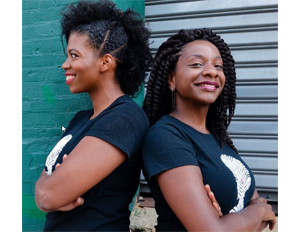
Image 1 / 2
The founding of Tress began not with a whiteboard session but with a personal frustration. In 2014, Cassandra Sarfo — a software engineer from Ghana — saw a hairstyle online that she loved but could not identify the weave name, find the stylist, or source the product. [1] The problem was mundane in the way that the best startup ideas often are: a specific, recurring annoyance with no adequate solution. Sarfo brought the idea to two colleagues she had met at MEST in Accra, Ghana's most prominent technology entrepreneurship program. [2]
The three co-founders — Priscilla Hazel (CEO, from Ghana), Esther Olatunde (CTO, from Nigeria), and Cassandra Sarfo (CPO, from Ghana) — validated the insight quickly. [3] As Sarfo later told Newsweek: "We realized it was an issue almost all black women face. So we decided to build something that would collate information on hair and hairstyles." [4]

The team's technical credentials were real. Between them, they had built health social networks, developed mobile apps for farmers across Africa, and worked on consumer brand marketing for companies including Nike. [5] What they lacked — and what would matter enormously later — was direct experience building and monetizing consumer social platforms at scale.
The founders described their motivation in terms that were both personal and principled: "We are software engineers who are extremely passionate about solving a challenge that we personally face. We did not want to wait for someone else to maybe provide a future solution to our current problem." [6]
After meeting at MEST, the team spent approximately five months building the product before launching in Nigeria in February 2016. [7] That execution velocity — from idea to live product in under half a year — demonstrated genuine engineering discipline. The harder problem, as they would discover almost immediately, was not building the product but growing it.
Read the complete post-mortem, the rebuild playbook, and the exact reasons Tress is still worth studying now.