Overview
Akita Software built tools that helped developers understand the application interfaces their software used in production. Founded by Jean Yang in 2018, the company first tried to test APIs for security problems. Customers often lacked the API specifications that testing required, so Akita turned toward discovering and monitoring APIs from observed traffic.[1]
Postman acquired Akita in 2023 and brought its technology and team into its API platform. The deal put production discovery beside Postman’s existing tools for designing and testing APIs. Postman now offers Insights, a product that watches traffic and reports endpoint metrics; it remains an active competitor to any new entrant.[2] [3]
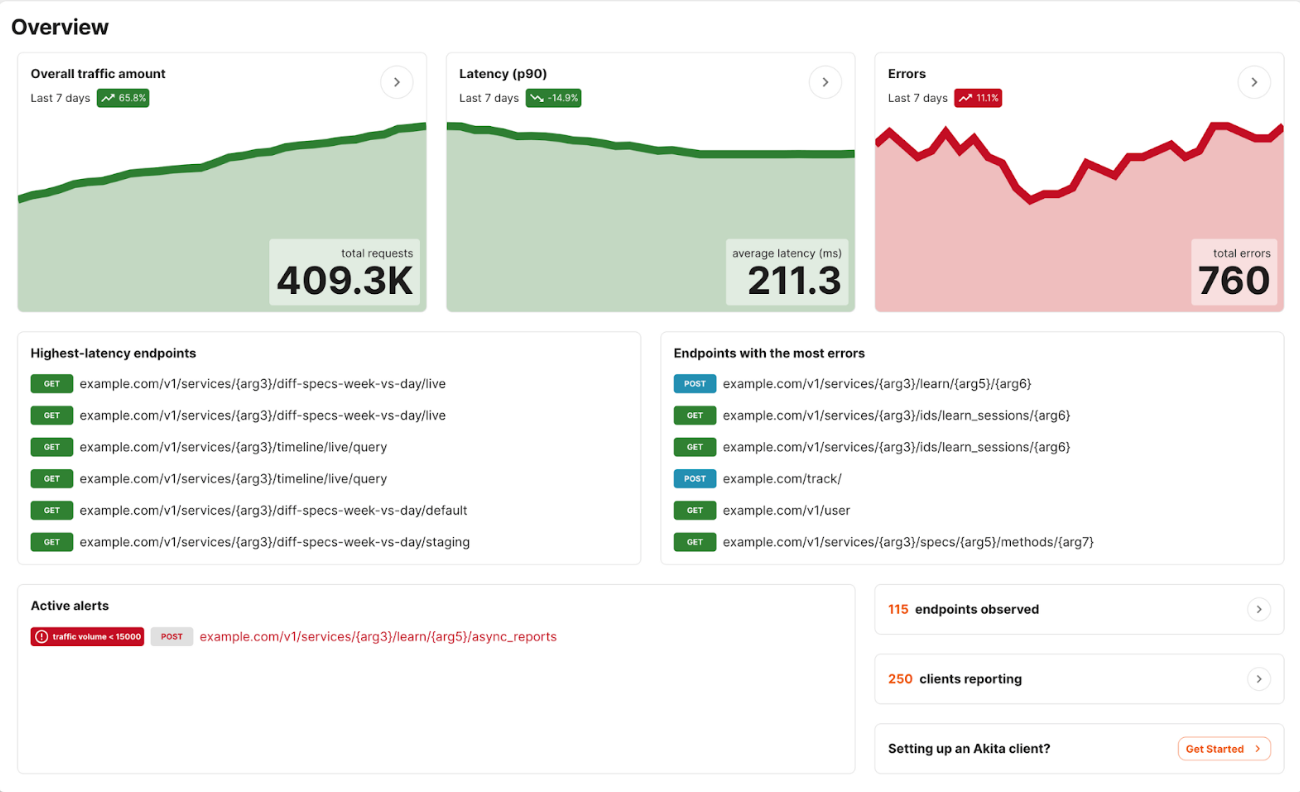
Image 1 / 1
Founding Story
Yang studied programming languages and software verification, earned a PhD at MIT, and taught computer science at Carnegie Mellon. Conversations with industry teams led her to a different reliability problem: software was becoming a collection of services whose interactions were difficult to understand. She saw the API, the interface through which programs exchange requests, as both a source of complexity and a useful place to observe it.[1]
In summer 2018 Yang took leave from Carnegie Mellon to join an accelerator and raise funding. She said she explored working with two potential cofounders but ultimately started alone. Andreessen Horowitz and Sequoia co-led Akita’s seed round; Yang did not disclose its size in the interview.[1]
The earliest product was an API fuzzer: software that sends varied inputs to find defects. It exposed an unexpected prerequisite. Yang said teams liked the demonstrations but lacked specifications that described their APIs. Before testing the first major customer’s system in 2019, Akita spent months producing a specification for it. Similar requests encouraged a change in direction.[1]
Timeline
- 2018: Yang founded Akita and began raising seed funding.[1]
- 2019: The team built an API specification while pursuing a first major fuzzing contract.[1]
- 2020: Akita pivoted toward API observability; Yang said the change took roughly a year and required different skills.[1]
- July 2023: Postman announced that it had acquired Akita.[2]
- September 2023: Yang introduced an alpha of Postman Live Insights and its agent.[4]
What They Built
Akita observed API traffic to identify endpoints, the individual addresses where software services accept requests. It could surface endpoints that a team had not documented and report slow or failing calls. That approach gave developers a starting map of production behavior without first requiring them to prepare an exhaustive specification.[2] [5]
The change from fuzzing to observation altered the immediate user job. Instead of asking a security team to test a known interface, Akita could help developers discover what was running and where errors appeared. That did not eliminate security’s importance. It moved the product toward a prior question: which interfaces exist and how do they behave?[1]
Market Position
Target Customers
Akita targeted teams operating services connected through APIs. Its pitch mattered where developers inherited systems with incomplete or outdated documentation. Postman said the acquisition would make discovery and monitoring available to organizations using its API platform.[2]
Market Size
A precise addressable market for Akita’s original product is not established in the available evidence. Broad API-management estimates would not show how many teams could deploy its agent or would pay for production discovery.
Competition
Akita competed for attention and budget with observability and API-management products. TechTarget identified Postman’s competitors as including SwaggerHub, MuleSoft, Azure API Management, and Google Apigee. Their strengths varied: an API gateway can manage traffic at an existing control point, while Akita sought to infer what was already happening across services.[5]
Business Model
Public sources establish venture funding and enterprise use, but do not establish Akita’s revenue, pricing, or customer acquisition cost. Yang described working toward a major customer contract in 2019. That evidence is too narrow to estimate unit economics or claim a particular level of commercial success.[1]
Outcome and evolution
A missing prerequisite became the product
The fuzzer depended on an accurate API specification. The customers who most needed help sometimes lacked one. Akita’s team spent months building a specification for a prospective customer, then saw the same problem elsewhere. The pivot addressed that dependency, but it also changed the product and the team needed to build it. Yang said the transition took about a year.[1]
Distribution joined production visibility
Postman already held collections of API requests used in development. Akita added a view of interfaces actually receiving production traffic. Bringing these together offered a path from an observed error to the requests developers already used. Postman said it acquired Akita to add discovery and monitoring; financial terms were not disclosed in the announcement.[2]
The successor is not hypothetical. Postman’s documentation describes Insights as an Enterprise feature that infers endpoints and reports errors and latency. It also lists deployment and traffic limitations: it supports specified REST environments and does not support encrypted traffic or gRPC and GraphQL in the listed troubleshooting guidance. Those limits are potential research leads for a new entrant, not proof of an unserved market.[3] [6]
Key Lessons
- Validate prerequisites. Akita’s fuzzer demos attracted interest, but absent API specifications blocked deployment. The work required before a product can operate may reveal a separate customer need.
- Budget for a real pivot. Moving to observability took about a year and required different people. A change in product category can change the company’s technical work as well as its pitch.
- Distribution can complement technical depth. Postman brought an established API workflow to Akita’s production-discovery technology. The sources explain the rationale; they do not disclose investor returns.