Overview
Allset began in 2015 with a simple promise: let a diner reserve a table, order, and pay before arriving, so a restaurant lunch fits into a workday. Ukrainian entrepreneurs Stas Matviyenko and Anna Polishchuk built the service after working on restaurant loyalty and payment products. It later expanded into pickup and contactless ordering.[1] [2]
In June 2024, SoundHound AI announced the purchase of key Allset assets and said its team would join SoundHound. The buyer wanted restaurant relationships and ordering capabilities for a voice commerce service. The public announcement does not establish that SoundHound bought the entire legal company or disclose the price.[3]
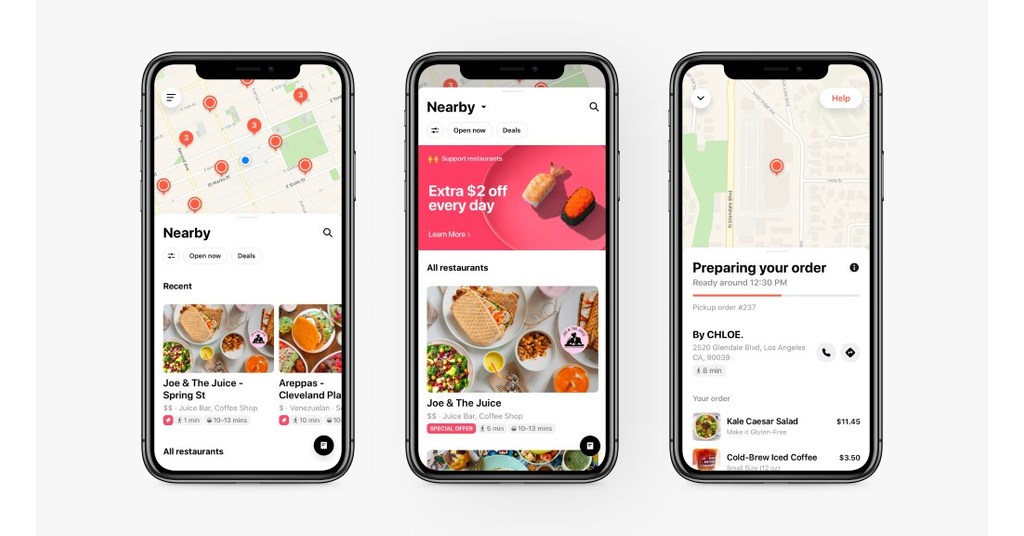
Image 1 / 1
Founding Story
Allset grew out of the founders' earlier work in Ukraine. Matviyenko told Food+Tech Connect that the team had built Advice Wallet, a restaurant loyalty program, and Settle, a mobile payment app. He said Allset began with the team's own need to make lunch at nearby restaurants faster. Polishchuk was its chief operating officer; Matviyenko said in 2017 that the two had worked together for six years.[1]
“Allset was created to make lunch for our team easier and faster at nearby restaurants,” Matviyenko told Food+Tech Connect in 2017. In the same interview, he described the main growth constraint: “Our biggest challenge right now” was adding enough restaurants to meet demand. The team enrolled and trained restaurants remotely as it entered cities. Those statements describe the company's own experience, not independently audited results.[1]
A September 2015 company announcement described a pilot at 12 restaurants in San Francisco and Palo Alto. The initial product combined a reservation, meal selection, and payment. The company charged a dollar to the diner and a dollar to the restaurant per order at launch.[4]
Timeline
- 2015: Allset launched its lunch reservation and preorder app after a restaurant pilot.[4]
- 2017: The company reported more than 13,000 monthly orders across over 400 restaurants in six cities.[1]
- 2020: As dining rooms closed, Allset expanded contactless takeout and raised an $8.25 million Series B that included Andreessen Horowitz.[2]
- 2024: SoundHound announced its purchase of key assets and the transfer of the Allset team.[3]
What They Built
A diner selected a restaurant, booked a time, chose food, and paid in advance. The restaurant received the order before arrival and could prepare the meal around the reservation. That combined several steps usually split among a reservation service, a server, and a payment terminal. It also gave the kitchen a timing problem: the experience depended on the food and diner arriving at roughly the same time.[4]
By 2020, Allset had added takeout and contactless service. Its July announcement described phone-based ordering for pickup and dine-in, payment, and order tracking. Restaurants could use contactless ordering for people already on site as well as customers arriving to collect food.[5]
The change also altered the supply problem. An office lunch marketplace needed enough participating restaurants near workplaces during a narrow meal window. Pickup could serve customers closer to home, but it placed Allset against established ordering channels. Matviyenko told TechCrunch that new partners during the first pandemic restrictions were often in residential neighborhoods rather than the office districts Allset had previously emphasized.[2]
Market Position
Target Customers
The original customer was a worker who wanted a seated restaurant meal without spending most of a lunch break waiting. Restaurants received advance orders and an opportunity to turn tables faster. Later, pickup and contactless ordering broadened the use case to diners who wanted to collect food or order from a phone on site.[4] [5]
Market Size
Allset did not disclose a reliable addressable market figure in the sources reviewed. Restaurant counts show the company's reported reach, not the number of active ordering customers or profitable locations.
Competition
Reservation services helped diners find tables, while delivery and takeout apps handled orders. Allset's early distinction was combining a reserved table with an advance meal order. In 2020 Matviyenko told TechCrunch that delivery would require substantial logistics and might require a partner. Avoiding a delivery fleet made the model lighter, though it left collection to the diner.[1] [2]
The competitive bar has since moved. Toast's 2026 documentation describes commission-free restaurant-owned online ordering and an integration that places direct ordering links in Google Search and Maps. SoundHound offers voice pickup ordering at participating U.S. restaurants. A new entrant would need to solve a specific distribution or operational problem beyond enabling an online order.[6] [7]
Business Model
Allset's pricing changed with its product. At launch, it charged both sides a fixed dollar per order. By 2017, VentureBeat reported a 12% restaurant commission. In 2020, Allset waived its 12% commission for contactless takeout and offered a limited free period for new restaurants. These are different dates and products, not one stable fee schedule.[4] [8] [2]
The company did not disclose revenue, contribution margin, customer acquisition cost, or deal proceeds in the sources reviewed. Funding and restaurant counts alone cannot establish whether its marketplace was profitable.
Traction
Matviyenko reported 13,000 monthly orders and over 400 restaurant partners in six cities in April 2017. By July 2020, Allset said it partnered with more than 3,000 restaurants in 18 U.S. cities. At the asset deal announcement in 2024, SoundHound reported nearly 7,000 restaurant partners. These figures are company or buyer claims, and partner counts do not show how many restaurants were actively receiving orders.[1] [5] [3]
Outcome and evolution
A lunch product met a sudden change in where people ate
Allset depended early on a dense match between office workers and nearby participating restaurants. In March 2020, Matviyenko reported that orders fell about 60% as distancing measures began, then recovered by about 10% as the company added restaurants. Allset responded with contactless pickup and fee waivers. The figures describe an immediate shock and response; they do not establish the company's later financial performance or the reason for its asset sale four years later.[2]
Restaurant access became valuable to a buyer
SoundHound had voice technology and distribution through devices and restaurants. Allset brought restaurant relationships, integrations, ordering experience, and a team that knew the marketplace. SoundHound's 2024 announcement said it would continue Allset's services and offer voice products to participating restaurants. Its 2025 earnings call said Allset was bringing merchant locations to automotive customers. The company's 2026 support documentation describes voice ordering for pickup at participating restaurants, but it does not quantify Allset's separate contribution.[3] [9] [7]
A restaurant network can be useful even when the original consumer interface changes. That is a plausible explanation for SoundHound's interest, supported by its stated plans and subsequent comments. The sources do not disclose the seller's alternatives, purchase price, or returns, so they cannot establish whether the transaction met the founders' or investors' expectations.
Key Lessons
- Local supply is part of the product. Allset's preorder flow only worked where a useful restaurant had joined. Its own founder identified restaurant onboarding as a growth constraint in 2017.
- A narrow use case can change quickly. The office-lunch focus gave Allset a clear initial customer, but pandemic restrictions moved demand away from the places it had served.
- Track pricing by use case and date. Fixed fees, restaurant commissions, and temporary waivers each describe a different stage. A single fee number would misrepresent the business.
- An asset sale has a precise scope. SoundHound identified key assets and a joining team; the announcement does not support claims about a whole-company purchase or financial outcome.
Sources
- Food+Tech Connect founder interview
- TechCrunch on Allset's 2020 funding and pandemic response
- SoundHound asset acquisition announcement
- Allset's 2015 launch announcement
- Allset contactless ordering announcement
- Toast ordering integration documentation
- SoundHound voice ordering support
- VentureBeat on Allset's 2017 funding
- SoundHound 2025 earnings call