
Alterya
Summer 2022AcquiredProtecting Humans from Scams
Pressure-test this opportunity
Explore the risks and possibilities with a prompt for ChatGPT, Claude, or your agent.
Protecting Humans from Scams
Explore the risks and possibilities with a prompt for ChatGPT, Claude, or your agent.
Alterya turned recipient-side scam intelligence into an enterprise product and a strategic acquisition. Founded in Tel Aviv in 2022, it joined YC Summer 2022. Chainalysis acquired it on January 13, 2025 and continues to market it under the Alterya name. The February 2026 OKX adoption announcement provides a concrete sequel: pre-withdrawal screening connected to Chainalysis KYT. YC, acquisition, OKX.
The commercial insight was that a valid account holder can authorize a scam payment. Passing authentication does not establish whether the recipient or surrounding investment story is legitimate. Alterya collected evidence outside the payment ledger and brought it into institutional risk decisions.
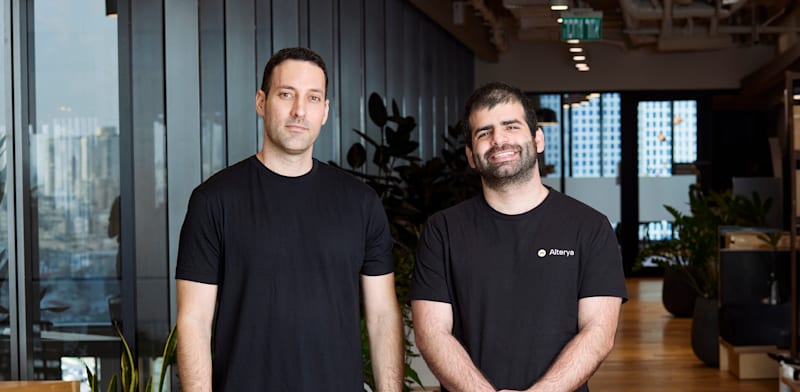
Image 1 / 1
Elad Fouks and Shahaf Gonen brought cybersecurity experience to the company. YC describes Fouks as a former Unit 8200 group leader and special-operations officer. Gonen led a cybersecurity team, graduated from the Talpiot program and previously worked at Google. How they met is not established by these accounts. YC.
In Nyca’s June 2024 interview, Fouks described starting with DeFi infrastructure, reassessing after the bear market, and interviewing fintech firms about authorized fraud. Public blockchain data helped the team test models before accumulating proprietary labels. He named Coinbase and Crypto.com deployments, emphasized signed proofs of concept, and identified payment-risk leaders as champions. Investor Tom Brown supplied introductions; Brown and Izzi Steinhaus helped compare payment markets. The team had 20 people, its first U.S. account executive, and a planned solutions-engineer hire. Reserve-duty absences created operational pressure, though Fouks reported continued traction. Nyca interview.
These are founder-reported milestones, rather than audited sales figures. Their significance is the connection between technical discovery and a buyer who could integrate the result.
Authorized push-payment fraud involves deception that induces the account holder to send money. Conventional access controls can succeed while the payment remains harmful. The recipient and external communication therefore supply a different set of signals.
Chainalysis describes Alterya as connecting web, social and chat signals to crypto wallets, digital wallets and bank accounts. Its listed tools include entity scores, evidence, dashboards, webhooks, an explorer and watchlists. It markets both payment screening and mule/synthetic-account detection. Alterya product.
The operating sequence is collection, identifier linkage, risk assessment, then an institution’s intervention or review. A link is only as useful as its provenance and freshness. Shared names, copied domains and disputed outcomes can create false associations; an absent match does not establish safety.
The OKX announcement describes domain screenshots, reconstructed chats and evidence-backed alerts within pre-withdrawal screening. That places evidence beside the payment decision, rather than leaving it in a separate investigation tool. OKX.
The buyers are exchanges, payment providers and financial institutions with fraud operations and integration capacity. The acquisition announcement names Binance, Coinbase and Block; it includes a Coinbase risk leader’s account of identifying wallets linked to known investment scams. Chainalysis.
Loss totals show the importance of the problem, not the software market. The FTC recorded more than $12.5 billion in reported U.S. consumer fraud losses in 2024, up 25%; that population extends beyond Alterya’s addressable payment flows. FTC.
UK reimbursement protections began October 7, 2024 for qualifying domestic transfers. Current PSR guidance specifies eligible customers, scope, exceptions and a £85,000 maximum claim. Those obligations create prevention incentives; they do not make every flagged transfer reimbursable or every hold justified. PSR guidance.
Current competition overlaps the recipient and evidence layers. Feedzai’s ScamAlert accepts screenshots and feeds pre-payment context into bank risk systems. BioCatch Trust shares recipient-side intelligence between participating banks. Alterya itself remains available from Chainalysis. A new entrant must test a specific workflow advantage against these products and existing institutional controls. Feedzai, BioCatch Trust.
The observed sales motion was enterprise engagement and proofs of concept. Public material does not disclose prices, revenue, gross margin, retention or burn. Integration and evidence quality are necessary costs, but headcount cannot reliably reconstruct them.
CTech estimated acquisition consideration near $150 million; Globes reported $160 million. The parties’ announcement does not disclose the price. Neither estimate establishes realized investor returns. Ownership, preferences and consideration terms remain unavailable. CTech, Globes.
At acquisition, Chainalysis reported monitoring more than $8 billion monthly, protecting 100 million end users and detecting $10 billion sent to scams during 2024. These are different measures: monitored volume, covered users and detected transactions do not equal losses prevented. Announcement.
In February 2026, it reported more than $23 billion monthly monitoring and more than $300 million in losses prevented over the previous twelve months. It also cited up to 60% fraud reduction at some exchanges using prevention tools including Alterya. The published account supplies no independent audit or matched-control method; the result cannot be promised to another customer. Named adoption and continued product availability support operating continuity more firmly than a universal accuracy claim. OKX announcement.
The acquisition thesis is complementary evidence plus distribution. Chainalysis explicitly framed the transaction as combining granular real-time fraud data with blockchain intelligence. Its previous Hexagate acquisition also showed a broader move into prevention. The 2026 KYT connection provides a later example of that stated integration rationale. Acquisition, OKX.
The sequence supports an inference: Alterya could become more useful when its external recipient signals reached institutions already using Chainalysis. It does not prove that independence was impossible, that the team exhausted its capital, or that the deal was necessary for survival. Talent, R&D expansion and the acquirer’s product strategy also appear in contemporaneous reporting. CTech.
The original pivot illustrates a separate mechanism. Moving toward a known payment-risk buyer made technical capability commercially testable. The next proof had to be a usable institutional decision, with credible evidence and acceptable false positives. A signed pilot supported discovery; it was not a substitute for measured production performance.