Overview
Argo AI built a self-driving system with backing from Ford and Volkswagen. The Pittsburgh company reached public ride pilots and driverless testing, then lost its strategic investors' support before establishing a sustainable independent business. Ford announced the wind-down in October 2022. [1] [7] [12]
Commercial operation required more than making a vehicle drive a route. Vehicles, safety evidence, local operations, passenger demand, and continued funding had to arrive together. Argo's partners could provide several of these pieces while still deciding the overall program no longer fit their priorities.
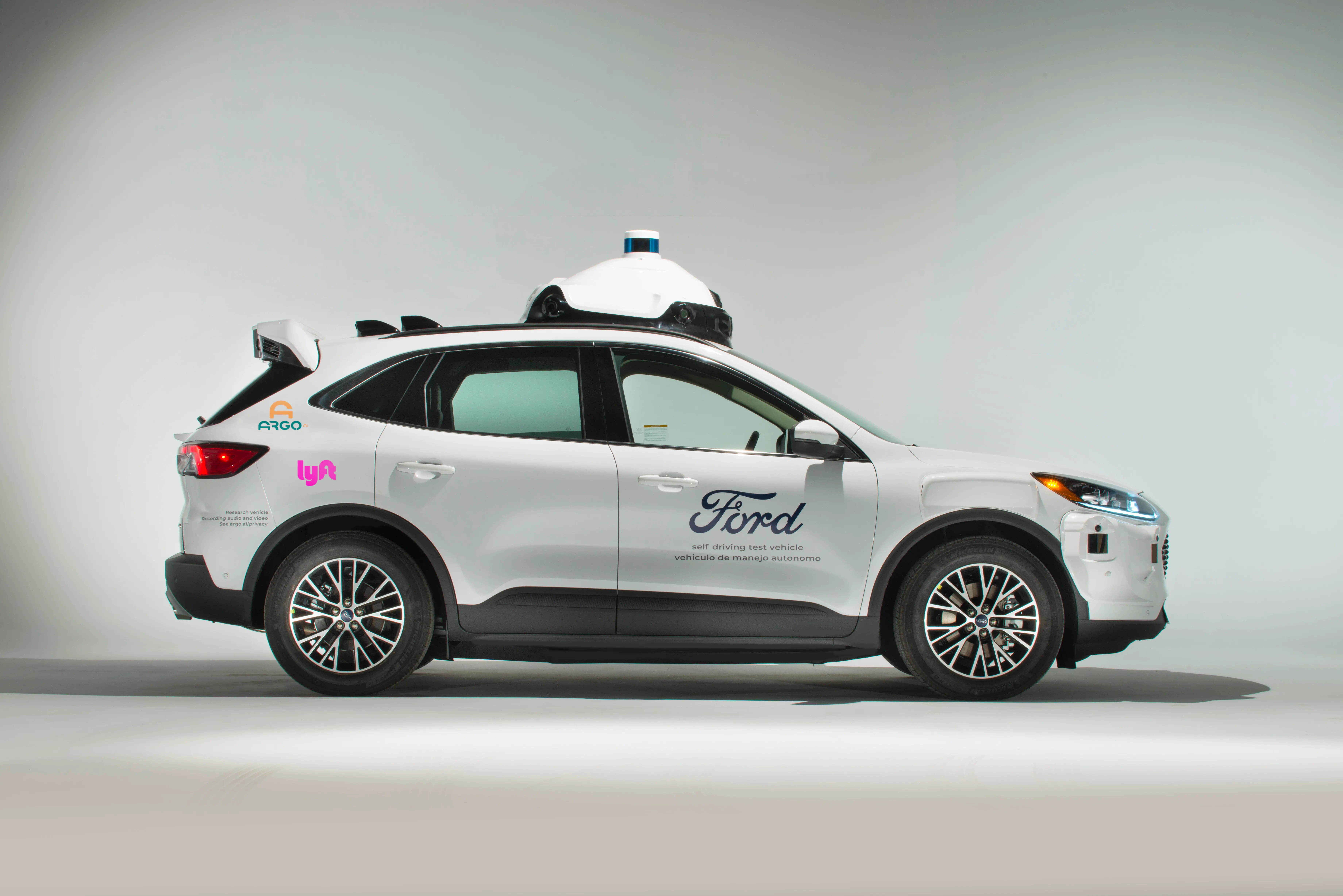
Image 1 / 1
Founding Story
Bryan Salesky and Peter Rander cofounded Argo in 2016. Both had Carnegie Mellon robotics backgrounds. Salesky had led work at Google's self-driving program; Rander came from Uber. Ford's first release identified them as CEO and COO. Their exact first meeting is not established. [2] [3]
In February 2017, Ford committed $1 billion over five years. The arrangement preserved employee equity and substantial startup independence inside a majority-owned company. Ford supplied automotive integration and manufacturing experience; Argo concentrated on the software driver. [3]
Salesky said: “We are energized by Ford’s commitment and vision for the future of mobility.” The commitment joined technical ambition to a manufacturer that already knew how to build vehicles at scale. It did not remove the work of making autonomous service reliable and economical. [3]
Timeline
- 2016: Salesky and Rander founded Argo AI. [2]
- February 2017: Ford announced its five-year investment commitment. [3]
- October 2017: Argo acquired Princeton Lightwave, adding lidar expertise. [5]
- 2019–2020: Volkswagen announced its investment; the transaction completed June 1, 2020. [6] [11]
- December 2021: Lyft announced Miami rides using Ford vehicles and Argo's system. [7]
- May 2022: Argo began driverless operations in Miami and Austin. [12]
- September 2022: Public Lyft service opened in Austin with two safety operators aboard. [14]
- October 26, 2022: Ford announced wind-down plans; Volkswagen ended further investment. [1] [8]
- 2023: Ford formed Latitude AI with former Argo employees; the founders pursued separate trucking company Stack AV. [9] [16]
What They Built
Argo developed a driving system for specified operating conditions, often described as Level 4 automation. Within its intended conditions, the system performs driving without depending on a person to take over. That scope differs from a consumer car that drives everywhere. Ford's initial target was commercial mobility services. [3]
The platform combined sensors, software, detailed maps, and operational support. Argo acquired Princeton Lightwave in 2017; a later Ball Aerospace announcement documents a separate license for its lidar technology in defense and aerospace. Lidar measures surroundings using light. A useful sensing asset could have value beyond Argo's vehicle service. [5]
The Lyft agreement divided responsibilities among Argo's driving system, Ford vehicles and fleet operations, and Lyft's rider network. Cleaning, maintenance, and fueling still mattered. Its five-year target of at least 1,000 vehicles was a deployment plan, not an achieved fleet count. [4]
Market Position
Target Customers
Argo worked through automakers and service partners rather than selling a complete consumer vehicle. Lyft connected passengers to cars. Walmart supplied a different use case: delivering customer orders. Its September 2021 agreement proposed integrations and testing in Miami, Austin, and Washington, D.C. [10]
These partners reduced the need to create demand from nothing. They also introduced linked schedules and obligations. A vehicle might be ready for a test while its customer-facing service still needed operational support or permission to expand.
Market Size
Passenger trips and deliveries are frequent, but total transport spending cannot establish Argo's revenue opportunity. A viable forecast needed supported trips, vehicle utilization, costs per mile, remote and local labor, and the price partners would pay.
The reviewed sources do not provide mature licensing revenue, commercial margin, or a repeatable cost per driverless paid trip. Public availability and technical milestones remain useful evidence with narrower scope.
Competition
Argo competed with other driving-system developers and with different uses of its backers' money. Ford shifted toward driver assistance for personally owned vehicles. Volkswagen retained autonomous-service goals while changing development partners. Those alternatives could deliver benefits on a different schedule. [8] [9]
The market continued developing after Argo. Waymo now advertises public fully autonomous rides in several cities. Volkswagen's later ID. Buzz program uses Mobileye technology. These later programs preserve evidence of continued demand for autonomous mobility. Argo's own path to profitability remains unproved. [17] [19]
Business Model
Ford's original plan included possible licensing beyond its own program. Later partnerships joined driving technology to fleet operations and service distribution. The reviewed record does not establish a final per-vehicle licensing tariff or recurring commercial revenue. [3] [4]
Volkswagen's $2.6 billion investment headline combined $1 billion in funding with its Autonomous Intelligent Driving business valued at $1.6 billion. Its separate $500 million purchase of Ford's existing shares did not represent new operating cash for Argo. Volkswagen's report confirms completion in June 2020. [6] [11]
Ford's $2.7 billion pretax impairment also differs from cash spent. Its filing explains that earlier noncash valuation gains increased the investment's carrying value. Ford reported approximately $500 million net cash invested after proceeds from Volkswagen. The impairment cannot serve as Argo's burn rate or operating loss. [1]
Traction
Lyft's December 2021 Miami announcement established an operating passenger service beyond a proposed partnership. Austin followed publicly in September 2022. The Austin service charged normal fares but retained two safety operators. [7] [14]
Argo separately announced driverless daytime operations in May 2022. Salesky said: “we set out to tackle the hardest miles to drive”. Initial riders were employees. That milestone should be retained without describing the public Lyft service as driverless. [12] [13]
The company described third-party review and test-track validation with TÜV SÜD, then created an external safety advisory council. These efforts supplied additional scrutiny. They were not universal operating permission or proof of profitable service. [12] [15]
Outcome and evolution
Ford's filing attributed its change in direction to additional time and capital required for commercial scale and Argo's inability to attract new investors. Volkswagen independently announced the end of further investment. The evidence supports loss of financing for independent continuation, without establishing a precise legal dissolution date. [1] [8]
Ford's Latitude announcement records about 550 former Argo hires across engineering and operations. It also describes reusing development tools and infrastructure experience for driver assistance. This is a specific transfer of people and knowledge, not proof that Latitude continued Argo's original service. [9]
Salesky and Rander now lead Stack AV. SoftBank's 2023 presentation identifies that separate company as a subsidiary developing autonomous trucking technology. Its current website retains that focus; it does not by itself establish commercial driverless deployment. [2] [16] [22]
Volkswagen's 2026 MOIA update describes Los Angeles validation testing with onboard operators and planned Uber rides later in 2026. As of this October 23 review, that announcement remains a plan, not evidence that the announced ride service launched. Mobileye, rather than Argo, supplies the later driving system. [17] [18]
Argo could make technical progress and still face a financing decision its backers declined. The reviewed evidence does not establish whether more time, different ownership, or narrower deployment would have produced a sustainable business.
Key Lessons
- Argo's partners supplied vehicles and access to riders. The commercial result still depended on the entire service working together.
- Argo reached both driverless tests and public rides with safety operators. Track those milestones separately to preserve what each demonstrates.
- Argo's strategic investors could fund a different route to automation. Their priorities were a continuing business dependency.
- Argo's deal values contained cash, contributed operations, secondary shares, and accounting changes. Those figures cannot substitute for operating economics.
Sources
- Ford Q3 2022 filing
- Current Stack leadership biographies
- Ford original Argo investment
- Ford Argo Lyft deployment agreement
- Ball Aerospace lidar technology license
- Ford Volkswagen expanded alliance
- Lyft Miami service launch
- Volkswagen investment withdrawal
- Ford establishes Latitude AI
- Ford Walmart delivery partnership
- Volkswagen 2020 half-year report
- Argo driverless operations announcement
- Contemporary driverless rider scope
- Austin Lyft launch and operators
- Argo safety advisory council
- SoftBank 2023 investor presentation
- Volkswagen Mobileye agreement
- MOIA America Los Angeles testing update
- Current Waymo service
- Current Foxglove pricing
- Current Foxglove visualization
- Current Stack trucking focus