
Awari
Winter 2021AcquiredReinventing lifelong learning for the future of work.
Pressure-test this opportunity
Explore the risks and possibilities with a prompt for ChatGPT, Claude, or your agent.
Reinventing lifelong learning for the future of work.
Explore the risks and possibilities with a prompt for ChatGPT, Claude, or your agent.
Awari began in Brazil in 2018 as a UX-design school built around practical projects and one-to-one mentorship from working technologists. It expanded into data, programming, product, marketing, and corporate training, joined Y Combinator's Winter 2021 batch, and reported more than 100,000 learners by 2024.[1][2][3]
Awari proved demand and grew revenue, but its two most valuable assets scaled differently. The course catalog and subscription could reach thousands; reliable expert mentorship and consumer distribution remained labor-intensive. Fluency Academy bought 100% of Awari in March 2024, paired the catalog with its influencer channels, and absorbed the team. The independent company ended while the product continued as Awari by Fluency and later Fluency Skills.[4][5]
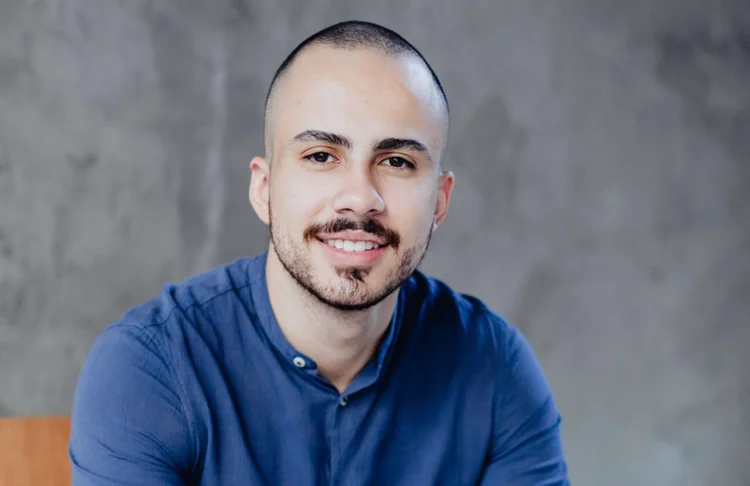

Image 1 / 2
Fabio Muniz learned product design outside a formal program. He began freelancing from Jundiaí as a teenager, then spent time in New York, San Francisco, and Washington. His client and employer record included NBC, Viacom, Google, Shogun, Toptal, and Candidate Labs.[1][6]
In the United States, Muniz saw working designers teach at bootcamps and schools such as General Assembly and Designlab. He began teaching design himself in 2016. An offer to lead a design team back in Brazil at the end of 2017 exposed the shortage of candidates with practical UX skills. Muniz declined the role, but the hiring problem became Awari's starting point.
Muniz told Exame: “Embora tenha recusado a oferta, no início de 2018, a Awari surgiu como uma proposta de formação na área de UX Design, que combinava o ensino prático e mentoria individual de especialistas do mercado.”[1] He started with individual design courses, then built longer tracks with live sessions, projects, career coaching, and mentors from technology companies.
The public record names Muniz as the sole founder and does not describe a cofounding team. In a 2021 interview, he admitted that the company structure lagged behind the opportunity. Asked what he would change if starting again, Muniz said: “Com certeza eu teria estruturado um time muito mais cedo e teria preenchido algumas vagas com mais senioridade.”[6]
Awari's early differentiators were concrete. Mentorship was scarce in Brazilian online technology education, the detailed curriculum exceeded weekend bootcamps, and the first course cost roughly R$1,100 when in-person options cost much more. The company later added a money-back job guarantee, career interview practice, and employer connections. Its ambition widened from teaching UX to replacing expensive graduate degrees for technology workers.
Awari combined a course platform with a managed network of instructors, mentors, and career advisers. A learner chose a track in UX/UI design, data, programming, product management, marketing, or people management. Recorded material supplied the base knowledge. Live classes, assignments, and a final project added deadlines and portfolio evidence. One-to-one sessions connected the learner with professionals from companies such as Nubank, Bradesco, Google, Magalu, Itaú, Ambev, and AWS.[3]
The career layer addressed the job transition. Advisers reviewed LinkedIn profiles, prepared learners for interviews, and helped them tell a coherent career story. Mentors could discuss real workplace decisions rather than repeat the curriculum. Every graduate completed a project that could appear in a portfolio.[10]
Awari tried several payment and risk-sharing models. Its four-month intensive course charged tuition upfront. A nine-month shared-success program delayed payment until Awari placed the learner in a job paying more than R$3,500. The company later offered a guarantee that refunded tuition if a compliant graduate remained unemployed after six months.[10][6]
In November 2021, the company replaced course-by-course sales with a R$2,900 annual subscription. Students received credits for two live courses, mentoring, and career consultations, plus unlimited recorded tracks. The shift aimed to extend the relationship beyond an eight-week course and raise repeat engagement.[7]
The model joined software scale to service quality. Recorded lessons and written content could support more learners at low marginal cost. Live teaching, mentor matching, attendance, feedback, and career advice required scheduling and quality control. The same human element that justified a premium price also created the hardest operating work.
Awari first sold to Brazilian professionals entering or advancing in technology careers. The typical buyer valued a practical route into UX, data, software, or product work and wanted more guidance than a self-paced course. Awari later added a corporate-training arm for employers developing internal teams.[3]
No defensible market-size estimate for Brazilian mentor-led technology training was found. Awari's own scale offers a narrower signal: 15,000 paying learners and more than 100,000 total learners at acquisition. The World Economic Forum now says Brazilian employers expect 37% of workers' core skills to change by 2030. PwC counted 73,000 Brazilian job postings requiring AI knowledge in 2024, up from 19,000 in 2021.[11][12] Those figures show skills churn, not willingness to pay for Awari's format.
Awari competed with universities, graduate programs, independent bootcamps, and large online-course libraries. Alura now sells employers more than 2,000 courses, study tracks, learning data, and an AI assistant from R$125 per person each month.[13] DIO offers free, employer-sponsored bootcamps with projects, live mentoring, and hiring profiles.[14] Rocketseat, EBAC, and other schools also sell career-oriented technology training.
Content breadth favored larger libraries. Free bootcamps weakened consumer pricing. Awari competed on individual mentorship, practical work, and career support, but those benefits depended on mentor supply and consistent delivery. Fluency brought another structural advantage: a creator network that already attracted learners without relying entirely on paid advertising.
Awari earned consumer tuition, then annual subscription revenue, and added corporate training. The 2022 subscription cost R$2,900 annually and allocated scarce live services through credits. Earlier programs ranged from upfront tuition to placement-contingent payment. Mentorship and career support justified the premium over recorded-course libraries.
The company raised at least R$5.5 million across its 2021 and early-2022 rounds. Named backers included Y Combinator, Weekend Fund, Shashank Mathur, Brian Requarth, Mike Mahlkow, Ben Hamner, Olima Ventures, and the Guiabolso founders.[7]
Awari reported R$1.1 million of 2020 revenue and more than R$7 million in 2021. Public sources do not disclose gross margin, paid-media spending, mentor compensation, completion, placement, refund, or retention rates. Those missing figures matter because the subscription combined cheap recorded content with expensive human sessions. The acquisition price and investor returns were also undisclosed.
Awari's reported monthly revenue rose from R$12,000 to R$410,000 during the year before April 2021. At that point, the company counted 1,180 students and 270 mentors.[8] Annual revenue then grew from R$1.1 million in 2020 to more than R$7 million in 2021.[7]
At acquisition in 2024, Awari said it had 15,000 paying students and more than 100,000 learners in total. The current corporate page claims more than 130,000 learners under Fluency.[3][9] These figures come from the companies. No audited cohort outcomes or post-acquisition Awari revenue were found.
Awari charged more than self-paced libraries because learners could reach working professionals. That promise created a scheduling and quality-control system around every course. The company responded with mentor credits, career advisers, a larger team, and hundreds of mentors.
Anonymous learner accounts show the failure modes. A 2022 collection described missing instructors, mentor-curriculum mismatches, and inconsistent feedback.[15] In April 2024, one buyer said a scheduled mentor failed to appear and that mentorship had been the main reason for purchasing; Awari replied that it contacted the mentor and was improving its process.[16] These reports cannot establish prevalence. They do identify the exact place where a mentor-led subscription can break: the scarce service must arrive on time, even as enrollment grows.
Awari expanded from UX into data, programming, product, marketing, management, recorded courses, live courses, career support, and corporate training. That breadth raised the value of the subscription, but it placed Awari beside larger libraries and free employer-funded bootcamps.
Muniz named the acquisition mechanism in an April 2024 interview: “A Fluency tem canais de distribuição muito fortes por conta de seu modelo de influenciadores, e a Awari possui uma forte carteira de produtos.”[3] Awari had tried subscription pricing, course expansion, and a corporate arm. Fluency supplied a lower-cost audience and cross-sell base. The deal joined two complementary assets that were expensive for either company to reproduce.
The non-obvious mechanism was a split between curriculum production and trusted attention. Course content became easier to expand and competitors offered thousands of lessons. Distribution through creators remained concentrated, while high-quality mentoring stayed scarce. Awari's product could grow faster inside a company that already owned attention.
In February 2022, Awari planned to grow from about 45 employees to nearly 150, reach R$40 million in annual revenue, train 9,000 students that year, and enter Chile, Mexico, and Colombia.[7] The 2024 acquisition coverage still described Awari as Brazil-only. No source confirmed the revenue or hiring targets.
The company did reach meaningful learner scale, so missing proof should not be treated as proof of failure. It does show that the public expansion story outran the later evidence. Fluency offered regional distribution and a much larger consumer base without requiring Awari to build those channels alone.
Fluency acquired the full company, planned to integrate the entire team, gave Muniz a C-level operating role and board-adviser seat, and kept Awari's courses running.[3] Muniz's announcement described six years of challenges and gratitude rather than a closure.[17]
Terms remain undisclosed, so the record cannot show whether the outcome returned venture-scale capital. It can show why the combination made operating sense: Awari contributed technology-career products and mentors; Fluency contributed creators, reach, and capital.