Overview
b8ta sold brands a place to demonstrate products, trained store staff and information about shopper engagement. The US company opened its first showroom in Palo Alto in December 2015. Its monthly subscription model treated physical retail as a service that a brand could buy, rather than only a channel that purchased inventory. The US operation closed on February 18, 2022. Japan's regional licensee had already separated from it.[1][9][10]
The central problem was a mismatch between the flexibility sold to brands and the property obligations behind the service. Software made participation easier to manage. It could not remove the cost of stores when people stopped visiting them. Public evidence supports that mechanism, but does not establish the stores' profitability before the pandemic.
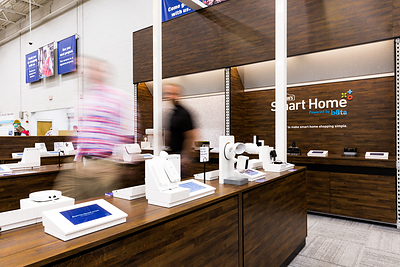
Image 1 / 1
Founding Story
Vibhu Norby, Phillip Raub, Nicholas Mann and William Mintun founded b8ta. Norby's December 2015 account describes sharing his idea with colleagues at Nest who became his co-founders. He had seen how Nest's working displays helped people understand unfamiliar home technology. His frustration was concrete: products available online often sat boxed or inaccessible in ordinary stores.[1]
Norby summarized the intended experience as “No packaging — just products.” The first showroom would let visitors try products and buy them the same day. The business would give makers traffic and sales information, alongside an easier route into a physical store.[1]
Norby brought software experience. In his 2018 RetailGeek interview, he described an earlier startup and joining Nest as an engineer with his team. The interview also records his work with Raub on retail access. The founders came together through Nest; the available accounts do not establish the exact first meeting of all four.[2]
The original insight survived several changes in format. By December 2021, Norby told Retail TouchPoints, “Experiential retail is expensive.” He was then promoting live shopping from studios inside stores. The comment identifies a cost already present in the original promise: demonstration space, knowledgeable people and an audience all had to be supplied.[16]
Timeline
- December 2015: The first Palo Alto showroom opened, according to the founder's launch account.[1]
- November 2017: Lowe's announced expansion from a three-store pilot to 70 stores.[3]
- June 2018: Macy's announced a minority investment and expanded software partnership. Contemporary reporting put the round at $19 million.[4][7]
- 2019: b8ta announced a Toys “R” Us joint venture, a $50 million Series C, Ark Marketplace and the Forum fashion concept.[5][6]
- October 29, 2020: b8ta announced its acquisition of Re:store and plans to bring the Maiden Lane showroom under Forum.[17]
- 2021: Shop Studios turned stores into venues for live product programming.[16]
- February 2022: US stores closed. Japan continued under separate regional rights.[9][10]
- 2025: Japan announced closures of Yurakucho and Umeda for March 31, then Shibuya for September 28.[11][12]
What They Built
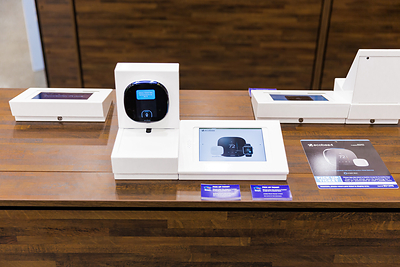
A maker could arrange a display and manage its presence through software. A shopper could handle a working product, read information on a tablet and ask for a demonstration. In Lowe's installations, trained “b8ta testers” supported the experience. The partner described adjustable displays and content informed by a dashboard, connecting the shop floor to brand decisions.[1][3]
The tools extended beyond checkout. RetailGeek's interview describes digital signage, staff training and browsing analytics. Norby also said an online shop launched in August 2017 and reached almost 20% of product sales volume a year later. That was a founder-reported product-sales measure, not b8ta's subscription revenue or profit. It complicates a claim that the company had no online sales capability.[2]
Distribution also changed. Macy's used the software for The Market @ Macy's, which its June 2018 release placed in ten stores. The Toys “R” Us venture applied the model to interactive toy shops. Ark then offered the underlying marketplace tools to retailers and landlords. These were different routes to market: operating a showroom, supplying a shop within another retailer and selling infrastructure to another operator.[4][5][6]
In October 2020, b8ta added a fashion business through its Re:store acquisition. The issuer release described cash, equity and contingent consideration, with Re:store retaining licensing rights. It planned to rebrand the Maiden Lane showroom under Forum and give participating brands access to Forum's online marketplace. This extended the physical format during the pandemic, before the later livestreaming emphasis.[17]
Shop Studios offered another adaptation. A December 2021 interview described broadcasts from Bay Area stores, with dedicated hosts and an audience watching remotely. The format could reach people outside a shop's immediate catchment. It still used store space, equipment and staff; the evidence does not establish its standalone margins.[16]
Market Position
Target Customers
The paying customer was a brand seeking product discovery and learning, while the shopper received a place to try products. Retail partners sought a changing assortment and a way to manage participating brands. Those customers valued different outcomes: a useful demonstration, sales, feedback or an operating system for a shop.[1][4]
Market Size
The relevant market was the amount brands would repeatedly pay for effective physical exposure. Overall retail sales could not establish that amount. A store needed enough participating brands to cover space and service costs, and enough suitable visitors to justify those brands' renewals. No dependable store-level contribution margin, renewal cohort or final revenue series was established.
Competition
Conventional retailers controlled audiences and distribution. Online marketplaces offered convenient transactions. b8ta competed by making discovery and demonstration easier to buy. That position depended on visits that could not be delivered through software alone.
Current tools already cover important parts of a smaller experiment. Appear Here markets temporary shops and pop-up space, including stays under a month. Shopify combines in-person selling with inventory and reporting. Its current US pricing lists a $39 monthly Basic plan and an additional $89 monthly per POS Pro location, with billing terms, payment fees and hardware costs to check separately. These are existing alternatives, not proof that a new retail-testing service has buyers.[14][15]
Business Model
b8ta charged brands for access and information. The brand therefore had to judge the value of its presence, beyond units sold. It also created an obligation to supply the space and service that made that presence useful.[2]
The October 2019 issuer release announced $50 million in Series C equity, led by Evolution Ventures with Macy's and other existing investors participating. That was financing for expansion, not operating revenue. The $19 million 2018 round reported elsewhere is another dated financing event; neither establishes lifetime cash received or investor recovery.[6][7]
Traction
The Series C release claimed more than 50 million product engagements and more than 1,000 brands launched. It described 19 flagship locations then operating, while projecting 25 worldwide by year-end. Engagements, brands and stores measure different things. None establishes profitable renewals, and the projected store count should remain a target.[6]
Outcome and evolution
In his closure interview, Norby said weak traffic recovery led b8ta to close 15 stores while retaining lease obligations. Eight remained before the final shutdown. He described unsuccessful landlord settlements and said even much greater streaming success probably would not have changed the outcome. These are the CEO's account, not audited evidence separating each cause.[8]
The lease mismatch helps explain why closing stores did not finish the financial adjustment. The company could remove an operating location while retaining a payment obligation. An alternative explanation is that the original format already had weak economics. Public store-level results do not resolve that question. The record supports a pandemic shock and difficult adjustment, rather than proof that either software or physical discovery had no value.
Japan's history is separate. Its February 2022 issuer release says it ended the US capital relationship in September 2020 and obtained exclusive Japanese trademark and software rights in December 2021. It continued after the US closure. Later official notices set closure dates for its three listed stores in 2025. As checked October 27, 2026, an old three-store page remains online, but those notices prevent treating it as evidence of operating shops.[10][11][12][13]
The US operation's final legal dissolution, creditor recoveries and current ownership of every regional brand right remain unverified. A February 2022 report's statement that the UAE business continued is a historical observation, not confirmation of its current availability.[9]
Key Lessons
- Match commitments across both sides. b8ta made showroom participation easy for brands, while its leases remained difficult to unwind when traffic fell.
- Separate software distribution from store operation. Lowe's, Macy's and Ark showed several ways to distribute b8ta's tools. Their existence did not establish profitable company-owned stores.
- Measure the customer's result. b8ta's engagement counts documented activity. Brand renewal and contribution after store costs would have tested its economic value more directly.
- Follow regional rights and dates. Japan's 2022 independence preserved a separate business for a time. Its later store closures change what the old brand website can prove today.
Sources
- Vibhu Norby — Hello, Retail! (2015).
- RetailGeek — Founder interview transcript (2018).
- Lowe's — Smart Home powered by b8ta (2017).
- Macy's — Investment and commercial partnership (2018).
- Tru Kids and b8ta — Toys “R” Us venture (2019).
- b8ta / Business Wire via MarketScreener — Series C and Ark (2019).
- Retail TouchPoints — Founder interview and 2018 financing (2018).
- Modern Retail — CEO account of the US closure (2022).
- Retail TouchPoints — US closure and historical international status (2022).
- b8ta Japan — Regional rights and independence (2022).
- b8ta Japan — Yurakucho and Umeda closure notice (2025).
- b8ta Japan — Shibuya closure notice (2025).
- b8ta Japan — Surviving company and store listing (checked October 2026).
- Appear Here — Current temporary retail marketplace (checked October 2026).
- Shopify — Current POS plans and features (checked October 2026).
- Retail TouchPoints — Shop Studios founder interview (2021).
- b8ta / Business Wire via MarketScreener — Re:store acquisition (2020).