
BackType
Summer 2008AcquiredBackType was an analytics company acquired by Twitter in 2011
Pressure-test this opportunity
Explore the risks and possibilities with a prompt for ChatGPT, Claude, or your agent.
BackType was an analytics company acquired by Twitter in 2011
Explore the risks and possibilities with a prompt for ChatGPT, Claude, or your agent.
BackType began as search for comments scattered across websites. It evolved into tools that connected online conversations to publishers’ content and traffic. Twitter acquired it in July 2011. This was an acquisition, not a documented business collapse; the undisclosed price prevents a judgment about investor returns.[1]
Its strongest surviving contribution is Storm, the stream-processing system developed inside BackType. Apache released Storm 3.1.0 in September 2026.[2] The lesson spans two businesses: a marketer-facing analytics service and infrastructure that became valuable beyond that service. Neither proves that BackType’s independent business was profitable at scale.
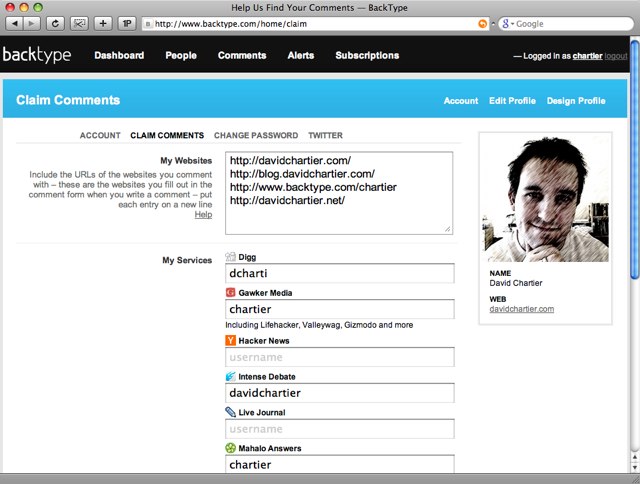
Image 1 / 1
Christopher Golda and Michael Montano studied electrical engineering at the University of Toronto. Golda had graduated; Montano was interning at RIM when they began iPartee, an events-focused social network, in Waterloo. It launched in November 2007 but gained little traction. By spring 2008, they were working on BackType and supporting themselves with consulting.[3]
They assembled a demo in two weeks for their Y Combinator interview. Acceptance took them to Boston for the summer of 2008. YC supplied $15,000, according to their contemporary interview. The smaller product gave users a direct reason to try it: find conversations they already cared about.[3]
Golda explained the need: “I wanted to be able to follow comments written by the people we care about.”[4]
The team’s investor described another constraint: obtaining US visas took roughly six months. The founders eventually worked from a shared San Francisco condominium in 2009.[5] Their early history was an iterative product search, accompanied by practical limits on location and resources.
The initial product indexed comments and matched them to people through the website addresses or service identities they supplied. Search and alerts made distributed discussions easier to follow.[4]
BackTweets shifted the unit of analysis from a person to a piece of content. BackType Connect then returned external discussion to the publisher’s own WordPress page.[6][7] These were distribution choices as well as features: a publisher could see activity around an article without asking its readers to adopt BackType.
Commercial buyers wanted a broader answer: what did those conversations do for their business? BackType moved toward social analytics, with streams of events feeding the service. Its investor named Bitly, Radian6 and the Huffington Post among users; a direct interview identified marketers and publishers as commercial API customers.[3][5]
Storm addressed the processing work beneath that interface. Its streams, processing components and execution model let the team assemble continuously running data pipelines. Marz’s account describes development under startup conditions, followed by substantial engineering work at Twitter for shared infrastructure and larger workloads.[9] This was an operational capability with applications beyond marketing analytics.
Consumers used comment search. Publishers and marketers paid for access to data and wanted to understand how content travelled. Commercial API demand appeared early, before the later analytics dashboard.[3] Those groups had different jobs: following a person’s comments was useful, but it was not the same purchasing need as evaluating a publishing campaign.
Public evidence does not establish BackType’s addressable market or recurring revenue. A nearby transaction illustrates commercial interest without supplying either number: Salesforce announced its Radian6 acquisition on March 30, 2011, for approximately $326 million in cash and stock.[11] That announcement came after BackType’s March 10 funding coverage.
Comment platforms such as Disqus and IntenseDebate hosted discussion at the publishing site; BackType searched across sites. Analytics vendors served commercial monitoring needs, and BackType could also supply them with data. Radian6 appearing in its investor’s user list demonstrates that supplier and competitor roles could overlap.[5]
Twitter occupied another position: it generated conversation data and controlled a major distribution surface. Its Web Analytics announcement explicitly credited the acquisition and described referral traffic, content sharing and Tweet Button performance.[10] That establishes product fit. It does not establish that Twitter forced a sale or that independent competitors could not survive.
BackType combined free discovery tools with commercial data access and an emerging analytics product. The founders’ March 2009 interview reported API income and some profitability, without amounts.[3] This is evidence of early monetization, not proof of durable company-wide margins.
Disclosed financing comprised YC’s initial investment and the two rounds described above. Public sources reviewed here do not disclose acquisition proceeds, annual revenue, customer retention, source-data costs or the later product’s margins. Those gaps matter: an acquisition can preserve useful technology while leaving the independent business’s economics unanswered.
March 2011 coverage reported roughly 100 companies and 30 terabytes of data under analysis.[12] These describe adoption and workload, rather than verified paying accounts or recurring revenue. The investor’s named users offer additional evidence that the output served real commercial workflows.[5]
The acquisition also drew contemporary developer attention. This discussion documents that response; it does not measure customer demand.
BackType’s standalone story ended through acquisition. Two facts support a plausible explanation for Twitter’s interest: the fit with Twitter’s announced analytics product, and the infrastructure demonstrated during negotiations. Marz recalled that “the entire due-diligence turned into a big demo of Storm.”[9] His retrospective offers an engineer’s perspective on the discussions, rather than a complete account of the buyer’s decision.
A reasonable inference is that the team and processing system increased BackType’s strategic value alongside its analytics service. Calling that an established escape from platform pressure goes further than the evidence. There is no disclosed board account, purchase price or operating record showing that Twitter dependence made an independent business impossible.
The sequel also needs separate treatment. Twitter’s September 2011 announcement placed acquired capabilities inside its own free analytics offering.[10] Storm became an independent open-source project and remains actively released.[2] The original brand’s disappearance, integration into a buyer and survival of infrastructure are different outcomes.
The founders continued building and investing: YC documented Golda’s later Twitter and venture work; True Ventures announced Montano as a partner in 2024.[13][14] Their subsequent careers reinforce that the acquisition was a transition. They do not resolve BackType’s financial outcome.