
BitPatrol
Spring 2025AcquiredAI-powered code security
Pressure-test this opportunity
Explore the risks and possibilities with a prompt for ChatGPT, Claude, or your agent.
AI-powered code security
Explore the risks and possibilities with a prompt for ChatGPT, Claude, or your agent.
BitPatrol was an AI-powered code security startup founded in 2024 by Christopher Lambert in New York, NY. The company participated in Y Combinator's Spring 2025 (X25) batch and built a GitHub App that scanned for exposed credentials — API keys, tokens, and passwords — on every code push, using a proprietary machine learning model rather than the regex-based pattern matching used by most competitors.[1]
BitPatrol failed to build a durable standalone business because its core product was a discrete, well-understood feature that GitHub could — and did — offer natively to over 100 million developers at near-zero marginal cost. No amount of ML sophistication could overcome that distribution asymmetry.
The company was acquired by an undisclosed buyer in 2025 — within roughly one year of founding — and the GitHub App was deprecated on October 6, 2025, confirming the product was not continued post-acquisition.[2] The rapid timeline, undisclosed acquirer, and product shutdown are consistent with an acqui-hire: the founder's credentials were the primary asset, not the product.

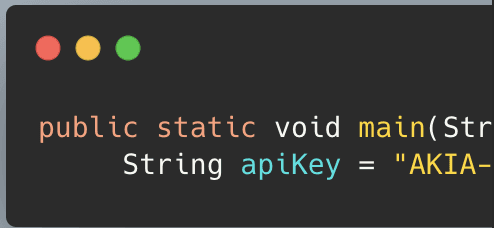
Image 1 / 2
Christopher Lambert founded BitPatrol in 2024 with a founding story that was unusually well-matched to the problem he was solving. His background combined elite engineering experience — stints at Stripe, Tesla, Lyft, and Capital One — with a Columbia University computer science education and a side career as a competitive bug bounty hunter on HackerOne.[3][4]
The founding insight came directly from that bug bounty work. Lambert rose to the top 2% of HackerOne's global rankings, and a significant portion of his findings involved exposed credentials — API keys, tokens, and passwords accidentally committed to source code by developers at large companies.[5] Crucially, many of the companies he reported vulnerabilities to were already using competing secret-scanning tools. The tools were missing real secrets in production. Lambert had firsthand, empirical evidence of a product-market gap: existing scanners generated too many false positives (crying wolf on test credentials and placeholder values) while missing genuine leaks that a skilled human could identify.
His HackerOne profile captures the transition explicitly: "Retired from bug bounties. Now building BitPatrol (YC X25): Secret detection that actually works."[6] This was a deliberate pivot, not an opportunistic one. Lambert was trading a successful side career for a company built on the exact knowledge that career had generated.
BitPatrol operated as a solo venture throughout its YC listing — team size of one.[7] Whether that was a strategic choice (move fast, stay lean, prove the model before hiring) or a constraint (difficulty recruiting co-founders or early engineers into a narrow security niche) is not publicly known. What is clear is that Lambert carried the product, sales, and engineering functions alone through the YC batch and into the market.
The company's messaging evolved to incorporate "vibe coding" — the wave of AI-assisted development that was flooding GitHub with code written by developers who may not fully understand what they're committing — as a key demand driver.[8] Whether this was the original thesis or a timely reframe during YC is unclear, but it was a credible and well-timed narrative: AI coding tools were genuinely accelerating the rate at which secrets appeared in repositories.
Lambert's X (Twitter) bio at the time of the company's operation read: "building @bitpatrol_io (YC X25) prev @stripe | computer science @columbia | top 2% on @hackerone."[9] That single line — Stripe, Columbia, HackerOne top 2%, YC — is a remarkably strong signal line for a pre-seed security founder, and likely explains both the speed of the fundraise and the speed of the acquisition.
BitPatrol's core product was a GitHub App that ran on every code push, scanning the committed code for exposed credentials — API keys, authentication tokens, database passwords, and similar sensitive strings that developers accidentally include in source code.[12]
The technical differentiator was the detection engine. Most competing tools — including many enterprise-grade products — relied on regex pattern matching: they looked for strings that resembled known credential formats (e.g., strings starting with "sk_live_" for Stripe keys). This approach generates significant false positives because developers frequently commit test credentials, placeholder values, and example strings that match the same patterns as real secrets. Lambert's experience as a bug bounty hunter had given him a precise understanding of where these tools failed.
BitPatrol's ML model was trained to understand code context and developer intent, not just string patterns.[13] The model cross-referenced flagged strings against a dataset of billions of public commits, Docker images, and open source packages to distinguish genuine secrets from known-safe test values.[14] The practical claim was fewer false positives — alerts that developers would actually act on, rather than learn to ignore.
The product integrated into existing developer workflows through Slack, PagerDuty, Jira, and custom webhooks, meaning alerts could surface in the tools developers already used rather than requiring a separate dashboard check.[15] A personal vulnerability dashboard with severity scoring was also offered, giving developers a prioritized remediation queue rather than a flat list of alerts.[16]
Pricing followed a product-led growth structure: Free, Pro, and Enterprise tiers, with the real-time GitHub integration listed at $20 per developer per month.[17][18] The free tier was designed to drive adoption, with the expectation that teams would upgrade as they encountered the limits of the free offering — a standard PLG motion for developer tools.
The "vibe coding" framing was a notable product positioning choice. Lambert's YC listing argued that AI-assisted coding tools were creating a new, accelerating supply of leaked secrets: developers using tools like GitHub Copilot or Cursor were generating and committing code faster than they could review it, and AI-generated code was more likely to include hardcoded credentials.[19] This was a legitimate demand signal, but it was one that GitHub itself could observe and respond to with equal or greater speed.
The product's entire surface area was a GitHub App. There is no public evidence that BitPatrol scanned GitLab, Bitbucket, CI/CD pipelines, or other code hosting environments — a scope limitation that both simplified the initial build and concentrated platform dependency risk.
BitPatrol's go-to-market strategy targeted four segments: engineering managers at startups with limited or no dedicated security headcount; compliance and security operations teams at larger organizations; DevOps and SRE engineers responsible for infrastructure credentials; and AppSec engineers at growth-stage companies building out their security programs.[20]
The beachhead logic was sound. Startups with no security team are genuinely underserved by enterprise-priced tools, and a $20/developer/month GitHub App with a free tier is a credible entry point. The early GTM plan relied on founder network effects — onboarding early adopters from Lambert's YC cohort and prior colleagues — and offering free historical audits to demonstrate value before asking for payment.[21] This is a reasonable approach for a solo founder with strong network capital but limited sales infrastructure.
The application security market is large and growing. Secret scanning sits within the broader DevSecOps and software supply chain security category, which has attracted significant venture investment and M&A activity. GitGuardian, the most direct competitor, raised $44M in a Series B in 2022 and claimed over 300,000 developer users. The market signal was clear: exposed credentials are a real, frequent, and costly problem. The question was never whether the market existed — it was whether a standalone point solution could capture enough of it before platform incumbents absorbed the use case.
BitPatrol's competitive landscape was crowded and structurally unfavorable for a new entrant. Primary competitors included GitGuardian, GitHub Advanced Security (Secret Scanning and Push Protection), TruffleHog from Truffle Security, and Spectral (acquired by Check Point's CloudGuard).[22] Tracxn ranked BitPatrol 18th among 57 active competitors in the space, indicating a fragmented market with no dominant independent winner but significant noise from both startups and platform players.[23]
The competitive map had two distinct axes that mattered most: distribution reach versus detection accuracy. On distribution, GitHub Advanced Security was in a category of its own — it could reach every GitHub user with a single product update, with no sales motion required. On detection accuracy, BitPatrol's ML-based approach had a credible claim to superiority over regex-based tools, but that advantage was narrow and temporary: any well-resourced competitor could invest in similar ML capabilities.
The most structurally dangerous competitor was GitHub itself. GitHub Advanced Security's Secret Scanning and Push Protection features are bundled into GitHub's paid plans and available for free on public repositories. GitHub has the training data advantage (every commit ever pushed to its platform), the distribution advantage (100M+ developers), and the integration advantage (zero friction, already in the workflow). BitPatrol was building on top of GitHub's platform while competing with GitHub's own product — a position that required either a decisive accuracy advantage that GitHub couldn't replicate, or a speed-to-market advantage that would allow BitPatrol to establish switching costs before GitHub caught up. Neither materialized at scale.
GitGuardian represented the other end of the competitive threat: a well-funded, established independent player with a similar product thesis, a larger dataset, and an existing enterprise sales motion. For a solo founder with $500K in pre-seed capital, competing for the same enterprise AppSec budget as GitGuardian — which had raised over $56M by 2022 — was a difficult proposition.
BitPatrol pursued a product-led growth model with a freemium entry point and a per-seat SaaS pricing structure. The publicly listed price of $20 per developer per month for the real-time GitHub integration placed it in the mid-market range for developer security tools — below enterprise-priced competitors like GitHub Advanced Security's full suite, but above free open-source alternatives like TruffleHog's CLI.[17]
The company never disclosed revenue, ARR, or customer counts. The absence of any traction metrics in public sources — including the YC listing, press coverage, and third-party databases — is itself a signal. Companies with meaningful early traction typically surface those numbers in YC Demo Day materials or founder social media. No such data is available for BitPatrol.
On unit economics: with $500K in pre-seed funding[24] and a solo team, BitPatrol's burn rate was likely low by startup standards — perhaps $10,000–$20,000 per month in infrastructure, tooling, and operational costs, with no salary overhead beyond the founder's own draw. This implies a runway of 24–48 months on capital alone, meaning the acquisition was not forced by cash exhaustion. The decision to sell appears to have been strategic rather than distressed.
The PLG motion — free tier to drive adoption, paid tier for real-time scanning, enterprise tier for larger organizations — was the right structural approach for a developer tool. But PLG requires volume to work: the funnel needs thousands of free users to convert a meaningful number to paid. With a solo founder and no disclosed marketing spend, achieving that volume against well-resourced competitors was the central execution challenge.
BitPatrol's most fundamental problem was structural, not executional. The entire product ran as a GitHub App, scanning code hosted on GitHub's platform, using GitHub's webhook infrastructure to trigger on push events. This created a dependency that was also a competitive threat: GitHub could replicate the core value proposition and distribute it to every user on its platform without a sales motion, a pricing negotiation, or a product adoption hurdle.
GitHub Advanced Security's Secret Scanning feature had been available since 2019 and Push Protection — which blocks commits containing secrets before they land in the repository — launched in 2022. By the time BitPatrol entered the market in 2024, GitHub was not a future threat; it was an existing, improving competitor with 100 million developers already using its platform.[22] BitPatrol's ML accuracy advantage was real but narrow: GitHub had access to the same training data (every commit ever pushed to its platform) and the engineering resources to close any accuracy gap over time.
The "vibe coding" framing was a smart attempt to find a wedge — arguing that AI-generated code was creating a new, accelerating supply of leaked secrets that existing tools weren't calibrated for.[19] But this argument applied equally to GitHub Advanced Security. If AI coding tools were generating more secrets, GitHub could update its own scanner to handle them. The demand signal was real; the defensibility was not.
Building a security product that targets enterprise and growth-stage companies requires simultaneous investment in product depth, sales infrastructure, customer success, and trust-building. Security buyers are conservative; they need references, compliance documentation, and confidence that the vendor will exist in 18 months. A solo founder carrying all of these functions faces a structural ceiling on how fast the business can grow.
Lambert's credentials were strong enough to open doors — YC, Stripe, Columbia, HackerOne top 2% — but credentials alone don't close enterprise deals or build a sales pipeline. The early GTM plan relied on founder network effects and free audits,[21] which is a reasonable starting point but a slow path to scale against competitors with established sales teams. There is no public evidence that BitPatrol expanded beyond the solo team structure during its operating period.
Tracxn's ranking of BitPatrol 18th among 57 active competitors illustrates the structural challenge of the market.[23] Secret scanning is a well-understood problem with multiple credible solutions. Differentiation on accuracy is real but difficult to communicate to buyers who haven't experienced the false-positive problem firsthand. Differentiation on integrations (Slack, PagerDuty, Jira) is table stakes — every competitor offers the same connections.[15]
The market was not winner-take-all in the traditional sense — GitGuardian had built a sustainable independent business — but it was increasingly consolidating around platform bundles (GitHub Advanced Security, Snyk's broader SAST suite) and well-capitalized independents. The space for a new, narrow point solution was shrinking, not growing.
The combination of these three factors — platform dependency, solo scaling constraints, and a consolidating market — made the acquisition outcome rational rather than surprising. With $500K in pre-seed capital, no disclosed revenue, and a product that GitHub could absorb at any time, the expected value of continuing to operate independently was likely lower than the expected value of an acquisition offer from a larger security or developer tools company.
The undisclosed acquirer, product shutdown, and rapid timeline (founded 2024, acquired 2025) are the three markers of an acqui-hire.[11][2] Companies that acquire a product continue operating it, at least temporarily. Companies that acquire a founder shut the product down and put the person to work on something else. The GitHub App deprecation notice on October 6, 2025 is the clearest evidence that this was the latter.[2]
Whether this outcome was positive for Lambert depends on deal terms that are not public. His credentials — Stripe, Tesla, Columbia CS, YC, top-2% HackerOne — would command a significant compensation package at any major security or developer tools company. The acquisition may have been a better outcome for him personally than grinding through a difficult competitive landscape as a solo founder.
Building on a platform is not the same as building a business. BitPatrol's entire product surface was a GitHub App — which meant GitHub controlled the distribution, the data, and the competitive response. When GitHub Advanced Security offered secret scanning natively, BitPatrol had no distribution channel of its own to fall back on. Contrast this with GitGuardian, which built direct enterprise sales relationships and multi-platform support (GitLab, Bitbucket, Azure DevOps) that created switching costs independent of any single platform's decisions.
Accuracy advantages in ML are temporary without data moats. BitPatrol's core claim was that its ML model reduced false positives by cross-referencing billions of public commits and Docker images.[14] But GitHub had access to the same public data — and more of it — plus the proprietary signal of every private repository on its platform. A detection accuracy advantage built on public data is replicable by any well-resourced competitor with the same data access. BitPatrol needed a proprietary data source (e.g., enterprise customer repositories that no competitor could access) to make the accuracy advantage durable.
Solo founding in enterprise security compresses the window between launch and exit. Security buyers require vendor stability, references, and compliance documentation. A solo founder cannot simultaneously build product, close enterprise deals, write SOC 2 documentation, and provide customer success. BitPatrol's early GTM relied on founder network effects and free audits[21] — a strategy that works for the first 10 customers but doesn't scale to the 100 needed to demonstrate independent viability. The solo structure may have accelerated the acquisition decision by making the scaling path implausible.
"Vibe coding" was a real demand signal but not a defensible wedge. Lambert's framing of AI-assisted coding as a new source of credential leaks was timely and credible in early 2025.[19] But a demand signal that is visible to a solo founder is equally visible to GitHub's product team. A wedge is only defensible if the incumbent cannot or will not respond — and GitHub had both the incentive and the capability to update its own scanner for AI-generated code patterns. BitPatrol needed a wedge that GitHub structurally couldn't replicate, not one that required GitHub to be slow.
Acqui-hire outcomes are rational responses to structural ceilings, not failures of ambition. BitPatrol's acquisition within one year of founding is sometimes read as a failure. A more precise reading: Lambert identified a real problem, built a credible solution, attracted YC and Caffeinated Capital, and exited before burning through capital in a structurally difficult market.[10] The lesson is not that he should have tried harder — it's that the structural ceiling was visible early, and recognizing it quickly is itself a form of good judgment.