
Bump
Summer 2009AcquiredBump, Flock, Photoroll (unreleased) => Google Photos
Pressure-test this opportunity
Explore the risks and possibilities with a prompt for ChatGPT, Claude, or your agent.
Bump, Flock, Photoroll (unreleased) => Google Photos
Explore the risks and possibilities with a prompt for ChatGPT, Claude, or your agent.
Bump made contact exchange memorable: two people held their phones and bumped hands to share information. The Summer 2009 YC company reached more than 150 million installs before Google acquired it in 2013. Its public apps ended, but an unreleased photo product became a foundation for Google Photos.[1]
Bump’s interaction attracted users faster than its business could support venture expectations. Bump made people try an app and show it to friends. Its strongest lasting insight came from discovering what people wanted to do with their photos. Acquisition gave that insight another route to market; calling the whole company a failure misses the sequel.
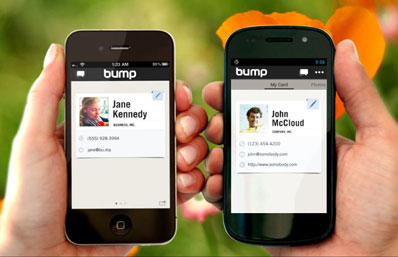
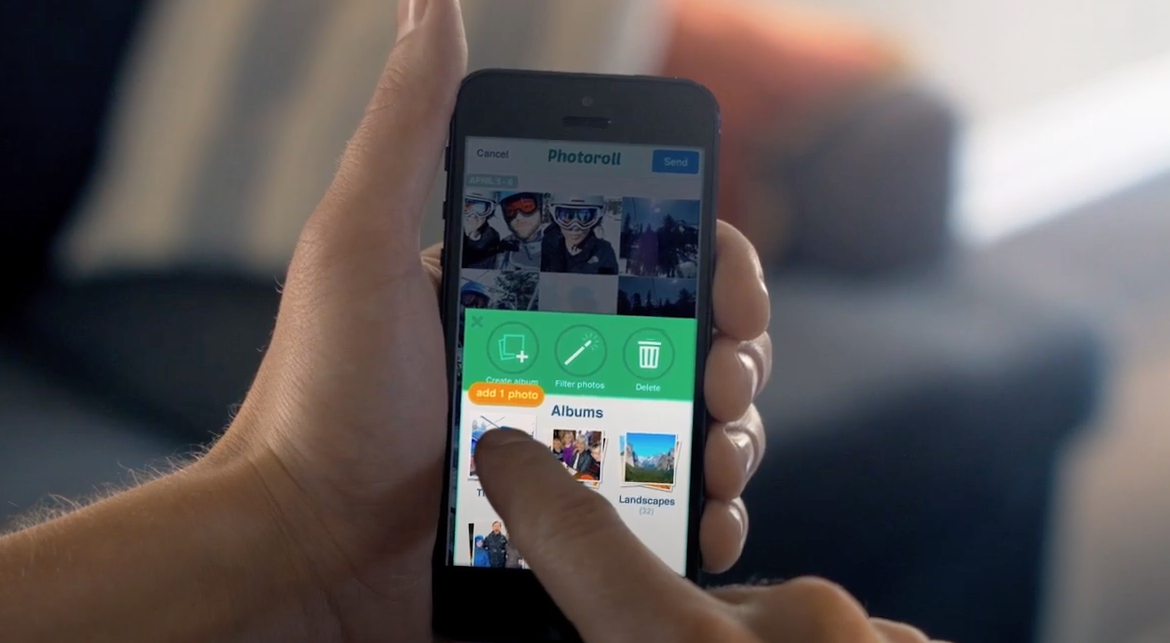
Image 1 / 2
David Lieb, Andy Huibers, and Jake Mintz began building Bump around Lieb's experience exchanging contacts at Chicago Booth. Development began in 2008; YC's directory records a 2009 founding date and Summer 2009 batch. These describe different milestones rather than evidence of two companies.[6]
Lieb had worked at Texas Instruments and the Stanford AI Lab, studied at Princeton and Stanford, and left his MBA to start Bump. His technical background mattered because the product concealed a matching service behind a familiar social action.[2]
The founders' initial problem was specific. In a room full of new acquaintances, entering contact details interrupted conversation. Bump offered a visible agreement between two people instead of requiring them to type. The gesture also supplied its own demonstration: someone could explain the product by using it.
Bump began with contacts and expanded into photos and files. Devices did not transfer data through their physical contact. A server matched signals from the phones and brokered the exchange. That approach avoided requiring NFC hardware, but still needed both participants to open the app.[4]
The team extended the metaphor to computers: users opened Bump's website and tapped a keyboard's space bar with their phone. A contemporaneous hands-on review described location permission, confirmation, and downloading the transferred images. It also reported difficulty getting the initial bump right. The task was useful, but the physical shortcut did not remove every setup step.[8]
PayPal supplied another application of the technology: its March 2010 announcement described account-to-account transfers by bringing iPhones together. This was a partner feature, not evidence that Bump earned transaction fees. Historical coverage records its removal in 2012; the reason and commercial terms remain unclear.[7][6]
Flock moved toward automatic photo grouping and sharing among friends. Its successor, Photoroll, placed that sharing inside a familiar photo gallery. YC's company profile identifies the unreleased Photoroll as a basis for Google Photos. The progression matters: the team moved from one transfer action toward a place where people could keep and use their photos.[1]
Bump served people meeting face to face and people sharing photos with friends or family. The second group became especially important. In May 2012, Lieb told The Next Web that users shared about two million photos daily. That is evidence of a substantial photo workflow, not merely curiosity about a contact trick.[17]
The expanding smartphone market gave Bump room to distribute. But counting every phone owner as an addressable customer says little about willingness to pay. A contact exchange occurs when two people meet; the service has to earn enough from those occasions or extend into work people repeat. The public record does not provide reliable paid conversion, cohort retention, or audited revenue series.
Email and existing contact or photo tools could complete the same tasks with different friction. Apple's iOS 7 introduced AirDrop for sharing with nearby supported devices. Apple's announcement specified hardware requirements and accepting a transfer; it was not an always-on feature available across every iPhone. It strengthened the native alternative, but announcement timing alone does not prove it caused the acquisition.[10]
The competitive lesson extends beyond copying a gesture. An operating system can supply distribution and convenience that an independent utility must earn. A standalone company needs another source of value, such as a recurring workflow, a customer relationship, or an outcome worth paying for.
Lieb's 2019 account describes small tests of paid features, stickers, and ads. He estimated roughly $1 of annual revenue per user and cited about 10 million monthly active users. His conclusion was a mismatch with venture expectations; he also said a smaller profitable Bump business could have existed. These were retrospective estimates, not disclosed annual revenue or a measured universal ceiling.[4]
Bump raised roughly $20 million. Contemporary reporting placed the Google price around $30–35 million; terms were not disclosed.[11] Dividing those figures does not reveal investor returns. Ownership, preferences, employee allocations, and deal terms are missing. The public evidence also does not establish the company’s burn rate.
The business question was therefore narrower than whether anybody would pay. Could the product's use and revenue support the scale its financing required? Funding bought the team time to explore, but it also raised the cost of accepting a modest utility business.
Lieb recalled spending $42 on a demo video and described Apple’s ad during Dancing with the Stars causing a 1,000-fold traffic spike within ten minutes that crashed the service. These are founder recollections, not an audited acquisition-cost calculation.[4]
Apple's billionth-download promotion offered unusually valuable exposure. It also makes the shorthand “no marketing” incomplete: low direct spending does not mean Bump grew without distribution help.[3]
YC's profile records more than 150 million installs by 2013. That cumulative measure does not share a time window or denominator with monthly active users. Dividing the two cannot establish a 93% churn rate or a retention curve.[1] The better evidence is Lieb's own account that long-term use and retention did not support the intended business.[5]
Lieb recalled calling from a list of Bump’s top 100 users with Jake Mintz. Photo sharing with family emerged as a central job; the calls connected activity on a dashboard to a reason people returned.[4] A large installed base became useful research access, even though it did not establish a sustainable business by itself.
Lieb's 2024 account connects the photo opportunity to the decision to sell to Google and build across Android and iPhone. He also describes investor pressure making it harder to follow the product's direction.[5] The evidence supports both a disappointing standalone business and a consequential acquisition. It does not justify reducing the transaction to an acqui-hire with no product substance.
After the acquisition, the team announced that new Google projects needed its attention. Bump and Flock were removed on January 31, 2014, and their data was deleted after an export period.[12] Google Photos later operated at a much larger scale: Google's May 2025 statement reports more than 1.5 billion monthly users and over nine trillion stored photos and videos.[13] That success belongs to a broader Google product and team, not to the Bump app's original economics.
First Round's interview records why Flock struggled: people did not understand how the app chose photos to share. It also describes a later version improving the experience by starting with a familiar gallery. This qualifies the claim that automation itself doomed Flock. The issue was whether users understood and controlled the result.[9]
A visible action helps people identify who receives something and why. Replacing that action with prediction can reduce effort while increasing doubt. A familiar context and a clear choice can retain automation's benefit without making the outcome mysterious.
AirDrop made an adjacent task easier, but Bump's financing and use-frequency problem preceded the sale. The observed sequence cannot isolate how much AirDrop affected usage, negotiations, or valuation. The photo transition supplies a stronger explanation of what Google wanted to continue. Public sources do not expose the acquisition negotiations or a before-and-after AirDrop retention series.