
Command AI
Summer 2020AcquiredAI-powered user assistance platform
Pressure-test this opportunity
Explore the risks and possibilities with a prompt for ChatGPT, Claude, or your agent.
AI-powered user assistance platform
Explore the risks and possibilities with a prompt for ChatGPT, Claude, or your agent.
Command AI began as CommandBar, a search-and-action palette extracted from its founders' first product. In four years it widened into a user-assistance suite spanning search, product tours, surveys, nudges, and an AI agent. The company reported hundreds of customers and roughly 20–25 million end users through those customers' products before Amplitude acquired it in October 2024.[1][7]
The acquisition ended Command AI as an independent company, but its product survived. Amplitude launched Guides and Surveys four months later and retained Command AI's behavioral targeting, guardrails, tours, checklists, surveys, and annoyance measurement.[2][3] The deal exposed the company's central constraint. Assistance becomes more valuable when it shares identity, behavioral history, cohorts, experiments, and distribution with a product-analytics system. Command AI proved that product teams would buy a better help layer. Amplitude supplied the surrounding data and sales reach.
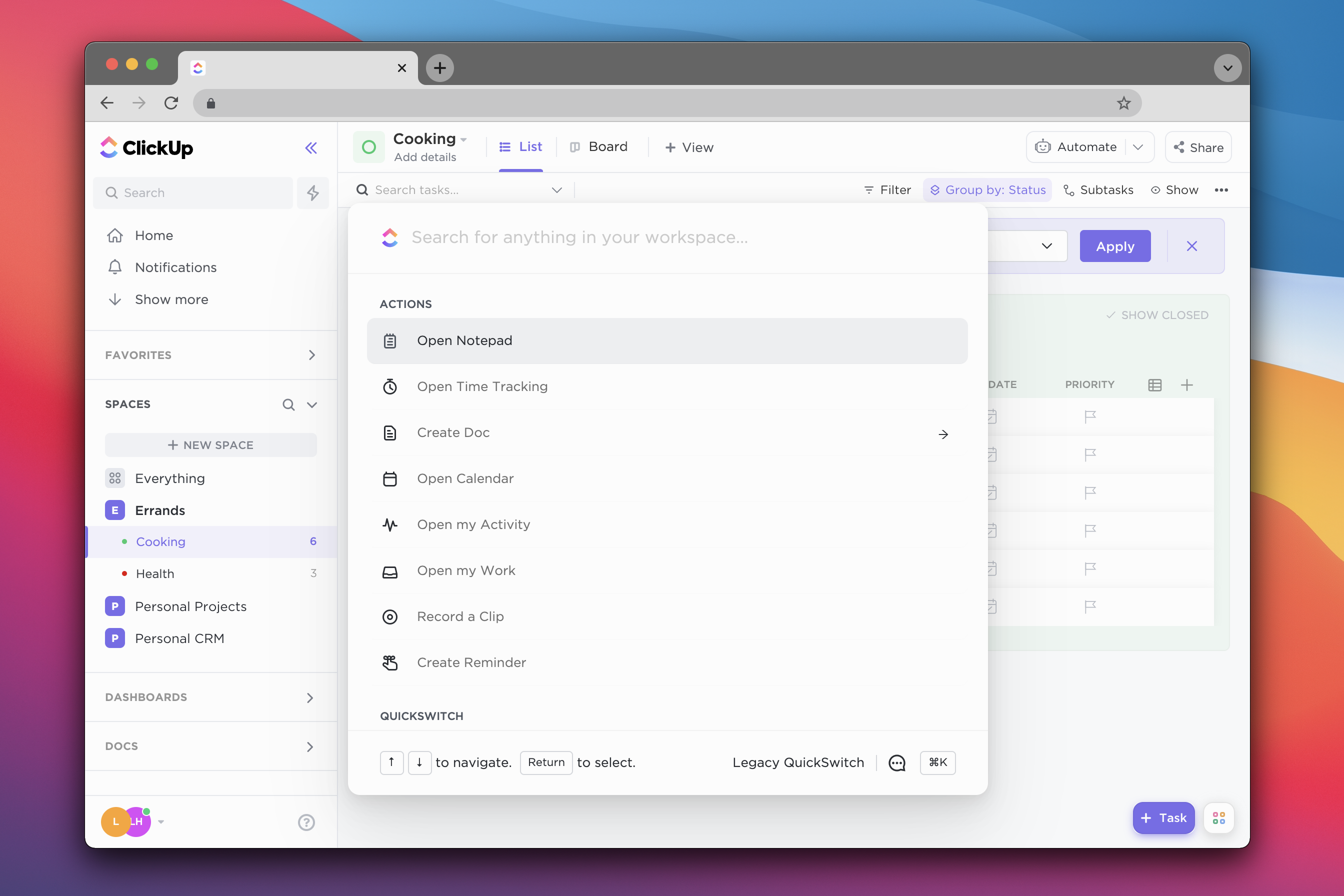

Image 1 / 2
James Evans, Vinay Ayyala, and Richard Freling first built codePost, a grading tool for computer-science assignments. Its new users struggled to learn the product, while experienced users found navigation slow. The founders built an internal command palette, inspired by the keyboard-driven menus used in developer tools. The feature answered a recurring software problem: products add capability faster than their interfaces explain it.[4]
The team separated that feature into CommandBar in 2020 and entered Y Combinator's Summer 2020 batch.[5] Evans summarized the initial conviction: “We thought this paradigm feels like it could be useful, but it is hard to build well.”[6] A year later he framed the job more directly: “Every app wants to make it easier for users to go from intent to action.”[4]
The early sales problem followed from that novelty. Prospects understood the product when they saw it inside an application, yet the team found it hard to explain over the phone. Embedded distribution helped: a CommandBar user inside one customer's product could encounter the interface before becoming a buyer elsewhere.[6] The same distinctiveness that opened meetings also forced the company to teach buyers a new category.
CommandBar first offered a low-code layer inside a web application. A developer installed an npm package or JavaScript snippet and identified the signed-in user. Product or customer-success staff then configured commands in a dashboard. End users searched in their own words to open pages, invite teammates, find help, or run other actions. The dashboard showed popular queries, synonyms, and dead ends, giving the customer a record of what users wanted but could not find.[4][9]
The embedded nature of the product mattered. Command AI offered global and per-widget themes so the assistance could resemble the host application's design system. Its own documentation treated a visually foreign widget as invasive.[10]
The scope later expanded in two directions. The Nudge Platform delivered tours, hints, announcements, surveys, and checklists based on behavior. It also measured signals such as users rage-closing a prompt. The AI Agent answered questions, performed actions, and co-browsed to teach an interface. That portfolio served product, growth, marketing, and support teams, which widened the addressable buyer set and the implementation burden.[5]
Command AI sold to software companies with complex products and enough user volume to justify an embedded assistance layer. Its customer lists included ClickUp, HashiCorp, Gusto, Netlify, LaunchDarkly, HubSpot, Yotpo, Thryv, and Freshworks.[4][5] The daily operators were product, growth, customer-success, and support teams; developers handled installation and actions that touched application logic.
No audited standalone market figure for Command AI's exact category was located. The company sat across product search, digital adoption, onboarding, in-app engagement, and support automation. Its reported reach grew from three million end users in April 2022 to about 20 million by May 2024, but those people used customer applications and did not represent paying seats.[4][7] An April 2024 podcast described seven-figure ARR and hundreds of customers; the figures were company-supplied and unaudited.[11]
The command palette initially competed with internal engineering work and established navigation. As Command AI added tours and nudges, it entered a crowded digital-adoption market. A 2024 buyer guide placed it beside Appcues, Chameleon, Pendo Guides, Userpilot, WalkMe, Userflow, and others.[12] Support tools and product-analytics suites supplied adjacent substitutes. Each expansion made Command AI more useful while placing it against vendors that already owned customer data, budgets, or distribution.
Command AI sold B2B software to the companies embedding its widgets. Public materials do not preserve reliable historical price points or audited gross margins. The product's economics likely combined platform access, end-user or usage bands, and enterprise terms, but the available evidence cannot establish the exact mix.
The company raised $23.8 million across its seed and Series A.[4] Amplitude's later 10-K records $33.6 million of purchase consideration: $26.7 million cash and $6.9 million in equity, including a $1.1 million holdback. The filing allocated $3.7 million to developed technology, $700,000 to customer relationships, $90,000 to the trade name, and $20.3 million to goodwill. It also recorded $13 million of restricted-share compensation for key-employee retention.[2]
TechCrunch's acquisition-day source estimated a price above $45 million.[1] The audited filing is the stronger record. Neither figure reveals founder or investor proceeds because ownership, liquidation preferences, and individual retention packages remain private.
Reported reach grew from a few hundred thousand end users in fall 2021 to three million in April 2022, roughly 20 million in May 2024, and about 25 million in acquisition coverage.[4][7][1] Evans separately said the company crossed $1 million ARR after YC.[13]
The customer logos and product continuation provide firmer evidence than reach alone. Amplitude retained the technology, migrated it into a new product, and continues to sell Guides and Surveys with behavioral targeting, experimentation, and annoyance controls.[3]
Evans gave the sharpest diagnosis in May 2024: “we failed at creating a category with our first product.”[7] CommandBar's novelty made the early product memorable, but buyers needed a demonstration before they understood it. Search, onboarding, engagement, and support already belonged to different budgets and established vendors. The broader user-assistance position made the product easier to place, at the cost of a larger feature surface and more direct competitors.
Personalized help needs behavioral context. A tour should know what a user has tried; a nudge needs a cohort and a cooldown; a product team needs to compare an intervention with activation or retention. Command AI could ingest behavior, yet an analytics platform already owned the canonical identity and event history. Amplitude's acquisition announcement described the combination plainly: cohorts would select users, experimentation would compare tours, and session replay would connect feedback with behavior.[14]
After the deal, Evans said most Command AI customers already paired it with analytics. He also compared Command AI's seven-person sales team with Amplitude's 200-person team.[15] The buyer could sell assistance into an installed analytics base and remove a separate integration and procurement decision. That distribution advantage compounds as guidance, surveys, experiments, and analytics share one account.
Command AI had real customers, a working embedded product, an experienced team, and a product philosophy aligned with Amplitude's move from observing behavior to changing it. Amplitude acquired both technology and the team, then shipped Guides and Surveys within four months.[2] The four-month launch and continued sales support a strategic-integration reading. The evidence does not support a distress-sale claim, and private ownership terms prevent a judgment on investor returns.