Overview
D2iQ began in 2013 as Mesosphere, selling software to make large groups of servers easier to operate. Its first platform combined Apache Mesos with enterprise tools. The company later concentrated on Kubernetes, another way to coordinate applications across machines, and renamed itself D2iQ. [1], [2]
Axios reported D2iQ’s liquidation through a creditor-assignment process in December 2023. [3]
The product had a different outcome. Nutanix acquired the D2iQ Kubernetes Platform, or DKP, and continued development with associated expertise. It later introduced Nutanix Kubernetes Platform, or NKP. Current Nutanix documentation explicitly describes that lineage, rather than an ended Kubernetes product. [4], [5]
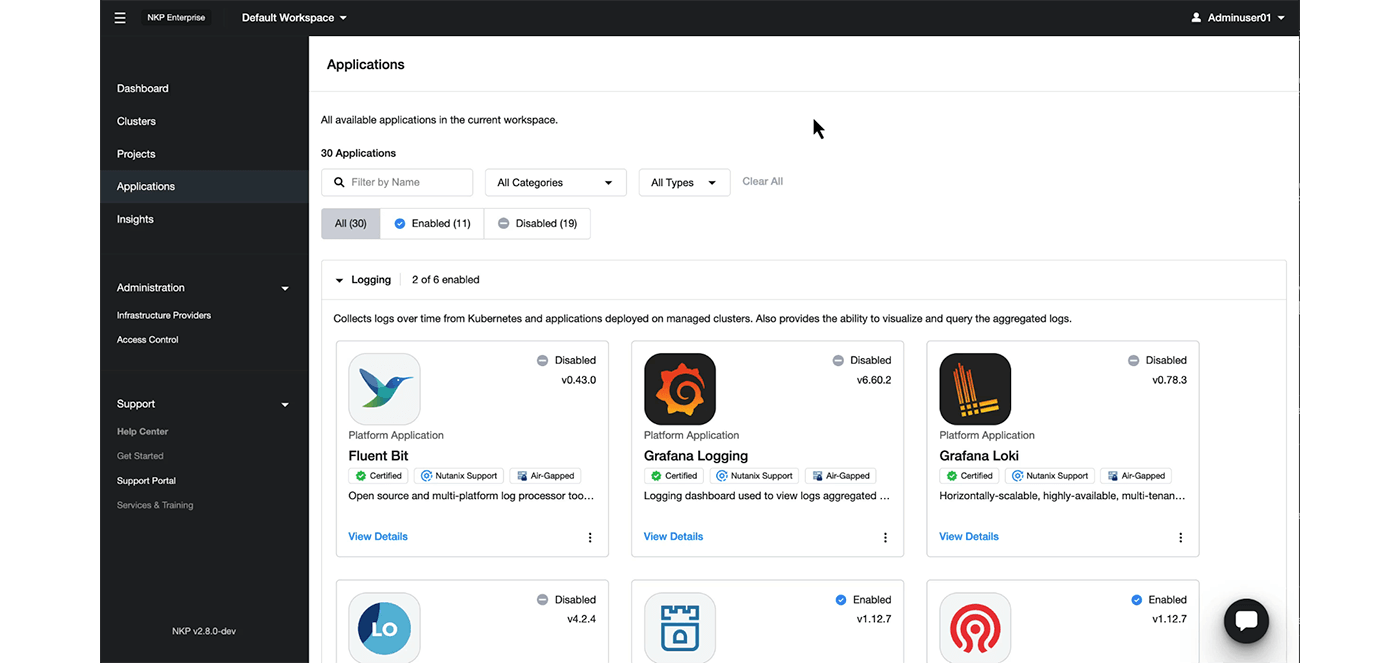
Image 1 / 1
Founding Story
Florian Leibert, Benjamin Hindman and Tobias Knaup founded Mesosphere in 2013. A Stanford case-study abstract identifies the three founders and the combination of proprietary software with Apache Mesos. The sources establish their related infrastructure work, but not precisely how all three first met. [6]
Knaup’s own account dates the founding to April 2013. Before that, he studied at the Technical University of Munich, moved to San Francisco and worked at Pingsta and Airbnb. At Airbnb, he worked on search, fraud detection and infrastructure. The startup applied experience from demanding internet services to the broader enterprise market. [7]
The original premise was to make a datacenter behave more like a shared pool of resources. An enterprise could run several distributed applications without treating each server as an isolated island. That still required a commercial answer to a difficult question: what would customers pay for when the underlying project was open source? Stanford’s case explicitly frames that boundary between community software, proprietary features and services. [6]
The founders’ later statements clarify the intended buyer. In the 2016 company announcement, Leibert said: “you need an agile IT infrastructure.” In a reported interview about the Kubernetes push, Knaup said: “Choice is very important.” Their pitch combined simpler operations with flexibility across the software an enterprise already used. These were positioning claims, rather than proof that every deployment was easy. [1], [2]
Timeline
- April 2013: Knaup dates the company’s founding to this month. [7]
- March 2016: Mesosphere announced a $73.5 million Series C led by HPE, with Microsoft joining as an investor. [1]
- May 2018: It announced a $125 million Series D. [8]
- August 2019: The company adopted the D2iQ name and emphasized Kubernetes and ongoing operations. [2]
- October 31, 2021: The DC/OS repository identifies this as its support endpoint, with existing contractual exceptions. [9]
- 2023: Nutanix acquired DKP; the buyer’s later launch release dates the purchase to that year. [10]
- January 2024: Nutanix confirmed the platform purchase and released DKP 2.7. [4]
- May 2024: Nutanix announced NKP, built on the acquired technology. [10]
- August 2025: Apache retired the separate Mesos project. [11]
What They Built
DC/OS pooled resources across machines and provided a common operating layer for distributed applications. The project’s own documentation describes software spanning multiple computers, with packaged components such as Mesos and Marathon. The aim was to give operators one way to deploy and run workloads across a larger environment. [9]
The initial portfolio covered more than web applications. Its 2016 announcement named technologies such as Cassandra, Kafka and Spark, alongside containers. It also announced Marathon 1.0 and a Jenkins-based delivery product called Velocity. Those names matter because the company was addressing a collection of operational systems, rather than merely wrapping one application. [1]
By the Nutanix purchase, DKP was a multi-cluster management platform. The January 2024 buyer announcement paired the acquisition with a new release and said the product would remain available across different infrastructure environments. Product continuity was therefore a concrete release commitment, beyond keeping a brand page online. [4]
Market Position
Target Customers
D2iQ sold to enterprise operations teams serving application developers. The platform needed to support their software choices and continuing responsibility for reliability. [2]
Market Size
The financing attracted both financial and strategic investors. The 2018 company release reported a $125 million round and nearly tripled year-over-year revenue, without supplying an audited revenue series in that announcement. These are dated financing and growth claims, not a demonstrated share of the entire cloud market or a measure of cash retained at liquidation. [8]
Competition
Kubernetes changed the platform around which customers and suppliers coordinated. The 2019 reporting describes D2iQ moving alongside other vendors toward that ecosystem. This left the company selling the quality of its ongoing operations and integration, while customers could choose competitors or assemble open source components. A popular underlying technology did not guarantee a unique commercial position. [2]
Business Model
Mesosphere combined open source infrastructure with proprietary software, enterprise packaging and services. Its business needed customers to value the supported combination enough to pay for it. The Stanford case identifies product boundaries, release schedules, customer needs and monetization as distinct problems to solve. Building useful open source software did not settle the cost of operating the commercial organization. [6]
The later DC/OS notice makes the separation visible. It allowed customers to obtain certain end-of-life or perpetual-use licenses, while explicitly excluding support from those licenses. Continued use of software and a continuing vendor support obligation are different parts of the customer relationship. [9]
Traction
The 2018 company announcement described Deutsche Telekom using Spark on DC/OS and Royal Caribbean running the platform across ships. These were specific company-reported deployments, rather than proof that every user of Apache Mesos paid Mesosphere. HPE also appeared among the round’s existing investors. [8]
Forge’s current company page says the original business ceased operations and no longer supports trading in its shares. Its displayed funding and valuation figures vary across sections, so this report uses dated company financing announcements instead of treating the current profile as a precise historical cap table. [12]
Outcome and evolution
The original company’s closure and the product’s later life must remain separate. Nutanix’s January 2024 announcement explicitly identified DKP as the acquired platform and said the team’s expertise would support its cloud-native organization. The announcement did not disclose consideration or establish a return for earlier shareholders. [4]
In May 2024, Nutanix introduced NKP as the successor platform. Its release explained product tiers and traced the technology to the 2023 acquisition. Current Nutanix material still identifies DKP’s evolution into NKP and provides product and support routes. This is a continuing commercial product lineage, even though the independent company ended. [10], [5]
Apache Mesos followed a separate path. Its project record says it retired in August 2025 and completed its move to the Apache Attic that October. The archived source remains available. Neither that retirement nor DC/OS’s earlier support endpoint means that Nutanix’s Kubernetes product also ended. Each platform has its own maintainer and support commitment. [11]
The available evidence does not establish final creditor recoveries or the precise consideration for the asset transaction. It also does not justify calling the transfer a federal bankruptcy acquisition. The practical customer question is which product, version and support agreement continued under the new provider.
Key Lessons
-
Separate the project from the business. An open source component, commercial product and operating company can reach different outcomes. Track the maintainer and support contract for each.
-
A platform shift changes the sale. When customers standardize on another underlying technology, the vendor must establish why its operating layer remains worth paying for.
-
Treat support as a product obligation. A perpetual license does not promise maintained code or help during an incident. State the support boundary before customers depend on it.
-
Verify continuity through releases. A buyer’s product update and current documentation provide stronger evidence than a retained name. Check what customers can actually operate next.