
Deed
Summer 2021AcquiredMaking it easy for employees to donate and volunteer with good causes.
Pressure-test this opportunity
Turn this teardown into a decision-ready prompt for ChatGPT, Claude, or your agent.
Making it easy for employees to donate and volunteer with good causes.
Turn this teardown into a decision-ready prompt for ChatGPT, Claude, or your agent.
If you only have a few minutes to spare, here’s what investors, operators, and founders should know about Deed (S21).
Deed began in New York in 2016 as an iPhone app for finding nearby volunteer work. By September 2017, it had nearly 30,000 downloads and relationships with 400 to 500 nonprofits. The company later turned that consumer interface into workplace software for employee giving, matching, volunteering, nonprofit vetting, and impact reporting.[1]
The employee experience won credible enterprise customers, but the category's hardest work sat behind the interface: moving money, checking nonprofits, enforcing company rules, supporting grants, and producing defensible reports. Bonterra acquired Deed on March 5, 2026 and launched a combined Bonterra Deed product four months later. The outcome suggests that Deed's engagement layer became more valuable inside a larger compliance and grantmaking system.[2][3]
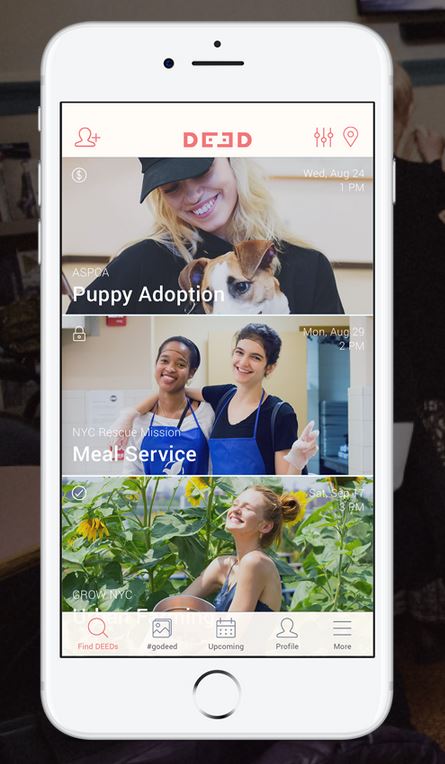
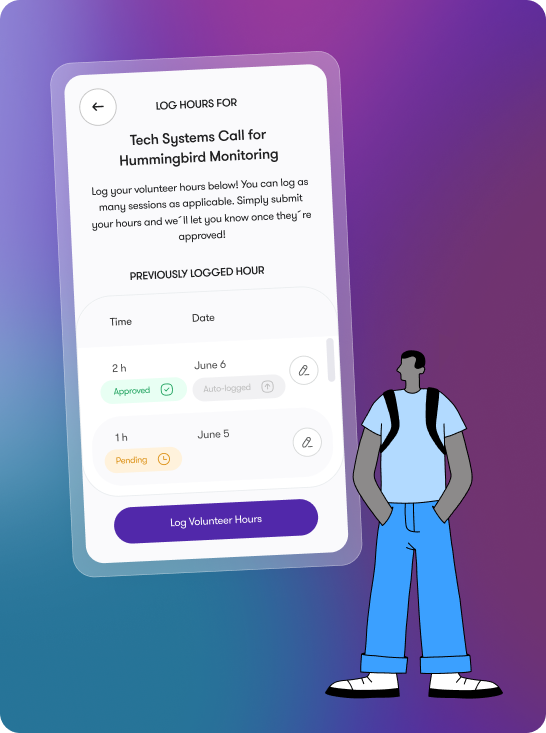
Image 1 / 2
Deevee Kashi studied philosophy at NYU, then promoted and managed New York nightlife venues and large events. He knew how to assemble a crowd, yet arranging useful volunteer work proved awkward. Kashi told the Jewish Standard/JTA: “When it comes to helping someone outside of yourself, it's really difficult.”[1]
Kashi left hospitality work in August 2016 and launched Deed that October. The app presented nearby opportunities as cards with clear dates, causes, locations, and commitments. A user could browse, choose an activity, and invite friends without calling several organizations. The team framed service as part of ordinary social life rather than an annual duty.
The early company improvised around scarce cash. Kashi's 2026 retrospective says the team held ticketed events about social issues to pay interns while he took no salary. Nonprofits supplied opportunities, and corporate social-responsibility practitioners explained what an employer deployment would require. Inquiries from Facebook and Snapchat executives in 2017 helped reveal the enterprise opening.[4][5]
Aske Ertmann brought more than 15 years of enterprise-application work. Steve Liu brought institutional-finance and sales experience. Y Combinator credits Kashi, Ertmann, and Liu as founders and placed Deed in its Summer 2021 batch, though public sources do not explain how the three first met.[6]
The company moved from consumer discovery into employee giving, matching, skills-based service, communities, and program administration. When Bonterra announced the acquisition, Kashi summarized the product belief: “User experience should never stand between people and doing good.”[2] That idea survived the pivot and became the part Bonterra wanted most.
The consumer app solved volunteer discovery. It turned nonprofit directories into concrete activities: walk dogs, serve meals, tend a garden, pick a date, and bring friends. Users could filter by time, location, and cause. That interaction became the seed of the enterprise product.
Read the complete post-mortem, the rebuild playbook, and the exact reasons Deed is still worth studying now.