Overview
Farmdrop connected UK shoppers with independent food producers, promising fresher food and a larger share of the retail price for farmers. Its business grew from local collection points into a home-delivery operation. It entered administration on 17 December 2021; the legal company was dissolved on 18 March 2024. Companies House company record Companies House insolvency record
The central problem was sustaining the distribution business while preserving the producer promise. More orders still required collection, packing, delivery and support. Later financial reporting describes sales growth alongside large losses. Supplier accounts show that Farmdrop created real value for some growers, then exposed them to concentrated demand and unpaid bills when it closed. The Grocer’s administrator-report coverage, 2022 Organic Growers Alliance, supplier accounts, Spring 2022, page 17
Founding Story
Farmdrop Limited was incorporated on 20 June 2012, initially as The Local Food Movement Limited. Its registration date anchors the company’s origin; product histories variously describe later service launches. Ben Pugh and Ben Patten launched the early service together. Companies House company record Contemporary founder-team reporting, 2014
Pugh had worked in finance covering retailers. In his first-person Foodism account, he recalled a grower receiving £1 for a squash that a supermarket sold for £3. He wanted to change how value reached farmers. He said, “I was unhappy with the lack of fresh and locally sourced food” available in shops. His account explains the customer problem that motivated him. Ben Pugh, Foodism first-person account, 2018
The operational work became apparent early. Writing about cash flow in 2014, Pugh admitted, “I got this totally wrong at the beginning.” Ben Pugh, cash-flow essay, 2014 His initial distribution model used local hubs and people who coordinated collections. The producer received 80% of the retail price, the local keeper 10%, and Farmdrop 10%, according to a contemporary founder interview. Later company material described a 75% producer share under a changed model. These are different arrangements at different dates. City AM founder interview, 2014 Farmdrop funding announcement, 2016
Timeline
| Date | Event |
|---|---|
| June 2012 | The legal company was incorporated. Companies House company record |
| 2014 | Contemporary coverage described community collection hubs and a crowdfunding round. City AM founder interview, 2014 |
| February 2016 | Farmdrop announced a £3 million round led by Niklas Zennström through Atomico. Farmdrop funding announcement, 2016 |
| September 2017 | The delivery service expanded to Bristol and Bath, according to subsequent funding coverage. Tech.eu Series B reporting, 2018 |
| June 2018 | A £10 million Series B was reported, with £20.75 million cumulative investment at that time. Tech.eu Series B reporting, 2018 |
| 17 December 2021 | Administration began. Companies House insolvency record |
| December 2023 | Administration ended. Companies House insolvency record |
| March 2024 | Companies House records dissolution. Companies House company record |
What They Built
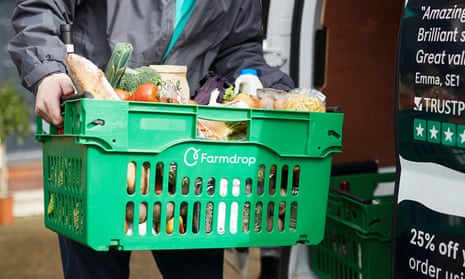
Farmdrop combined an online storefront with a physical food-distribution system. Shoppers chose groceries from named producers, then selected a delivery slot. The historical Spree vendor case study describes producer stories and dietary filters. Its page now carries a 2024 date while discussing the earlier business. It documents the old product, rather than a relaunch after dissolution. Spree’s historical product case study
Former developer Erik Nygren describes how changing the last delivery step from collection points to homes required a storefront rewrite. The more important constraint was availability by delivery date. Fresh produce arrived from farms at a packing hub, and the shop needed to show what could reach the customer on the chosen day. The interface therefore started with a delivery date and filtered stock accordingly. Former developer Erik Nygren’s account
Farmdrop coordinated demand, producer availability and delivery. Removing a supermarket from the transaction did not remove those tasks or their costs.
Market Position
Target Customers
The proposition addressed shoppers who valued food provenance and producers seeking a better route to urban customers. The purchasing experience still had to fit a household’s practical needs, including range, price and reliable delivery. Ethical intent could attract interest while leaving those requirements unchanged.
Market Size
The reviewed evidence does not establish Farmdrop’s obtainable market or the share of customers who ordered repeatedly at profitable delivery density. Headline grocery-market size would not answer those questions. Company-reported product and supplier counts describe range, not sustained demand.
Competition
A current entrant also competes with software that already supports local food enterprises. Open Food Network UK provides storefronts, order cycles, supplier connections and subscriptions. Its current pricing is free for monthly sales up to £500, then 2.4% including VAT for £501–£6,000. This is a software fee; food, staff and delivery remain separate costs. Open Food Network UK pricing, checked October 2026
The December 2024 Procurement for Good announcement describes four food hubs testing ways to sell local food into public-sector procurement. It shows continuing work on coordination and distribution, while treating viability as a research question. It does not prove that a new national home-delivery company would succeed. Open Food Network, December 2024 project announcement
Business Model
Farmdrop promised producers 75% of the retail price in its 2016 announcement. The remaining share had to support the company’s own activities. That headline split alone cannot establish gross margin after fulfillment, refunds, marketing and overhead. Farmdrop funding announcement, 2016
Tech.eu reported a £10 million Series B in June 2018, led by LGT Impact Ventures and Belltown Ventures, with Atomico participating. Its £20.75 million cumulative figure belongs to that date; it is not a final lifetime total. The proposed Manchester hub was an expansion plan, rather than evidence of an executed profitable operation. Tech.eu Series B reporting, 2018
The Grocer’s February 2022 coverage of the administrator’s report describes unaudited revenue of about £18 million for the year ended 30 June 2021 and a £12.8 million loss. Higher sales still did not cover the business’s costs. They do not establish the loss on each individual delivery. The Grocer’s administrator-report coverage, 2022
Outcome and evolution
Farmdrop stopped deliveries in December 2021. Contemporary closure reporting, December 2021 The registry separately establishes administration and the later dissolution. A current visit to farmdrop.com redirects to Planet Organic; farmdrop.co.uk redirects to Swaledale. Those destinations do not establish continuity of the original legal company or its obligations. Companies House company record Companies House insolvency record Historical farmdrop.com redirect, checked October 2026 Historical farmdrop.co.uk redirect, checked October 2026
The collapse affected more than investor returns. In the Organic Growers Alliance journal, Purton House Organics said Farmdrop had represented about half its turnover. The farm described cuts to staff hours and plans to find other outlets. Flourish Produce had invested for a proposed relationship that had not yet begun. Grown Green described unpaid deliveries and excess crops, while also saying the higher historical margins had made the relationship worthwhile. These are individual supplier accounts, not a representative survey. Organic Growers Alliance, supplier accounts, Spring 2022, page 17
A failed intermediary can have delivered useful prices and market access before failing. The lesson is to test whether the whole chain can fund its work, and how much dependence it creates for suppliers. The available evidence does not isolate whether a smaller footprint, different prices or a slower expansion would have produced a durable company.
Key Lessons
Measure the cost of a completed basket at the actual delivery density. A larger producer share only remains useful when the distribution service can pay its own bills.
Track supplier concentration and payment timing. A grower can lose both receivables and its next route to market in one closure. Help producers retain records, customer channels and alternative outlets.
Validate each expansion before adding fixed costs. Compare contribution after packing, transport, waste and support across repeat orders. Revenue growth alone cannot establish that a new hub can sustain itself.
Sources
- Companies House company record
- Companies House insolvency record
- Contemporary founder-team reporting, 2014
- Ben Pugh, Foodism first-person account, 2018
- Ben Pugh, cash-flow essay, 2014
- City AM founder interview, 2014
- Farmdrop funding announcement, 2016
- Tech.eu Series B reporting, 2018
- Former developer Erik Nygren’s account
- Spree’s historical product case study
- The Grocer’s administrator-report coverage, 2022
- Organic Growers Alliance, supplier accounts, Spring 2022, page 17
- Contemporary closure reporting, December 2021
- Open Food Network UK pricing, checked October 2026
- Open Food Network, December 2024 project announcement
- Historical farmdrop.com redirect, checked October 2026
- Historical farmdrop.co.uk redirect, checked October 2026