
Overview
Finley built software for the work that begins after a company signs a complex loan. From 2020 to 2026, its Credit Management System turned long agreements into borrowing-base calculations, covenant checks, funding requests, portfolio analytics, and investor reports. [1] [12]
The product found real demand. The strategic limit emerged deeper in the workflow. Lenders and borrowers wanted one party to own both the software and the operational truth behind servicing, verification, and collateral. Finley addressed that demand by joining Concord in March 2026. The acquisition ended Finley as an independent company but kept its product, team, and brand in market. [13]

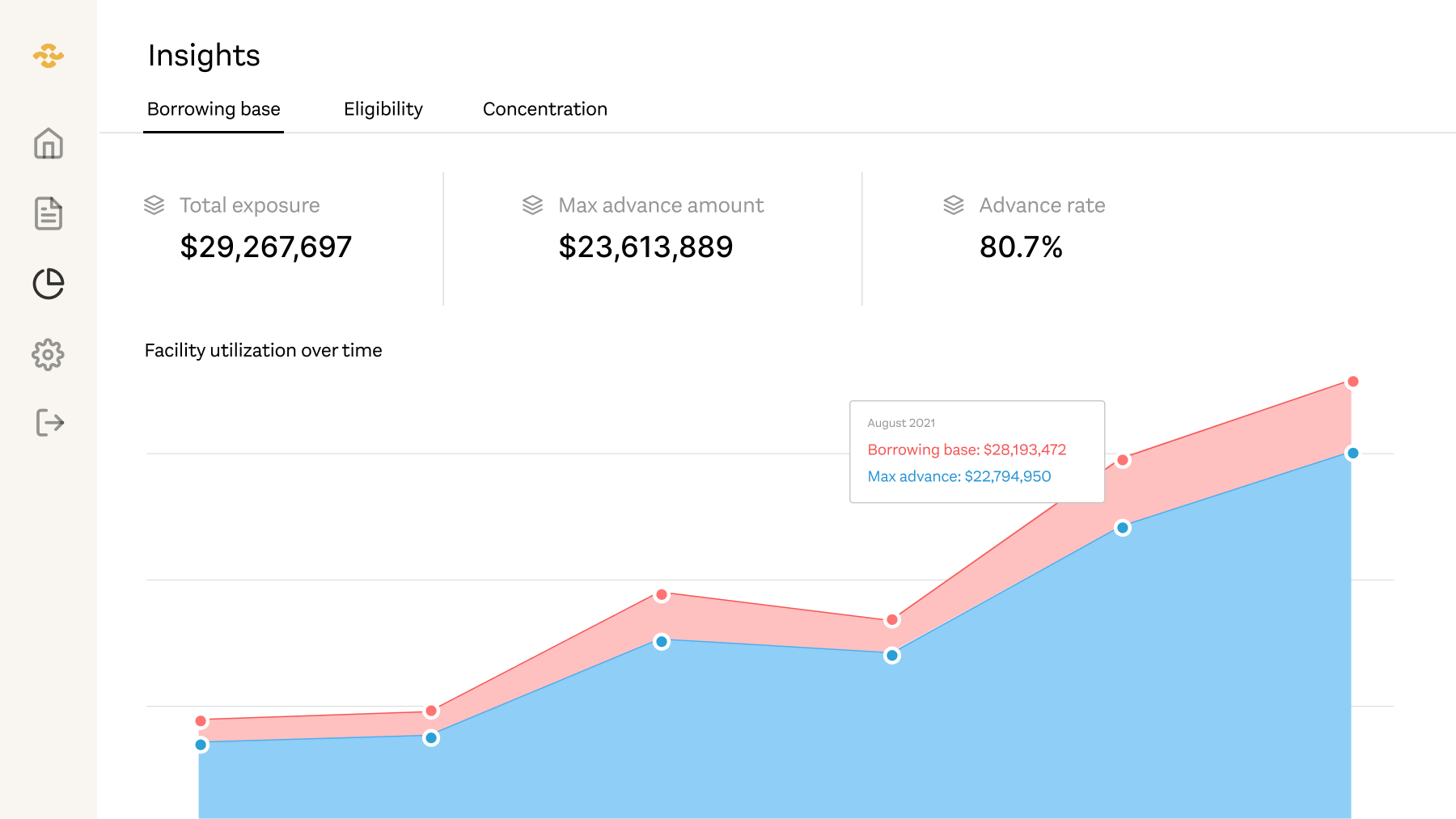
Image 1 / 2
Founding Story
Jeremy Tsui, Kevin Suh, and Josiah Tsui founded Finley in 2020, then entered YC's Winter 2021 batch. [1] The team combined three useful views of enterprise finance. Jeremy had worked in financial-risk modeling at Oliver Wyman and spent three years investing in debt capital at Goldman Sachs. Kevin had been the first engineer at cross-border credit-reporting company Nova Credit. Josiah had worked at Ironclad and Palantir. [4] [5] YC and the public record do not establish exactly how the three first met.
Jeremy's Goldman work supplied the initial problem. Non-bank lenders were filling gaps left by banks, but borrowers still had to interpret credit agreements that could run hundreds of pages. He told TechCrunch: "With consumer credit, we've seen a lot of innovation, but business credit or business lending has really been stuck in the past." [3] In a separate interview, he said that work informed Finley's product and sales roadmap for facilities between $20 million and $200 million. [4]
Kevin saw the same category from the infrastructure side. "Before Finley, I was the first engineer at Nova Credit, a global credit reporting platform, so I was in the B2B fintech space and knew how much financial technology infrastructure is still missing," he said in 2021. [5] Their banking, engineering, and legal-technology experience led to a narrow first product that made the obligations inside a signed credit agreement computable.
The founders' Launch HN described the baseline without euphemism. Borrowers managed compliance through email, Word, Excel, memory, and Post-it notes. Missing the right weekly report could put tens of millions of dollars of funding at risk. [2] Finley started with monitoring and reporting, then expanded toward a system of record for both sides of the loan.
Timeline
- 2020: Jeremy Tsui, Kevin Suh, and Josiah Tsui founded Finley in San Francisco. [3]
- Winter 2021: Finley joined Y Combinator and launched publicly around credit-agreement compliance and reporting. [1] [2]
- June 2021: Bain Capital Ventures led a $3 million seed round. [6]
- January 2023: CRV led a $17 million Series A after Finley reported dozens of customer engagements and billions of dollars of debt under management. [7]
- February 2025: Valley Bank deployed the Credit Management System for securities-based collateral and syndicated-loan servicing. [9]
- July 2025: Finley launched agents for agreement digitization, loan servicing, and portfolio analysis. [10]
- March 2026: Concord acquired Finley; Jeremy joined the buyer as Managing Director, Capital Markets. The price was not disclosed. [12]
What They Built
Finley's first job was to translate a credit agreement into a working calendar and rules engine. A finance team uploaded the agreement, connected its financial data, and saw upcoming reports, covenant tests, funding conditions, and borrowing capacity. Instead of copying values among spreadsheets and email threads, borrowers and lenders worked from the same structured facility model. [2]
The product grew in both directions. For borrowers, it coordinated funding requests, lender reporting, compliance, and portfolio data. For lenders and asset managers, it handled loan servicing, calculations, collateral monitoring, portfolio analytics, and investor reporting. The later credit-administration product added data aggregation, cash management, reconciliation, accounting, capital calls, and audit support. [14]
Finley designed around existing financial systems instead of attempting to replace bank cores. Valley Bank used the platform across securities-based collateral management and syndicated loans. The bank said the deployment displaced legacy technology that was expensive and laborious to maintain. Finley's system orchestrated post-origination work while leaving the core in place. [9]
The engineering choices were coherent with that integration job. Kevin described a 2021 monorepo built in TypeScript across React, Node.js, GraphQL, Express, Postgres, Lambda, and AWS CDK. One language spanned the web application, backend functions, and infrastructure definition. [5]
By July 2025, Finley layered three agents onto its data and workflow base. A Digitization Agent parsed credit documents, a Servicing Agent handled post-funding work, and a Portfolio Analysis Agent surfaced trends. Jeremy argued that reliable automation required the underlying data lake, interest and invoicing engines, and portfolio analytics; a chatbot alone could not run a credit back office. [10]
Market Position
Target Customers
Finley began with high-growth borrowers managing large private-credit facilities. Ramp, Parafin, and TripActions were early reference customers. TripActions said the software helped coordinate the reporting and compliance work behind its $300 million Goldman Sachs facility. [3]
The company then moved upstream to lenders, asset managers, and banks. Valley Bank's 2025 deployment shows how far the product had moved. A borrower-side compliance assistant had become post-origination infrastructure for a regulated bank with more than $62 billion in assets. [9]
Market Size
Finley described private credit as a fragmented market worth more than $1 trillion, but that figure came from company material rather than an audited market study. [7] The firmer evidence is operational. The company managed billions of dollars of debt by January 2023, while Concord administered more than $60 billion across more than 5 million accounts when it bought Finley. [7] [12]
The market also became more interconnected. Finley observed in August 2025 that banks, private funds, insurers, pension funds, and other allocators were increasingly sharing transactions. More parties meant more transfers, reconciliations, and opportunities for records to diverge. [11]
Competition
Finley competed on two axes: software depth and operational accountability. Spreadsheets and bank cores had distribution but weak support for bespoke private-credit terms. Modern software vendors could parse agreements and coordinate workflows, yet servicing firms controlled the people and processes that reconciled cash, validated collateral, and stepped in when an originator failed.
The Concord deal combined those axes. Concord brought 35 years of operating history, servicing capacity, investor relationships, and a large administered asset base. Finley brought a modern agreement model, calculations, analytics, and user interface. [8] A standalone vendor could sell cleaner software; the combined company could also stand behind the records.
Business Model
Finley sold enterprise software to borrowers, lenders, funds, and banks. Public pages used demo-based sales rather than posted pricing, so contract values, gross margins, sales cycles, retention, revenue, and profitability remain unknown. The company also did not disclose valuation at the 2023 Series A. [3]
Capital was clear. The $3 million seed and $17 million Series A account for $20 million; Finley's current About page says total funding exceeded $20 million. [6] [8] YC lists 32 employees, while the company says 36 US full-time employees. [1] [8] Those figures are too thin for a responsible burn-rate estimate: compensation, hosting, professional services, and acquisition timing are all missing.
The move into administration added service revenue and deeper customer responsibility. It also changed the operating model. Finley was no longer selling only software that helped a customer complete the work; the combined company could perform and verify parts of that work.
Traction
Finley's public milestones point to sustained adoption. The company reported dozens of customer engagements and billions of dollars managed by January 2023. TechCrunch reported fivefold revenue growth during 2022, a team that doubled to 18, and a claimed saving of one to two finance roles for an average customer. Finley did not disclose the underlying revenue. [3]
The later evidence is stronger at the customer level. Valley Bank deployed the system into two complex lending workflows in 2025. Finley now reports 36 US employees and a 90% improvement in funding-request efficiency, although it does not publish the baseline or study method. [8] The acquisition release said the software managed billions of dollars across facilities, warehouse lines, and syndicated loans. [12]
Post-Mortem
A system of record met a system-of-responsibility ceiling
Finley reached an acquisition rather than a shutdown. No public evidence shows that the company ran out of money or lost its market. The acquisition announcement presents the deal as a way to extend a working product. The sharper explanation comes from what customers asked the team to add.
During the two years before the sale, customers repeatedly requested backup servicing, independent verification, and borrowing-base validation. They had chosen Finley for servicing and monitoring software, but still maintained separate providers, feeds, contracts, and reconciliations. [13] A digital record could show the state of a loan. Institutional investors also needed an independent party to test the data, reconcile cash, and take over servicing under stress.
Finley's remedies progressed from workflow software to verification tools and AI agents. Those products reduced manual work, but they did not supply decades of servicing operations. Concord CEO Dhruv Vakharia stated the buyer's thesis directly: "Our clients need a partner that owns both the technology and the operations." [12] The acquisition supplied the missing responsibility layer.
More product surface increased the trust burden
Finley widened from borrower compliance into bank servicing, fund operations, portfolio analysis, and AI-assisted administration. Each step raised the value of the system and the consequence of error. A missed task is inconvenient; an incorrect borrowing base, covenant test, or cash allocation can affect whether capital moves.
The team responded by building calculation engines, audit logs, data pipelines, and agent workflows. Valley Bank's deployment showed that this architecture could replace legacy tooling. [9] Yet software controls do not replace the legal and operating role of a verification agent or backup servicer. Finley's March 2026 announcement made the distinction explicit. Pressure from borrower failures and fraud had raised expectations for data integrity and operational controls, and software alone could not satisfy them. [13]
The remedy worked by changing ownership. Concord already had servicing infrastructure, more than 5 million accounts, and more than $60 billion of administered assets. The combined team could use one data layer for both software and operations. Finley remained in market, but independence no longer offered the strongest path to broader adoption.
The exit preserved the product and leaves the price unknowable
Jeremy described Finley as the system of record and automation layer for everything after loan origination. He said Concord gave the software the scale, relationships, and operating depth it needed to reach its full potential. [12] He joined Concord, while Finley said its platform, AI features, team, loan servicing, and portfolio monitoring would continue. [13]
That continuity argues against calling the deal a conventional failure. It also does not establish a strong financial return. The price, investor proceeds, revenue, and profitability were not disclosed. The defensible conclusion is strategic: Finley proved the software wedge, then combined with the operator whose balance of trust, people, and servicing infrastructure could carry it farther.
Key Lessons
- The agreement was only the opening. Finley made dense credit documents computable, then followed the resulting data into servicing, portfolio monitoring, and investor reporting. Each expansion increased both customer value and the cost of being wrong.
- Enterprise credit buys accountable operations. Customers did not stop at a better dashboard. They asked for independent verification, backup servicing, and one team responsible for the same data from normal operations through a distressed handoff.
- A bank design partner changed the product's altitude. Valley Bank used the same agreement, pipeline, and calculation foundation across collateral and syndicated-loan workflows. That deployment showed the borrower tool could become bank infrastructure.
- The strategic exit solved a structural gap. Concord contributed distribution, 35 years of operating history, 5 million accounts, and the legal and human machinery of servicing. The product survived because the buyer completed the operating model.
Sources
- Y Combinator — Finley
- Hacker News — Launch HN: Finley
- TechCrunch — Finley closes $17M to turn 100-page debt capital agreements into software-managed code
- Finley — Founder interview: Jeremy Tsui on Uncharted
- Finley — Meet Kevin Suh, Co-Founder and CTO
- Finley — Seed fundraise led by Bain Capital Ventures
- Finley — $17 million Series A led by CRV
- Finley — About
- Finley and Valley Bank — Credit Management System partnership
- Jeremy Tsui — Announcing the AI-Powered Back Office
- Finley — The convergence of credit
- Concord — Acquisition of Finley Technologies
- Finley — Backup servicing, verification, and credit administration
- Finley — Credit administration
- The Longest View — Jeremy Tsui interview