
garten
Summer 2016AcquiredCreating workplace wellbeing.
Pressure-test this opportunity
Explore the risks and possibilities with a prompt for ChatGPT, Claude, or your agent.
Creating workplace wellbeing.
Explore the risks and possibilities with a prompt for ChatGPT, Claude, or your agent.
Garten made workplace food a managed service. Founded as Oh My Green in 2014, it stocked kitchens, catered meals, and later added unattended markets and wellbeing programs. HUNGRY acquired it in 2025, and now sells pantry services explicitly powered by garten. The product continued rather than shutting down. [2] [9] [10]
Its history shows a boundary: checkout software can automate a purchase, but somebody still has to procure, deliver, and replace fresh food. Office closures put that operating model under pressure. Garten adapted, then joined a larger food-service platform. Route density helps explain the operating pressure, while the deal’s stated rationale concerned combining services and distribution.
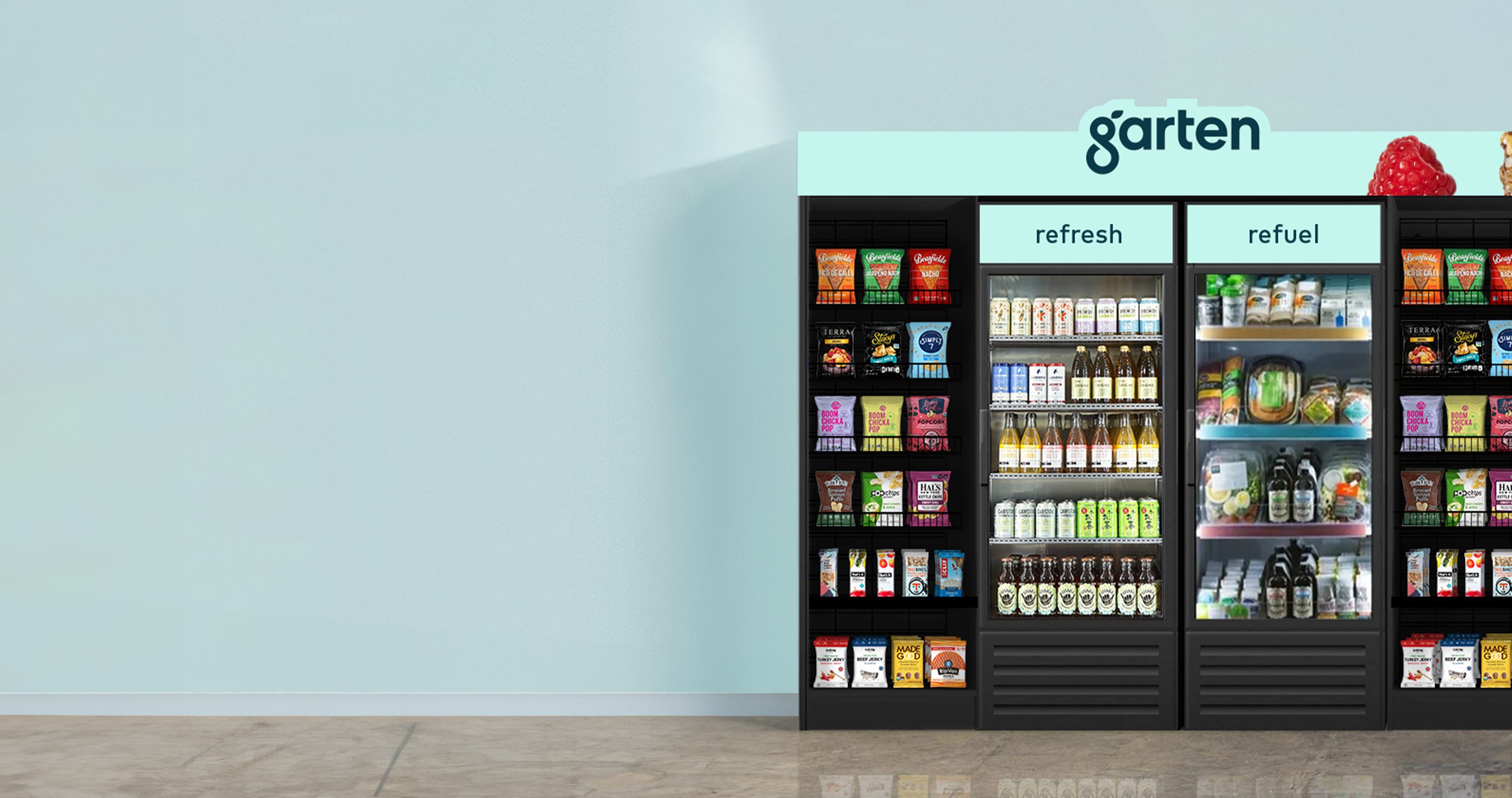
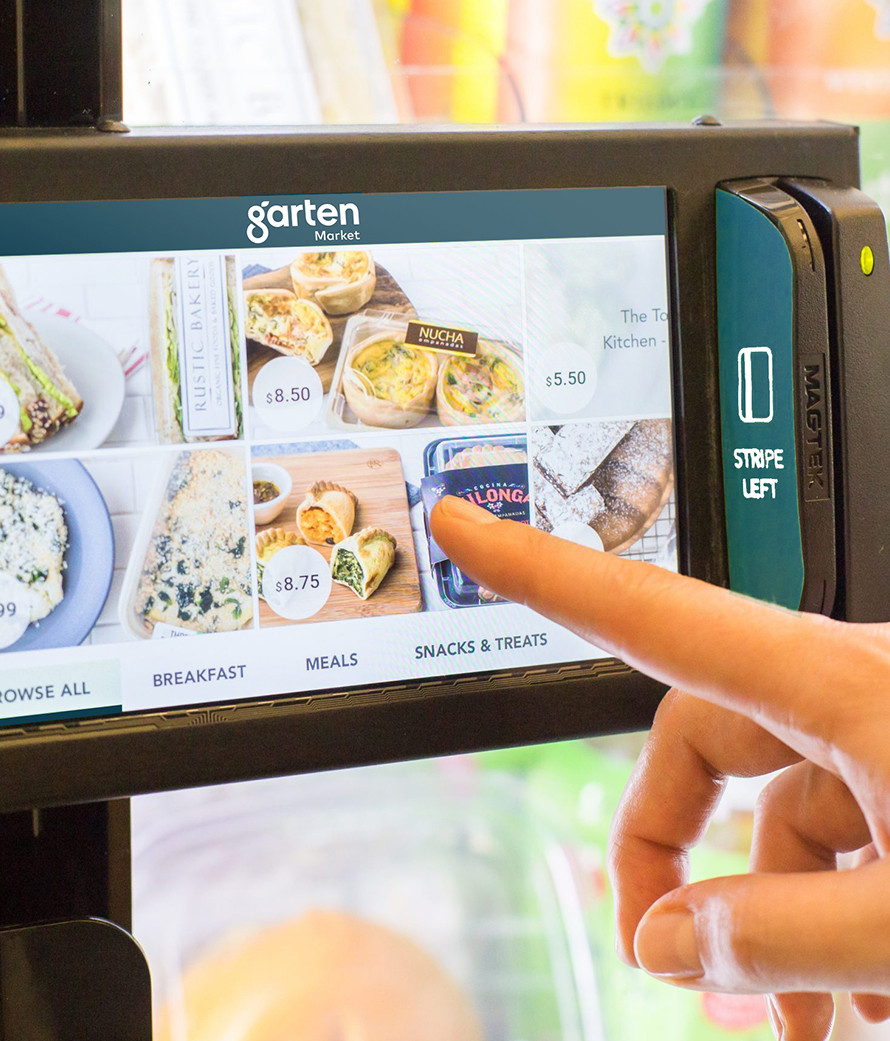
Image 1 / 2
Michael Heinrich brought experience at SAP, Microsoft, Bain, and Bridgewater to Oh My Green. YC records the company in its Summer 2016 batch. Garten’s own rebrand announcement dates its founding to 2014 and links the idea to healthier food at work. [1] [2]
A founder profile originally published by Symbolic Capital and reproduced by Heinrich’s later company, 0G, describes an early Stanford classroom project. He recalled: “The first order was $7.” The account also names Apple as an early customer. [3]
By 2020, the ambition had broadened beyond office perks. In the Byte Foods acquisition announcement, Heinrich argued that “companies of all sizes should be able to have accessible options” for food and services. Unattended food retail offered a way to reach sites that could not subsidize an entire catering program. [6]
The product did not require every worker to become a subscriber. Workplace buyers arranged a program, while staff received stocked food or bought items at a market. That organizational buyer simplified distribution, but tied demand to the places where employees worked.
The 2020 suite covered staffed kitchens, office snacks, meals, remote boxes, unattended fridges, and wellbeing classes. The announcement claimed doubled customer numbers and named Autodesk, Google, and Slack. Neither the customer claim nor this breadth establishes profitability for each service. [2]
The current site presents a dashboard for order and delivery management, budgets, employee feedback, fulfillment, and stockouts. HUNGRY’s continuing offer also advertises consumption and preference analytics. The software made the physical service more visible; it did not replace the service. [13] [10]
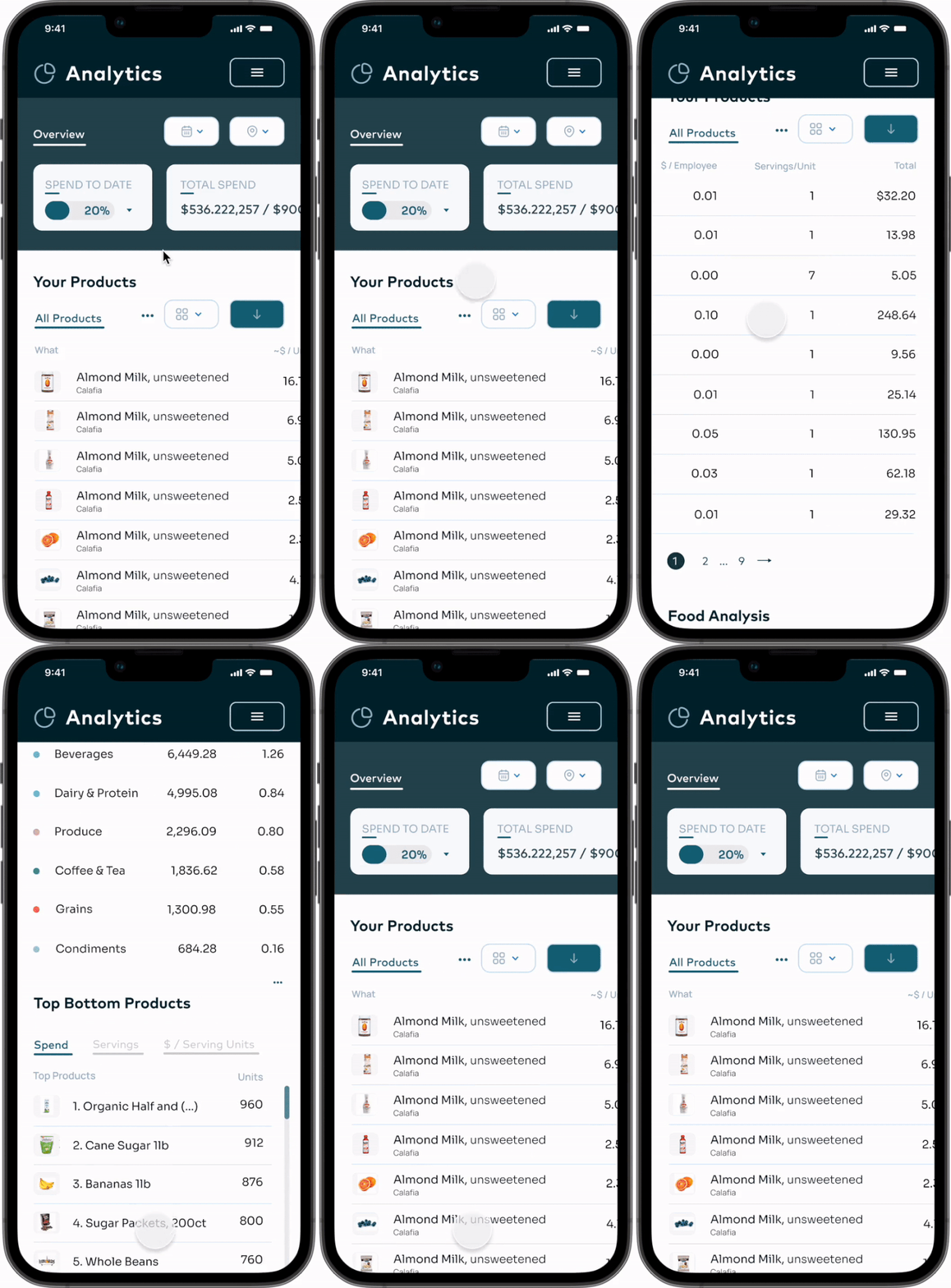
The Byte deal matters because it separated two roles. Contemporary reporting described 500 Bay Area smart-fridge locations operated by Byte Foods. Byte Technology retained the hardware and licensed software; Oh My Green became its customer. Neither the acquisition nor RFID checkout turned food delivery into a software-only business. [7]
Workers opened a fridge with a payment card. RFID tags let the system identify which items disappeared when the door closed and charge accordingly. Operators still bought, stocked, and managed the food. Garten’s acquisition announcement explicitly targeted workplaces, hospitals, government facilities, and universities, with locally adjusted assortments. [7] [6]
Garten’s workplace buyer could buy both convenience and an employee benefit. Its current site recommends markets for populations of 80 or more. That is a product recommendation, not a disclosed break-even threshold: attendance, purchase rates, subsidies, waste, and route costs still differ by site. [13]
Public workforce data show why headcount alone is an uncertain demand proxy. BLS reports that 22.8% of people at work teleworked for pay during the 2024 reference week; 77.2% did not. Those annual averages do not measure Garten’s customers or an individual site’s footfall. NAMA’s 2024–25 census overview describes growth in self-service retail and workplace amenities, but its public summary does not isolate Garten’s addressable market. [17] [18]
Current competition overlaps the proposed rebuild. Byte markets 24/7 healthcare food access, including night-shift staff, employee badges, and campus payment integrations. Its Metz Culinary case study describes feeding third-shift workers after cafeterias close. CookUnity advertises data-restocked workplace fridges and 24/7 access. Shift-aware fresh food therefore needs a demonstrated local service advantage, rather than an assumption that hospitals are an empty category. [14] [15] [16]
Garten combined employer-funded programs with employee purchases and managed food operations. Its 2020 Byte announcement specifically aimed to reach employers without fully subsidized food budgets. That expanded the possible buyers, while changing who paid for each meal. [6]
The Spoon’s October 2018 funding article described $20 million as the total raised since 2016, despite calling the announcement a seed round. That wording does not justify treating the whole amount as new 2018 cash. The later founder profile reports a progression from $300,000 ARR in the first formal year to $100 million by 2019, but leaves the later measure unclear and provides no audited accounts. It also claims unicorn status without supporting deal terms. Those claims cannot establish dependable revenue, valuation, or investor returns. [5] [3]
The 2024 profile reports that COVID eliminated 95% of the business and nearly 70% of staff were let go. Its founder account describes cost cuts, equipment sales, and emergency equity fundraising. These figures are retrospective claims, not independently verified financial statements. Acquisition terms, product-level margins, route contribution, and customer retention are not specified in the cited company material. [3] [9]
Dated product material shows remote snack boxes, virtual classes, and contactless markets during the pandemic. The rebrand had been in development for over a year, so COVID was not its sole cause. [2] [8]
Route density is a plausible explanation for the pressure. A shared workplace drop spreads travel and restocking work across more potential purchases; scattered homes require a different fulfillment model. However, public sources do not disclose site-level costs or prove that snack boxes restored comparable margins. The evidence supports adaptation and survival, not a measured claim that a particular pivot saved the company.
Garten’s announcement promised continued wellness, pantry, market, and analytics services with HUNGRY’s national platform. The current pantry page demonstrates ongoing branded distribution. HUNGRY’s partnership with Sodexo adds access to an existing institutional channel; its 2026 hungerhub announcement shows further geographic expansion. These observations support a strategic distribution rationale. They do not prove that Garten could not operate alone or that every customer received seamless service. [9] [10] [11] [12]
A rebuild needs operating evidence. A refrigerator dashboard is already available. A new operator must show that attendance-aware replenishment improves a specific route’s stockouts, waste, and allocated costs beyond the incumbent offer. Food safety also remains a prerequisite, not a forecast score: FDA’s 2026 model Code includes vending shutoff and service/restock controls, while applicable requirements depend on jurisdiction. Software cannot declare questionable stock safe by closing an incident. [19]