Overview
Graphite built code-review tools for engineering teams using GitHub. Its central workflow divides a large change into smaller, dependent pull requests, so a developer can continue working while earlier changes await review. The company began as a different developer-tools startup before its founders made their internal review tool the product.[1] [2]
In 2025 Graphite expanded its automated review features as AI coding tools increased the amount of code teams could produce. Cursor agreed to acquire the company that December; a16z now lists it as acquired by Cursor, while the exact closing date remains unverified. Graphite continues as a product, so a new entrant would compete with its surviving platform.[3] [4]
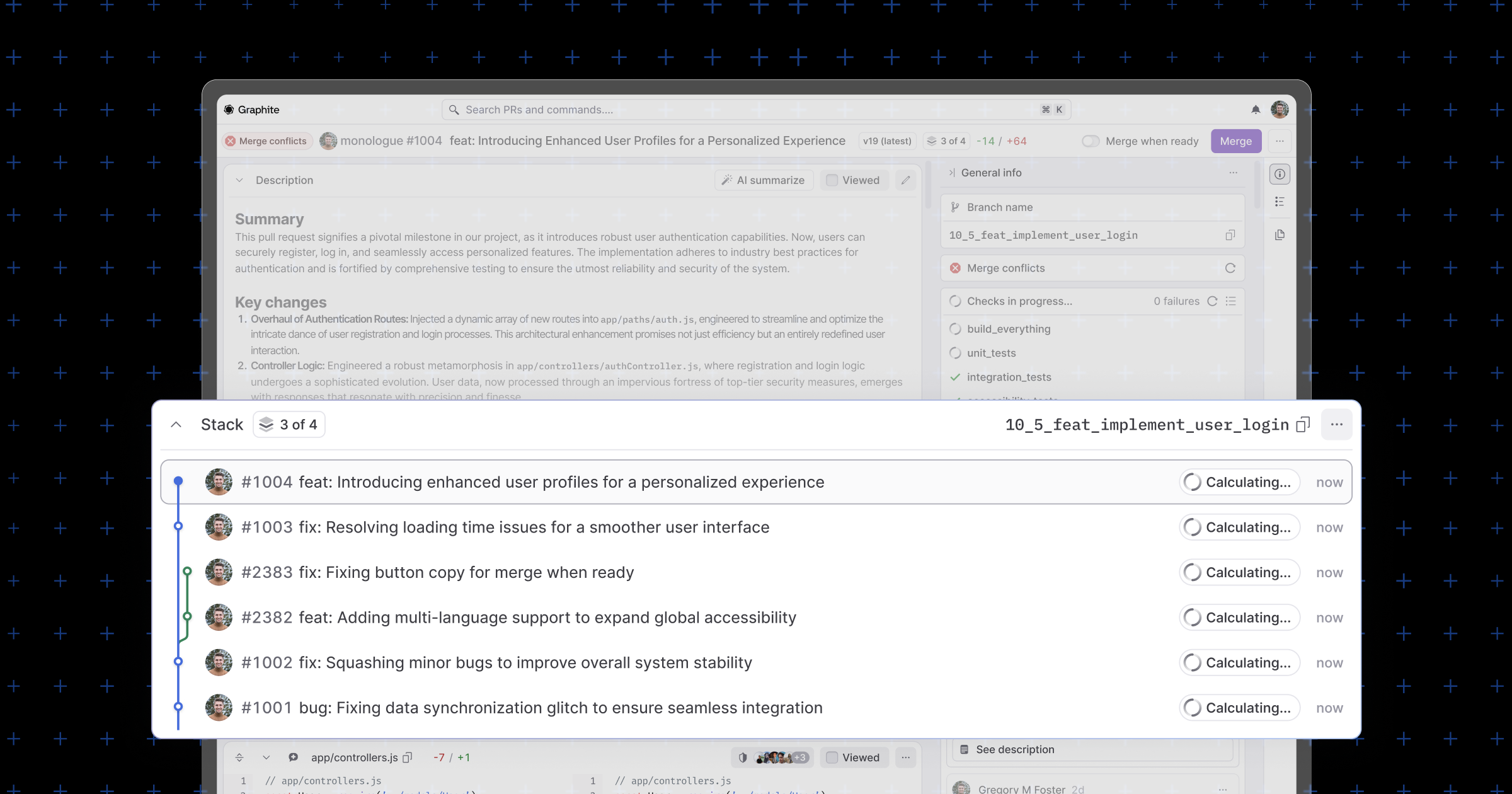
Image 1 / 1
Founding Story
Merrill Lutsky, Tomas Reimers, and Greg Foster founded Graphite in 2020. Reimers had worked at Facebook, Foster at Airbnb and Google, and Lutsky had previously founded a customer-feedback company. Their first direction was mobile development tooling. While working on that idea, the team missed the code-review workflows they had used at larger employers and built an internal tool.[5] [6]
The founders shared it with other engineers, who shared it further. In 2022 Reimers wrote that thousands of developers had already trusted it for daily work. Andreessen Horowitz led the company’s $20 million Series A that year.[1] [5]
Timeline
- 2020: Lutsky, Reimers, and Foster founded the company.[5]
- 2022: Graphite announced a $20 million Series A led by a16z.[1]
- March 2025: Graphite raised a $52 million Series B and expanded its AI review offering.[5]
- December 2025: Cursor and Graphite announced a definitive acquisition agreement.[3]
- Current: a16z lists Graphite as acquired by Cursor; the precise closing date is not public in the sources reviewed.[4]
What They Built
A pull request asks colleagues to review a proposed code change before it enters the main codebase. Large requests can be hard to review. In Graphite’s stacked workflow, each smaller request builds on the preceding one. A developer can create the next change while a reviewer considers the first, rather than waiting idle.[6]
Graphite layered its workflow on Git and GitHub. It added tools for coordinating and merging changes, then automated review features. In 2025 its AI product, Diamond, looked for possible errors and suggested changes. These features addressed a different part of the workflow from a coding assistant that writes the initial change: they helped teams inspect and integrate it.[5] [7]
Market Position
Target Customers
The product targeted teams that reviewed and merged changes in GitHub. Its early advocates included engineers familiar with internal workflows at large technology companies. By March 2025 Lutsky said Graphite served tens of thousands of engineers at more than 500 companies, including Shopify, Snowflake, Figma, and Perplexity. Those are company-reported figures, not audited usage data.[5]
Market Size
The available evidence does not establish the size of the market for stacked review or the share of engineering teams willing to pay for it. Broad developer-tools spending would not answer that question.
Competition
GitHub owned the pull-request workflow on which Graphite built. AI review specialists such as CodeRabbit competed for the same review moment, while Cursor’s Bugbot offered automated review alongside its coding assistant. Graphite’s stacked workflow gave it a distinct function, but also tied its value to an existing platform and its users’ willingness to change habits.[5] [8]
Business Model
Graphite sold software to engineering teams. In 2025 it made its core code-review offering free for teams of all sizes; previously the free tier covered teams of ten or fewer. Lutsky reported revenue growth of 20 times in 2024, but did not disclose the starting or ending revenue. That percentage alone cannot establish the business’s scale or profitability.[5]
Outcome and evolution
A workflow from inside a large company became a product
The founders’ internal tool addressed a problem they experienced directly. It also depended on a social change: reviewers and authors both need to understand a stack of related requests. The same workflow that lets an author keep moving can shift coordination work to the rest of the team. Graphite’s early sharing with engineers familiar with such systems offered a way to introduce that behavior.[1] [5]
Review joined code generation
Cursor made tools for writing code; Graphite concentrated on reviewing and merging changes. When the agreement was announced, Lutsky said Graphite would remain an independent product and the teams planned closer integrations. Cursor already had Bugbot, making the acquisition a combination of overlapping automated review and Graphite’s distinct stacked-change workflow. The companies did not disclose financial terms in their announcements.[3] [8]
a16z now lists Graphite as acquired by Cursor, and Cursor says Graphite has joined it. Neither source gives the exact closing day. The deal itself does not establish that Graphite failed, nor does the public evidence establish its investors’ returns.[4]
Key Lessons
- An internal workflow can reveal a market. Graphite’s founders turned their own review tool into the company’s main product after other engineers asked to use it.
- Review is a team habit. Stacked requests help authors continue work, but the entire review process must accommodate dependencies between changes.
- A free entry point can widen evaluation. Graphite expanded free core review in 2025 while developing paid AI features. Public revenue figures do not show whether that decision paid off.