
Heap
Winter 2013AcquiredCaptures user interactions with no code to generate analytics.
Pressure-test this opportunity
Explore the risks and possibilities with a prompt for ChatGPT, Claude, or your agent.
Captures user interactions with no code to generate analytics.
Explore the risks and possibilities with a prompt for ChatGPT, Claude, or your agent.
Heap let teams ask new questions about behavior they had already captured. Founded by Matin Movassate and Ravi Parikh in 2013, the YC W13 company reduced the delay between a product question and usable data. Its product grew from automatic interaction capture into event definitions, warehouse connections and proactive analysis.[1]
Contentsquare completed its acquisition of Heap on December 7, 2023. The disclosed rationale paired Heap’s cross-session product journeys with Contentsquare’s diagnosis of individual sessions. Heap remains available under that ownership. The useful lesson is how a collection advantage expanded into a wider workflow.[2][3]

Image 1 / 1
Movassate encountered the problem as a product manager at Facebook. Answering a new analytics question meant asking an engineer to add tracking, waiting for deployment and data, then asking a data scientist for a report. The founders chose to collect interactions before deciding which questions to ask.[1]
In their 2018 YC Q&A, Movassate and Parikh stated: “Analytics is a problem rooted in data collection, not visualizations.” They also advised: “Ask customers for money earlier.” Together, those observations connect product design to commercial testing: remove the waiting, then find out whether buyers value the result.[1]
Movassate later recalled building the prototype with Parikh in a basement. His March 2021 letter described a planned succession: Ken Fine, previously president and COO, became CEO while Movassate became chairman. He said the search for a successor had begun two years earlier. That account supports a deliberate leadership handoff; it does not establish founder removal or distress.[4] The observed accounts do not explain how the two founders first met.
Autocapture collected interactions with a client-side snippet. Virtual Events then attached business labels to that stored history. A team could define an event later and analyze earlier interactions, rather than wait for a new tracking deployment. Heap’s 2019 explanation also described the limits: backend payments and subscription state could require explicit events; some added properties were not retroactive; sensitive field values were not captured by default.[11] Automatic capture reduced a collection burden without eliminating the need to define the business question.
Sources extended the product into external systems. Its launch described connecting Marketo and Stripe, aligning identities, defining events and comparing re-engagement campaigns with purchases. Salesforce, Shopify and advertising systems supplied other parts of the customer journey. Some connectors were enterprise purchases, giving integrations both a product and commercial role.[7]
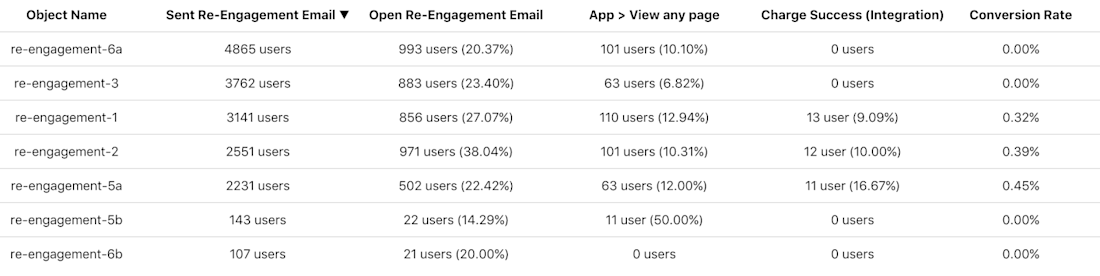
Connect carried defined behavioral data into warehouses. Heap’s June 2021 Snowflake announcement dated their partnership to early 2019 and identified customers using the combined workflow, including E*Trade, Huel and Clover. It reported Snowflake’s FY2021 Data Marketplace Partner of the Year award.[12]
Illuminate followed in June 2021, applying data science to surface overlooked behavior. Heap cited Workhuman’s nomination funnel as a customer example, with a reported double-digit increase in starts and submissions. The release gives no denominator, comparison group or precise effect size; it demonstrates a customer use case, not general causal efficacy.[9]
Heap served product teams and expanded across business functions. In the acquisition announcement, Fine described Heap’s North American base across SaaS, healthcare, financial services and ecommerce. Contentsquare brought a European origin and enterprise presence. Their proposed combination joined product coverage with geographic and customer reach.[13]
No reliable standalone addressable-market total is established here. Customer announcements show adoption, but company counts do not reveal paying seats, contract value or revenue. They should not be converted into a market-size estimate.
Heap’s collection advantage faced alternatives from product analytics and replay vendors. Mixpanel’s February 27, 2025 announcement made Autocapture available across its plans, alongside manual tracking and session replay. That is evidence of current convergence, two years after the acquisition.[14]
As of October 2, 2026, Heap still advertises a trial, Illuminate and integrated replay. Its Sense Chat offers natural-language analysis, summaries and follow-up questions. A new entrant faces established AI analysis and product analytics.[3][15]
Heap combined entry-level access with paid tiers and enterprise features. Current pricing lists a Free plan for up to 10,000 monthly sessions with six months of history. Growth offers an estimate after installation; Pro and Premier use custom session pricing. Connect and experience-analytics features have plan-specific packaging.[16]
The billing measure has changed across the company’s history. In the 2013 launch discussion, Parikh explained prorated monthly unique-user pricing and a trial. Readers questioned affordability for high-traffic publishers.[5] A collection-heavy product can create different value for a low-volume SaaS account and a large audience with shallow visits. Pricing needs to reflect the buyer’s work, not just the volume the system can ingest.
Observed sources do not disclose standalone revenue, margins, retention, acquisition consideration or investor returns. Funding and headcount do not establish burn or a forced sale.
Heap’s May 2017 release reported more than 6,000 companies and threefold revenue growth in the prior year. It named Zendesk, Twilio, Lending Club, Optimizely and other customers.[6]
The July 2019 founder announcement reported nearly 10,000 active customers, annual triple-digit revenue growth, tenfold event-volume growth over 18 months and 150 staff. It named Amazon, E-Trade, Twilio and WeWork. Those are company-reported measures with different units; event growth is not revenue growth.[8]
The December 2021 financing release used “over 8,000 businesses,” while the acquisition announcement used more than 10,000 companies. Their definitions do not establish a clean paid-customer growth or churn series.[10][2]
Heap had already moved toward proactive insight before Contentsquare acquired it: Sources launched in 2017, Connect in 2018 and Illuminate in 2021. Those dated products weaken the claim that Heap remained a single capture feature awaiting a second act. Its 2019 roadmap explicitly sought decision workflows and easier action.[8]
The more defensible strategic reading is complementary depth. Fine’s September 2023 account paired Heap’s lifetime journeys with Contentsquare’s individual-session diagnosis. Buying the capability and installed base could advance a broader platform faster than building both. That is an interpretation of the stated rationale, not evidence of a particular financial return.[13]
The launch discussion already exposed the tradeoff in broad data exploration. Parikh acknowledged that testing many hypotheses could produce false positives. Later event definitions, selective warehouse exports and privacy controls addressed different parts of the same problem: collecting more data does not automatically make each conclusion trustworthy.[5][11]
A weaker-growth or financing-pressure explanation remains possible, but the observed record does not establish it. The documented outcome is an acquired, continuing product. Assess its strategic fit separately from undisclosed economics.