Overview
IRL was Get Together, Inc.'s social calendar and group messaging product. It helped people discover events, make plans, and gather around shared interests. The company dates to 2016 in a Delaware court's account; the SEC dates creation of the IRL app to 2018. Those dates describe different stages of the venture.[1][2]
Its board wound down the company in June 2023 after an investigation challenged reported activity. The familiar claim that 95% of users were bots remains disputed. IRL's financing and governance came to depend on a growth story that the parties could no longer agree was real. Later civil and criminal allegations concern both user acquisition and financial controls; they do not constitute a criminal conviction.[3][4][5]
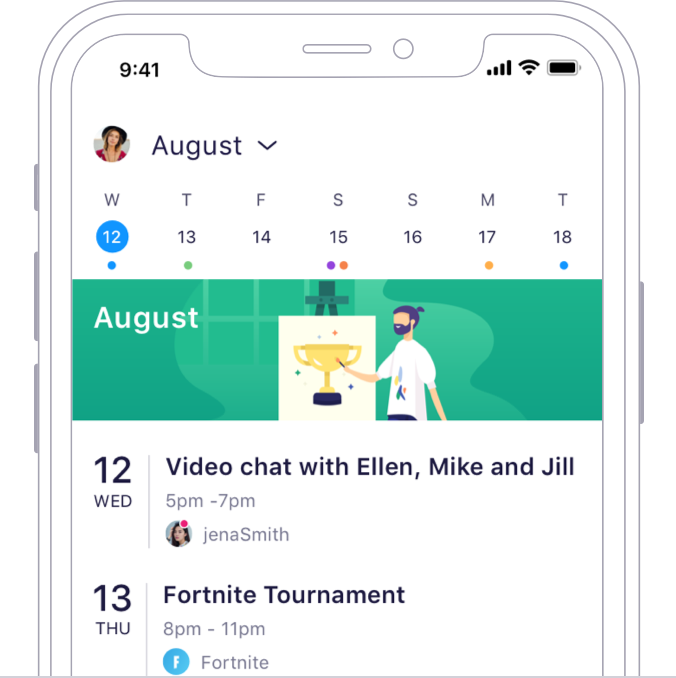
Image 1 / 1
Founding Story
The Delaware opinion identifies Abraham Shafi, Krutal Desai, and Genrikh “Henry” Khachatryan as Get Together's founders. Shafi was CEO and Desai president. Its background draws from the complaint and incorporated documents, rather than a trial finding about every historical detail.[1]
Shafi had earlier built recruiting software company getTalent. In a September 2020 interview, he said he left UC Berkeley to pursue that business and joined Dice after its acquisition. He later wanted to turn the calendar into a social product. He told Authority Magazine: “IRL’s purpose is to become the first truly social calendar.” Explaining the product idea, he said: “I started thinking about calendars”. These statements show his intended product direction; they do not validate subsequent growth claims. The reviewed sources do not establish how all three founders first met.[6]
The initial premise had a concrete use: friends often decide what to do through messages, while calendars record the eventual plan. Bringing those steps together could help a group act. That potential value depended on genuine participation and useful events, which an install count alone could never establish.
Timeline
- 2016: Get Together's founding year in the Delaware court's historical account.[1]
- 2018: Creation of the IRL social app, according to the SEC complaint.[2]
- 2020: Shafi described shifting toward virtual events during COVID restrictions.[6]
- May 6, 2021: TikTok named IRL as a Login Kit partner.[7]
- June 2021: IRL announced a $170 million Series C transaction at a $1.17 billion valuation.[8]
- December 19, 2022: The IRL team announced Memix, a free tool for turning text into GIF memes shared through existing chat apps.[17]
- June 27, 2023: IRL shut down at noon PDT, according to the surviving official notice.[18]
- July 2024 / August 2025: The SEC filed civil charges; federal prosecutors later announced a criminal indictment.[9][5]
What They Built
IRL combined discovery, a calendar, and group communication. People could join interest groups, post photos, run polls, chat, and coordinate plans. Contemporary coverage named groups around Among Us, Minecraft, and NBA fans. The company also announced a Culture and Creator Fund to support events and social activities. The sources reviewed establish that announcement, without establishing its spending or results.[8]
COVID restrictions changed the events people could attend. Shafi described a temporary “In Remote Life” framing and a shift toward virtual activities. That preserved the calendar's job while changing its content. The surviving product page still illustrates video chats and games; its continued availability does not mean the retired service has resumed.[6][10]
TikTok's original announcement verifies a distribution connection beyond IRL's own claims. Login Kit let users authenticate through TikTok, and its statement from Shafi connected the integration to event discovery. Authentication could reduce sign-up friction. It could not, by itself, prove that people formed durable communities inside IRL.[7]
The team also launched Memix in December 2022. Its announcement described making personalized GIF memes for existing chat apps on iOS and Android. This extended its communication work beyond IRL's own network. The release claimed a top App Store rank, which does not establish retention, revenue, or the authenticity of IRL activity. The evidence reviewed does not show how Memix affected the shutdown decision.[17]
Market Position
Target Customers
IRL pursued younger users who wanted groups and events outside Facebook. Its proposition joined two distinct needs: finding activities and maintaining a conversation among participants. A broad social network needed enough real people in the same interest or location; a calendar for an existing group could provide value with far fewer users.[3]
Market Size
No independently verified estimate of IRL's reachable paying market was established. Its reported audience cannot provide that estimate while authenticity and activity remain disputed. Group membership, a downloaded app, a conversation, and attendance are separate measures.
Competition
IRL's pitch overlapped with Facebook groups and events, messaging services, and event tools. The challenge was to move an existing group or help a new one become useful. Contemporary positioning identified a younger audience, but the public record does not establish reliable comparative retention.[3]
Current alternatives make a broad rebuild harder. Partiful offers free invitations and app-free guest responses. Luma offers a free event tier with unlimited events and guests, and charges a 5% platform fee on paid events. Apple introduced Invites in February 2025, with creation tied to iCloud+ and responses open to others. These are present-day competition facts, rather than explanations of a 2023 closure.[11][12][13]
Business Model
IRL explored paid groups and event-related monetization. Independently verified revenue and payer retention were not established. The announced financing therefore tells more about investor expectations than customer economics.[14]
The SEC complaint separates approximately $145 million of newly issued preferred stock from about $25 million spent purchasing existing employees' shares during the 2021 transaction. Calling the full marketed $170 million new operating cash would erase that distinction.[2]
Traction
Public reports repeated large user counts, but those figures are central to the dispute. The SEC alleged millions in incentivized acquisition spending were hidden from investors who were told growth was largely organic. The DOJ later alleged that related advertising expenses were disguised through third-party invoices. These remain allegations.[9][5]
Paid acquisition is compatible with a useful product. Mislabeling its source prevents reviewers from measuring whether customers arrive voluntarily, remain engaged after incentives end, or cost more to acquire than they will pay. This distinction is the operational issue even without resolving the bot fraction.
Outcome and evolution
The original company's June 2023 wind-down is established independently of the parties' disagreement about its cause. The root domain displays an asset-inquiry notice, while www.irl.com retains the original shutdown notice naming June 27 at noon PDT. Its 2023 footer and contemporary coverage establish the year. Old promotional pages on a subdomain also remain accessible; these pages do not establish a relaunch.[18][3][15][10]
Shafi publicly rejected the board's bot finding in July 2023. The March 2025 Delaware opinion allowed most founders' claims against investor-affiliated directors and others to continue. It expressly left the competing accounts unresolved. That procedural decision neither vindicated the founders nor proved the board's explanation.[4][1]
As reviewed October 23, 2026, a final criminal outcome was not established in the sources reviewed. The DOJ's indictment announcement preserves the presumption of innocence. An official Delaware docket for a related civil action lists a stay. The strongest supported conclusion is that disputed growth reporting and a contested governance response ended the original company; assigning a final legal verdict would exceed the evidence.[5][16]
Key Lessons
- IRL's calendar could adapt from physical to remote events. A durable user job can survive a change in where people gather.
- TikTok authentication verified a real integration, but a partner logo could not establish retention or attendance. Distribution evidence needs an outcome measure.
- IRL's acquisition allegations concern both spending and its description. Keep incentives visible when evaluating demand.
- The disputed closure shows why boards need reproducible activity measures and a documented decision process. A dramatic percentage cannot replace either.