Overview
Kittyhawk built electric aircraft that took off vertically, but its programs tested different businesses. Flyer pursued accessible personal flight over water. Heaviside pursued quieter, faster flight, while the Cora team continued through the separate Boeing joint venture Wisk. The company traced its origins to 2010 and was led by Sebastian Thrun with backing from Larry Page. [1] [2] [4]
Kittyhawk announced a wind-down in September 2022. Its current website describes stewardship of intellectual property and possible licensing. The supported outcome is the end of the aircraft-development venture as then operated, with continuing IP activity and a separate Wisk sequel. Proving an aircraft could fly did not establish a viable service, and the record supports different conclusions for each program. [11] [1]
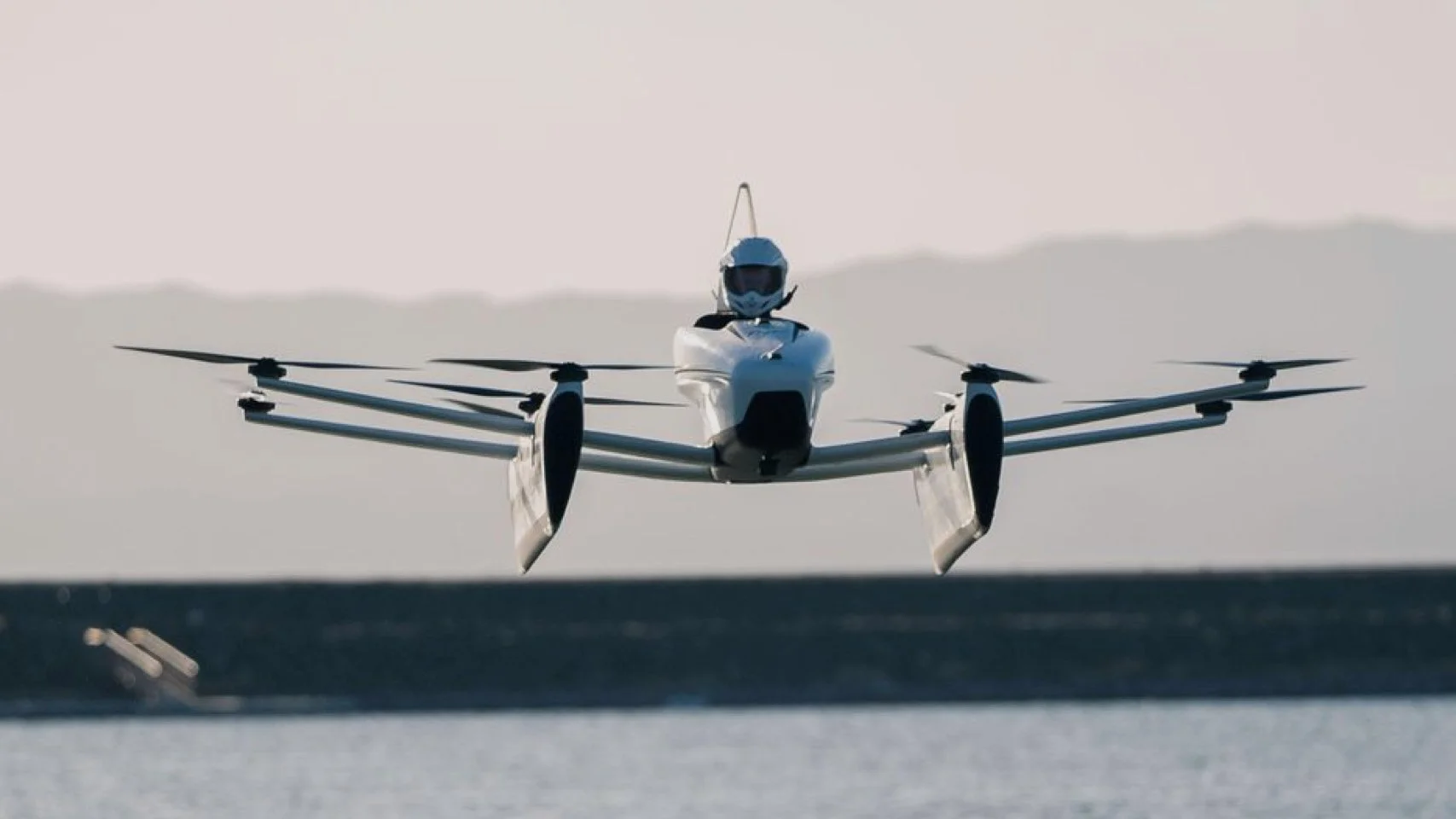
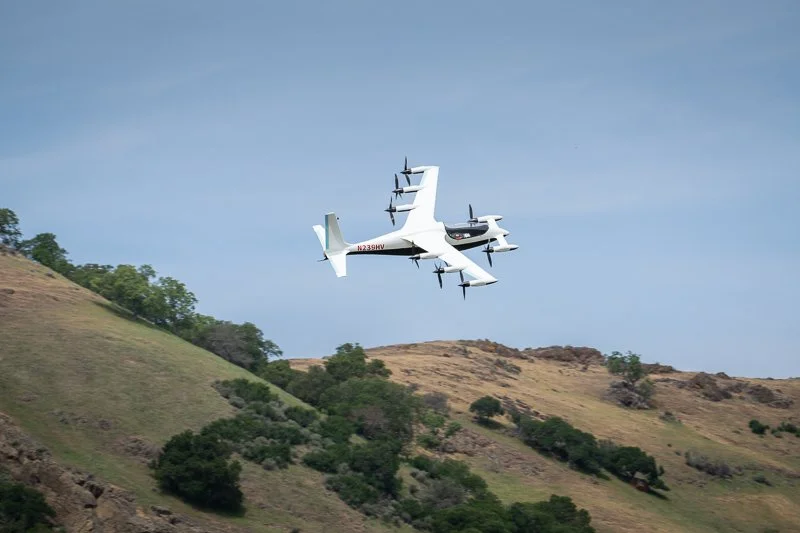
Image 1 / 2
Founding Story
Thrun brought experience from Google's self-driving car team and Google X. Page supplied backing. The company's profile and its 2021 partnership material give 2010 as its founding year. The exact incorporation date and legal sequence linking the early teams remain unverified. [22] [2] [7]
The stated purpose was practical transportation. In Boeing's June 2019 announcement, Thrun said: “Kitty Hawk was started to advance technology in flight and bring new innovations to life”. The partnership centered on Cora and joined a startup's aircraft work to an established aerospace company's resources. [3]
In October 2019, Thrun told TechCrunch: “The calculus here is that this has to be socially acceptable for people”. [5]
The available founder accounts establish the ambition and engineering context. They do not establish a specific private conversation that brought Page and Thrun together, or a complete account of their earliest funding decisions.
Timeline
- 2010: The founding year stated in company and partner material. [2] [7]
- 2019: Boeing announced the Cora partnership; the Cora team became the foundation of Wisk, a separate joint venture. [3] [4]
- June 2020: Flyer ended. [6]
- February 2021: Falck announced a framework to explore Heaviside in emergency response. [7]
- June 2021: Chris Anderson announced he would join as COO as part of a 3D Robotics acquisition. [21]
- July 2021: The Air Force announced approval for the next phase of Heaviside flight testing. [8]
- December 2021: AFWERX recorded remotely piloted testing with an Air Force pilot. [9]
- September 21, 2022: Kittyhawk announced the wind-down. [11]
- 2023: Wisk became wholly owned by Boeing. [12]
- August–September 2026: Boeing and Archer announced the Wisk agreement. Archer later reported expiration of the HSR waiting period; other closing conditions remained. [13] [23]
What They Built
Flyer and Heaviside addressed different constraints. The current Kittyhawk portfolio describes Flyer as an ultralight aircraft for over-water use, with controls intended for people with little training. Its photograph shows the rider exposed above a flotation-equipped frame. That is a particular recreation and training setting, rather than unrestricted urban transport. [1]
Heaviside added a wing and tilting electric propulsion. Air Force material documented automated and remote flight work, including training and operational evaluation. The government testing path provided a real counterpart to a public demonstration, but remained a testing path. Military airworthiness approval did not establish civilian type certification or permission to sell passenger trips. [8] [9]
Falck supplied a specific potential use case. Its February 2021 release proposed integrating Heaviside with emergency services, initially through a joint innovation framework. That document reported 13 prototypes and more than 700 test flights. These were development measures and a partnership announcement, rather than a delivered ambulance fleet. [7]
The distinction matters when reading rescue demonstrations. Janes reported that a May exercise practiced loading people and a full-weight dummy while the aircraft remained on the ground. Product-development director Matthew Croce said neither a person nor the dummy flew during that exercise. The result supported ground-handling evaluation, with passenger transport still requiring separate evidence. [10]
Cora followed another organizational route. Boeing's announcement described a two-person electric, self-piloting air taxi. Wisk later identified the Cora team as its foundation. Wisk's continuation therefore belongs in Kittyhawk's history, while its subsequent aircraft, financing and regulatory progress belong to Wisk. [3] [4]
Market Position
Target Customers
Kittyhawk moved among personal-flight users, prospective transport passengers and organizations exploring specialized missions. Falck and the Air Force made the institutional use cases concrete. Each required different evidence about training, availability, payload, ground handling and permissible operations. [1] [7] [8]
Market Size
Traffic congestion creates a broad problem, but it does not define a reachable aircraft market. A usable trip also needs a suitable aircraft, landing access, acceptable operating conditions and an authorized operator. The reviewed sources do not establish Kittyhawk's paid demand, repeat customers or a reliable addressable revenue estimate.
Competition
The relevant comparison included existing ground response and conventional aviation. A shorter airborne leg would have to offset preparation, positioning and handling time. This is a business inference from the complete mission, not a measured Kittyhawk advantage.
Wisk remains an adjacent technology lineage. Its current Generation 6 page describes a four-passenger autonomous aircraft as a candidate for FAA type certification. That positioning does not establish an available retail replacement for Heaviside. [14]
Business Model
The programs pursued several routes to value: personal aircraft use, prospective transport services, and institutional applications. The current company describes another route through licensing and strategic management of its IP. Public evidence reviewed here does not reveal a consistent revenue series, private funding total, unit manufacturing cost or service margin. [1] [2] [7]
There is at least one precisely scoped public funding record. The SBIR database lists a 2021 Phase I pilot-training award of US$49,796 to Kitty Hawk Corporation. It is one contract award, rather than a proxy for the company's lifetime financing or recognized revenue. [20]
The 3D Robotics transaction also brought a leader with drone experience into the organization. Anderson's reproduced announcement establishes his stated move and acquisition context. Its commercial terms and exact closing mechanics were not disclosed in that material. [21]
Traction
Kittyhawk's current site reports that it built and flew more than 100 aircraft. Falck's release supplies a narrower, dated Heaviside measure of 13 prototypes and over 700 test flights. The totals have different scopes and should not be added together. [1] [7]
The Air Force partnership produced approval for further testing and a documented remote-pilot milestone. No source reviewed here establishes a scaled, paying Heaviside passenger operation. Development activity demonstrated technical progress while commercial adoption remained unresolved. [8] [9]
Outcome and evolution
Thrun explained Flyer’s end: “we could not find a path to a viable business”. That explanation concerns Flyer. It does not establish the cause of the later wind-down or describe Wisk. [6]
For the later outcome, the company announcement reproduced by AIN said it had “made the decision to wind down”. It supplied no complete diagnosis. The sequence supports a bounded inference: Kittyhawk repeatedly reached technical demonstrations while the business and authorization needed for wider operation remained incomplete. It does not isolate financing, leadership choices or regulation as the decisive cause of the final decision. [11]
As reviewed November 2, 2026, Kittyhawk's website states that it continues to manage its IP and evaluates strategic opportunities. This is evidence of ongoing stewardship, with no verified restart of its earlier aircraft-development operation. [1]
Wisk’s August release announced a separate Boeing-Archer transaction involving Wisk, Insitu and SkyGrid. Archer reported in September that the HSR waiting period expired, satisfying one condition. Other closing conditions remained, with completion still expected by year-end. No completed closing was verified for this review. The August statement’s defense-business revenue belongs to Insitu, not Kittyhawk or Wisk. [13] [23]
Key Lessons
- Flyer’s over-water setting narrowed the customer problem it could address. Test demand within those operating limits before treating easy controls as proof of a broad transport market. [1]
- Kittyhawk's Falck partnership gave Heaviside a specific mission to investigate. Static loading and test flights answered different questions from routine patient transport. [7] [10]
- Kittyhawk's Cora team continued through Wisk. Separating a program can preserve its development while changing ownership and the resources behind it. [4] [12]
- Kittyhawk's current IP activity survives the aircraft wind-down. Product development, legal-company activity and the value of technical assets need separate outcome records. [1]
Sources
- Kittyhawk current technology and IP portfolio
- Kitty Hawk company profile
- Boeing and Kitty Hawk strategic partnership
- The Journey Continues with Wisk
- Heaviside reveal and founder interview
- Flyer closure and Thrun explanation
- Falck announces Heaviside collaboration
- Air Force Heaviside airworthiness approval
- AFWERX 2.0 program overview
- Heaviside static load exercise details
- Kittyhawk wind-down report
- Wisk 2023 recap
- Wisk publishes Boeing-Archer transaction announcement
- Current Wisk Generation6 aircraft
- FAA powered-lift final rule announcement
- FAA AC194-2 pilot training guidance
- LYNEports aviation planning software launch
- Urban-Air Port VBM-AI launch
- Kittyhawk.io renamed Aloft
- Kitty Hawk pilot-training SBIR award
- Chris Anderson acquisition announcement reproduced
- Sebastian Thrun biography
- Archer reports expiration of HSR waiting period, September 24, 2026