Lanyrd (W11) at a glance
- Existing records can start a network. Public speaker histories and Twitter follows made recommendations useful before speakers joined. Identify what supplies value before recruiting a new community.
- Give the buyer a separate job. Pro sold company event coordination alongside free discovery. Separate the paid workflow from audience growth, then measure whether customers stay.
- A sale needs an operating commitment. The team shifted toward Eventbrite while spam and reliability consumed attention. Continued service requires a responsible owner and recurring maintenance resources.
- Export before access becomes fragile. A later rescue recovered only part of speaker history. Verify that customers can preserve their complete published work independently.
Overview
Lanyrd connected conferences to the people who spoke at them. Simon Willison and Natalie Downe launched it in August 2010, then joined Y Combinator’s Winter 2011 batch. Twitter relationships helped visitors choose events; speaker histories, slides and recordings made the directory useful after the conference ended. Eventbrite announced its acquisition on September 3, 2013. [1] [2] [3]
Its strongest lesson concerns what happens after a strategic sale. Lanyrd’s team and structured event data suited Eventbrite’s plans, but the standalone community required continuing care. Founder accounts describe engineering attention shifting toward Eventbrite while spam and maintenance consumed Lanyrd’s remaining resources. The evidence supports that later service problem; it does not establish a failed business before acquisition. [4] [5]
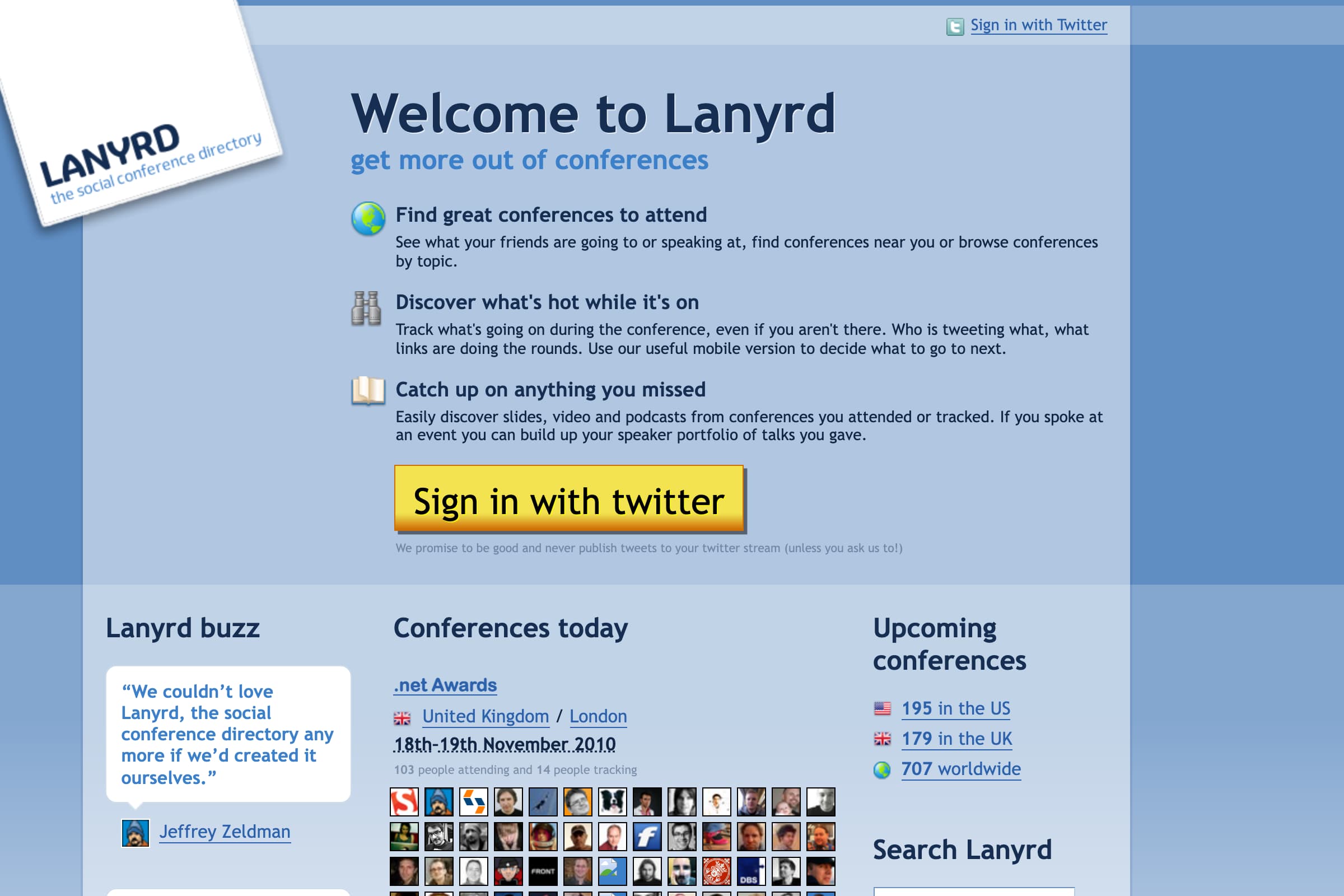
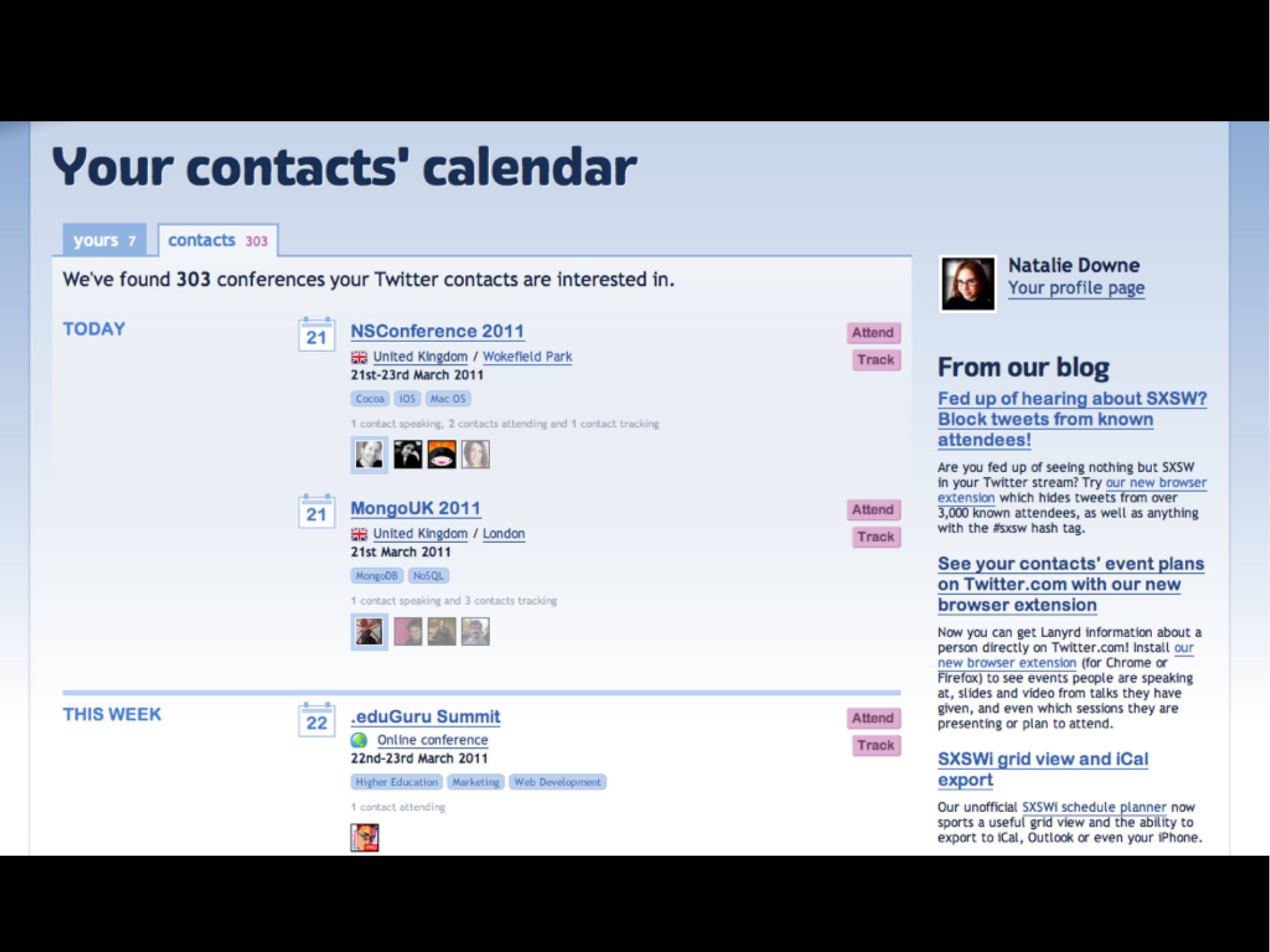
Image 1 / 2
Founding Story
The founders had already built together. Willison helped create Django during his work at the Lawrence Journal-World and later worked on data projects at the Guardian. Downe brought front-end development skills; their joint projects included Django People and WildlifeNearYou. Their complementary skills let them build a complete website together. [6]
They met at university and married in June 2010. During their honeymoon, food poisoning stranded them in Casablanca. They used the interruption to build Downe’s conference-directory idea. In her September 2013 account, Downe wrote: “We built something that we wanted to exist.” She describes releasing a working private version after a week. [7]
Willison’s August 31, 2010 announcement called it “Nat and my new project, launched today”. It already encouraged people to add older conferences and build histories of their talks. The archive was part of the original proposition, rather than a feature added after event discovery. [1]
Public speaker records and Twitter follows made recommendations useful before every speaker joined. [8]
Timeline
- August 31, 2010: Public launch announced by Willison. [1]
- Winter 2011: Y Combinator participation. September 2011: $1.4 million seed round announced. [3]
- February 2012: Jeremy Keith documented the SXSW speaker-card offer with MOO. [9]
- November 2012: LinkedIn integration broadened professional discovery as LinkedIn closed its events product. [10]
- April 11, 2013: Lanyrd Pro launched for businesses. August 1: A browsable directory covered more than 70,000 speakers. [11] [12]
- September 3, 2013: Eventbrite announced the acquisition and continued support for Lanyrd.com. [2]
- September 2015: An organizer reported repeated outages; Willison acknowledged reliability, spam and resource-allocation problems. [13] [4]
- October 2017: Notist reported login problems and provided a partial data-rescue tool. January 2018: IndieWeb records a return in read-only mode. [14] [15]
- October 13, 2020: The original UK company was dissolved. June 2022: Willison confirmed the site was unavailable. The precise final offline date remains unverified. [16] [5]
What They Built
Lanyrd organized a conference around events, sessions and people. Visitors could discover conferences by topic or location, then see which contacts were speaking, attending or tracking them. Speakers could collect their past talks in one profile. People could attach slides, recordings, notes and other coverage to the relevant event or session. [1] [2]
There was a useful boundary between public and personal information. Anyone could add a speaker from a public program, including someone who had never registered. Users could declare their own attendance, but could not declare someone else an attendee. The product reused public speaking records without requiring every person to join. [8]
The mobile experience mattered inside an event. Willison described an iPhone app that cached schedules and attendees offline, alongside community collection of slides and videos. An organizer could make the schedule available where conference connectivity was unreliable. [17]
Lanyrd Pro added a different customer and task. Companies could maintain private event calendars, notes and labels; review employees’ previous speaking activity; find open calls for proposals; and publish branded pages of their event involvement. Willison named GitHub, Facebook Developers and Heroku as users. These were tools for coordinating company activity, rather than an attendee subscription. [18]
The record also shows adoption outside company announcements. GitHub directed CodeConf readers to slides on Lanyrd in 2011. JCDL’s 2013 presenter instructions asked speakers to claim profiles and add slides or related material. These examples establish actual workflow use, without establishing payment or a formal partnership. [19] [20]
Market Position
Target Customers
The directory served people who learned, spoke or organized through professional events. Developers were a strong initial audience: in February 2013, Willison described the deepest coverage in technology, programming and startups. Companies with repeated speaking and sponsorship activity became a distinct paying target through Pro. [21] [11]
Market Size
No defensible estimate of Lanyrd’s addressable revenue market emerged. Conferences, speaker records and ticket spending measure different things. Eventbrite’s acquisition announcement reported nearly 40,000 listed events in 148 countries, demonstrating geographic coverage rather than annual transactions or paying customers. [2]
The relevant buyers were companies willing to pay repeatedly to plan and publicize conference activity. Their number, conversion rate and contract value remain unknown.
Competition
Willison contrasted Lanyrd with Plancast in 2010. Plancast covered broader social plans; Lanyrd concentrated on knowledge-sharing events with speakers. Its public speaker information could make discovery useful before a user’s friends adopted the product. [8]
Twitter supplied distribution and personalized relevance, but initially restricted participation to Twitter users. Lanyrd’s LinkedIn integration addressed a broader professional audience. The launch also benefited from the news of LinkedIn Events closing. This was an integration and timely positioning move; the evidence does not establish a LinkedIn partnership. [10]
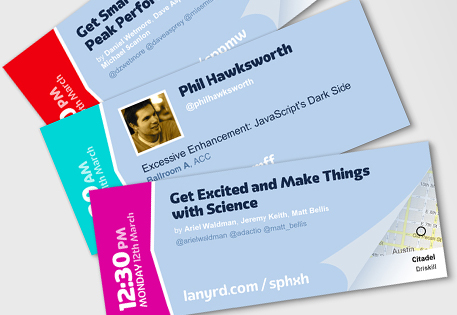
Its MOO campaign made event data useful in the physical venue. Speakers generated free MiniCards from Lanyrd’s unofficial SXSW schedule. The cards carried session details and venue maps; MOO’s interface let Lanyrd place generated designs and a coupon into the speaker’s shopping basket. Keith’s February 2012 entry documents the offer, while MOO’s November 2013 case study explains the mechanics. Neither source provides acquisition or conversion figures. [9] [22]
Business Model
The announced seed round was $1.4 million. Investors included Index Ventures Seed and PROfounders Capital. This is the announced round, rather than a reconciled lifetime funding total. [3] [23]
Pro introduced recurring revenue after earlier one-off deals and custom work. Advertised pricing started at $99 per company per month, varied with headcount, and offered a 10% annual-payment discount. Those figures describe an offer, not realized average revenue. [11]
Before Christmas 2012, the board rejected a revenue plan spanning seven products. The founders chose Pro, developed it with customers for three months and reported revenue. They also explored a Series A and acquisition options. [7]
Revenue totals, retention, payroll, profitability and acquisition consideration remain unknown. Funding alone cannot yield a credible burn estimate without staffing and operating-cost evidence.
Traction
Willison’s September 11, 2010 update reported 1,508 conferences, 5,167 speaker profiles, 5,637 people who had signed in and 13,293 edits. The distinction matters: speaker profiles could exist without registration, while edits measured contributions rather than retained users. [24]
By the 2013 acquisition announcement, event coverage approached 40,000; the newly browsable speaker directory held more than 70,000 speakers. These figures show a growing information resource. They do not establish active usage, a paid-customer count or a profitable business. [2] [12]
Post-Mortem
The acquisition valued capabilities that could move elsewhere
Eventbrite named structured event data, discovery, organizer analytics, mobile skills and Django engineering as acquisition benefits. It also promised continuing support for Lanyrd.com. Those goals could coexist initially, but transferring useful people and capabilities did not guarantee continuing investment in the standalone directory. [2]
The founders had rejected approaches that would have required closing the product. Downe described Eventbrite as a better fit. The later outcome therefore tests the durability of that expectation, rather than proving the founders knowingly chose immediate closure. [7]
Remaining open still required active care
In September 2015, organizer Daniel Appelquist reported outages that disrupted events and caused him to stop relying on Lanyrd. His account is evidence of a harmed customer workflow, not a measurement of overall churn. [13]
Willison replied that the site was back, identified a suspected Redis overload and described spam work consuming development time. He also said the team spent most of its time on Eventbrite; he personally preferred that work because it reached more people. The reply shows continuing repairs alongside a change in priority. A claim that maintenance stopped entirely would be inaccurate. [4]
In June 2022, Willison described work needed to keep Lanyrd “maintained, safe and secure”, which became impossible to justify as Eventbrite grew. He specifically identified overwhelming spam. The operating burden belonged to an editable community product; keeping an old database online could not remove it. [5]
A plausible feedback loop follows: outages reduce organizers’ trust, reduced use weakens the investment case, and less attention permits further problems. The sources support the outages and allocation shift. They do not measure this complete loop, so it remains an interpretation.
The archive’s value outlasted account access
Notist’s October 2017 rescue tool recovered conference names, dates and locations after login problems blocked a planned export. It could not recover full descriptions, resources or attendee lists. This preserved part of a speaker’s history while revealing the limits of relying on a single service for it. [14]
Read-only service, legal dissolution and final unavailability are separate milestones. The UK registry’s 2020 dissolution date cannot date the website’s closure. A conference archive needs a usable exit path before accounts or maintenance stop working. [15] [16]
Alternatives the evidence cannot settle
An immature recurring business might have encouraged a sale. However, no revenue cohorts or sales figures establish that explanation. Twitter dependency also created exposure, but no retrieved evidence identifies a particular Twitter policy change as the decisive cause. The strongest supported explanation concerns post-acquisition priorities and operating burdens, while pre-acquisition commercial performance remains unresolved.
Key Lessons
- Lanyrd used public speaking records and an existing follow graph to deliver recommendations before recruiting an entire new network. The specific source of initial usefulness matters when judging a social product. [8]
- Lanyrd Pro gave company event teams a paid task distinct from consumer discovery. Its advertised subscription and named launch customers justify studying that path; they do not establish durable revenue. [11]
- Eventbrite’s acquisition could benefit from Lanyrd’s team while the directory received less attention. A continued-operation promise needs a continuing owner and budget to survive changes in priorities. [4]
- Lanyrd’s later data-rescue effort preserved only part of the record. Export completeness and independent publication deserve the same care as collecting the original material. [14]
Sources
- Simon Willison: August 31, 2010 launch
- Eventbrite-issued acquisition announcement, September 3, 2013
- YC: Lanyrd’s $1.4 million seed round
- Simon Willison: September 2015 outage response
- Simon Willison: Twenty years of my blog, June 2022
- Simon Willison: Django Origins talk, republished July 2025
- Natalie Downe: Lanyrd, from idea to exit
- Simon Willison: How Lanyrd compared to Plancast
- Jeremy Keith: dated Lanyrd and MOO campaign entries
- Skift Meetings: LinkedIn integration, November 2012
- TNW: Pro launch, April 11, 2013
- TNW: speaker directory, August 1, 2013
- Daniel Appelquist: organizer reliability complaint, September 2015
- Notist: Import your Lanyrd events, October 2017
- IndieWeb: read-only status and export history
- Companies House: original LANYRD LIMITED, 07635439
- Simon Willison: conference social media and offline mobile use
- Simon Willison: Lanyrd Pro mechanics, May 2013
- GitHub: CodeConf 2011 materials on Lanyrd
- JCDL 2013: presenter instructions
- Simon Willison: topic coverage, February 2013
- MOO: Lanyrd speaker-card case study
- TechCrunch: seed investors
- Simon Willison: early activity figures, September 2010
- Hacker News: founder launch discussion