Overview
Leap Motion tried to make hands a practical computer input. Its $79.99 controller reached customers in July 2013 alongside Airspace, an app store with more than 75 applications. Buyers received a small USB device and a new way to interact, but useful software still had to be designed for it. Launch announcement reproduced by WIRED
The company lost its independence in May 2019. Contemporary reporting put Ultrahaptics’ purchase price at approximately $30 million, against roughly $94 million in funding and a reported $300 million previous valuation. Those figures describe a disappointing reported transaction; they do not establish individual investor recoveries. Hand tracking continued under Ultraleap and later ROLI. SiliconANGLE, Drake Star
Founding Story
Michael Buckwald and David Holz were friends from middle school. They arrived in San Francisco in 2010 with an early prototype. Buckwald had sold Zazuba to Yellow Pages; Holz worked on applied mathematics and had worked for NASA. Their first apparatus used a webcam, LEDs, and improvised cases, and could track one finger. Founder interview
The founders described a broad purpose. Buckwald said “there are barriers between humans and the computer.” Holz wanted to “make it easier for people to solve multiple problems.” The challenge was turning that ambition into specific tasks that people preferred to do with their hands. Founder interview
Timeline
- 2010: Buckwald and Holz began the company’s San Francisco development effort. Founder interview
- July 2013: Controller software and Airspace launched after hardware shipments began. Launch release
- September 2013: Leap Motion announced an embedded sensor for the HP ENVY17 Leap Motion Special Edition. Company announcement
- February 2016: Orion 3.0.0 entered beta, extending the software’s development toward virtual reality. Release record
- June 2018: Project North Star’s augmented-reality headset design became open source. Company announcement
- May 2019: Ultrahaptics and Leap Motion announced their combination. Investor-hosted announcement
- November 2025: ROLI announced Ultraleap was joining the company; its transaction adviser described a separate patent sale to SIM IP. ROLI, Drake Star
What They Built
The product combined optical hardware with tracking software. In the successor system’s documentation, two infrared cameras and LEDs observe hands. Software estimates the positions of joints and bones, then exposes tracking data to applications. Unity and Unreal integrations sit above that tracking service. This separates detecting a hand from deciding what a gesture should do. Ultraleap documentation
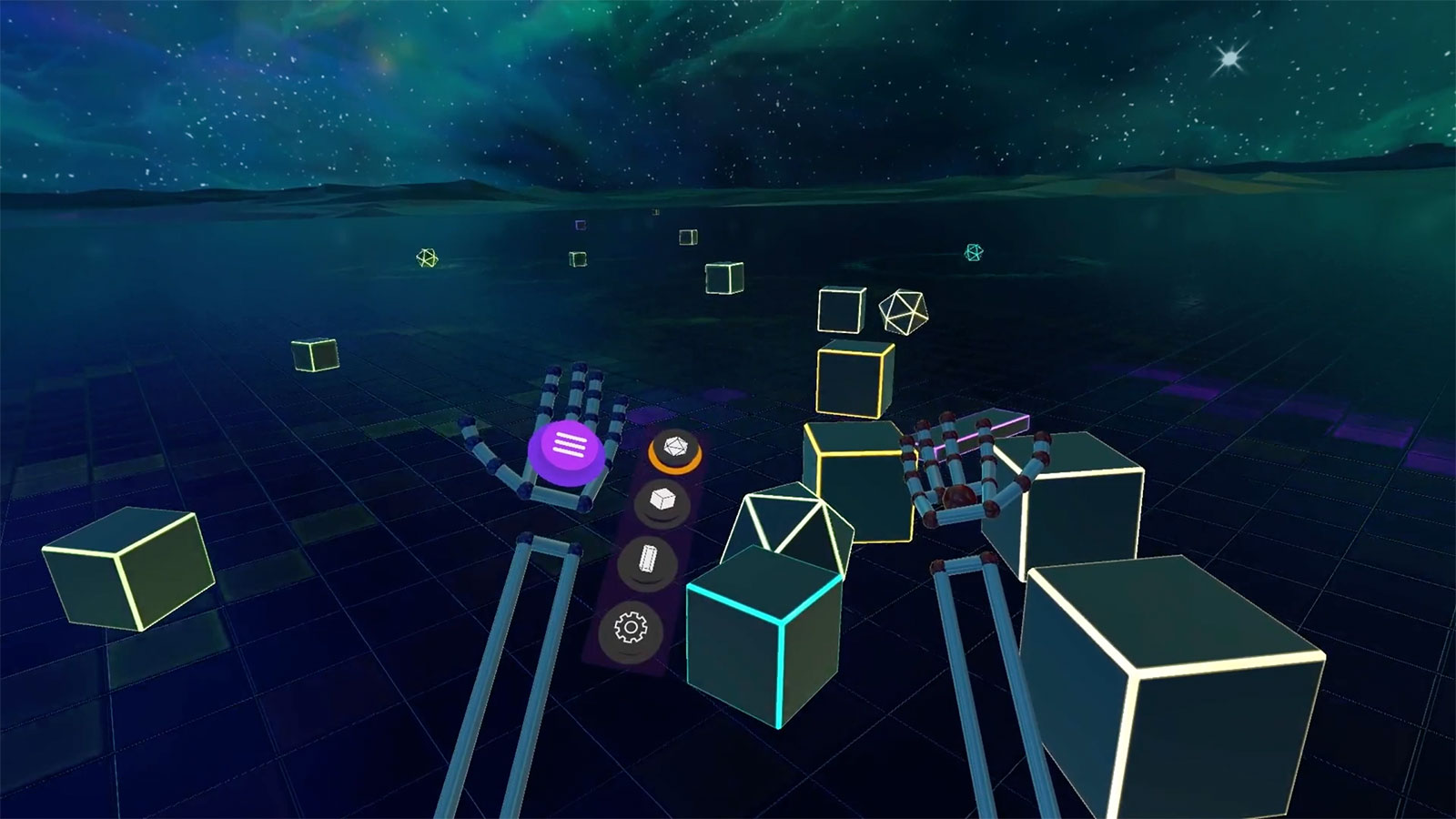
Airspace supplied a distribution channel for applications built around the controller. Fast Company’s launch review described musical toys, drawing, and virtual dissection. It also found a learning curve: controlling one harp string took practice, and a stray hand could interfere. Desktop control remained harder than using a mouse in the reviewer’s setup. The reviewer identified interaction problems in specific applications. Launch review
HP offered another route into daily computing. The company’s 2014 keyboard guide placed the sensor above the keys and included an interactive tutorial, Airspace access, and a function-key switch. Embedding removed the need for a separate accessory purchase, while retaining software installation and instruction requirements. HP setup guide
North Star explored a different form: hands interacting inside an augmented-reality headset. Leap Motion released schematics and assembly guidance, while warning that custom reflectors and display electronics were expensive in single units. The surviving repository contains mechanical, electronic, and software materials. An experimental reference design was a separate commitment from a finished consumer headset. North Star announcement, Original repository
Market Position
Target Customers
Early buyers included enthusiasts and developers exploring new interaction methods. Later uses extended into enterprise installations and immersive experiences. The 2019 combination announcement named art, medical training, industrial design, and location-based entertainment, including The Void’s Star Wars experience. These were identified application areas; the announcement did not disclose their revenue contribution. 2019 announcement
Market Size
A large population of computer users did not constitute a demonstrated market for a new input device. Launch preorders showed interest, and developer registrations showed willingness to experiment. Neither measured recurring task completion, paid application demand, or hardware retention. The reviewed evidence does not support a reliable addressable-market estimate for the original company. Launch release, Launch review
Competition
The immediate alternatives included the mouse and keyboard already on users’ desks. A new gesture had to improve a task enough to justify learning it. In virtual environments, the comparison shifted toward handheld controllers and other tracking methods. Ultrahaptics added mid-air tactile feedback, addressing a different layer of interaction from Leap Motion’s cameras. Launch review, 2019 announcement
Business Model
The original proposition combined hardware sales, an application marketplace, and embedded distribution. HP’s notebook announcement showed how a smaller sensor could travel with another manufacturer’s computer and bundled applications. By 2019, the company also described licensing its technology to enterprises and studios. Public materials reviewed here do not separate device margins, marketplace receipts, or licensing revenue. HP announcement, 2019 announcement
Traction
The 2019 announcement cited a community exceeding 300,000 software developers. That is a measure of participation, not a count of active paying customers. The reviewed materials did not disclose a consistent revenue or retention series. 2019 announcement
Outcome and evolution
Ultrahaptics bought Leap Motion in 2019. Road to VR traced the approximately $30 million price to Wall Street Journal reporting. The official combination announcement gave the strategic rationale but did not disclose consideration. The financial comparison therefore remains reported, and a prior financing valuation cannot supply a shareholder payout calculation. Road to VR, 2019 announcement
The successor continued developing hand tracking. Current Hyperion documentation includes tracking software, development tools, and commercial-use licensing with Controller 2 purchases. License terms and actual hardware supply still require checking for a specific deployment. Hyperion documentation
ROLI’s 2025 acquisition brought the team into a music company. Adviser Drake Star separately states that SIM IP acquired the haptics and extended-reality patent portfolio and granted ROLI an exclusive perpetual license. ROLI currently presents Airwave as both a piano-learning accessory and a gesture controller for music creation. This is a continuing, narrower application of spatial interaction. It does not mean the original startup remained independent. Transaction adviser, Airwave learning, Airwave creation
Key Lessons
- Choose a task before replacing an input. Airspace’s musical and creative uses made hand movement concrete; ordinary desktop navigation faced a strong existing tool.
- Teach the interaction where it happens. HP shipped a tutorial, while launch reviewers still needed practice. Tracking accuracy does not remove instruction costs.
- Count developer interest separately from demand. A large community can support experimentation without proving a recurring commercial workflow.
- Track the technology after the transaction. Leap Motion’s independence ended, while its software, team, and intellectual property followed different paths into later products.
Sources
- Launch announcement reproduced by WIRED
- SiliconANGLE
- Drake Star
- Founder interview
- Company announcement
- Release record
- Company announcement
- Investor-hosted announcement
- ROLI
- Ultraleap documentation
- Launch review
- HP setup guide
- Original repository
- Road to VR
- Hyperion documentation
- Airwave learning
- Airwave creation