
Lever
Summer 2012AcquiredTalent Acquisition Suite that combines ATS + Talent CRM
Pressure-test this opportunity
Explore the risks and possibilities with a prompt for ChatGPT, Claude, or your agent.
Talent Acquisition Suite that combines ATS + Talent CRM
Explore the risks and possibilities with a prompt for ChatGPT, Claude, or your agent.
Lever made recruiting software around a continuing relationship with a candidate. Its applicant tracking system manages active hiring, while its candidate relationship database keeps prospects and past applicants available for future roles. Recruiters, hiring managers, and interviewers work from that shared context rather than treating each application as an isolated record.
Founded in 2012, Lever joined Y Combinator’s Summer 2012 batch and was acquired by Employ in August 2022. It continues to sell under its own brand. Employ now positions Lever for growing teams, JazzHR for lean teams, and Jobvite for complex hiring. Lever also retains an enterprise offering. [1] [2] [3] [4]
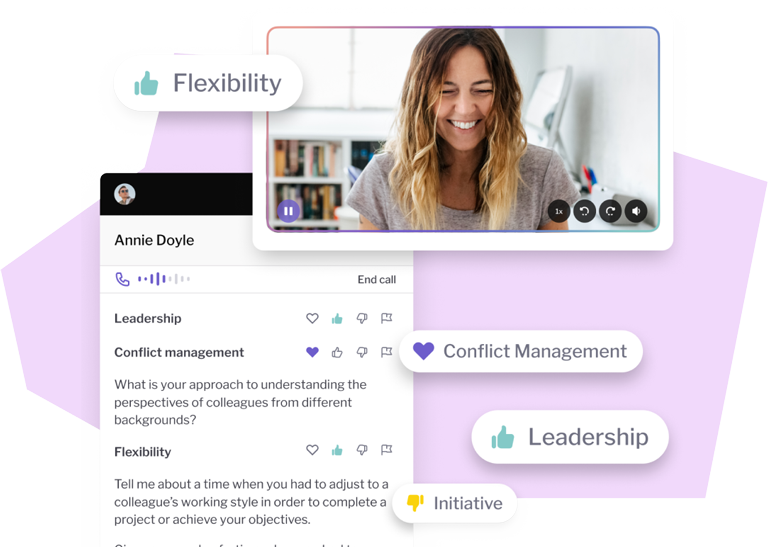
Image 1 / 1
Employ’s acquisition announcement names four founders: Nate Smith, Brian Noguchi, Sarah Nahm, and Randal Truong. Smith previously worked on Google Analytics and Search; Nahm worked in product marketing at Google. Those backgrounds connected product engineering with the experience of using software at work. [2] [1] [5]
The first attempt failed a concrete test. After nine months inside one customer’s recruiting team, the founders had not delivered enough for a company-wide rollout. In their YC interview, they recalled: “Our project was cancelled.” They also judged their software insufficiently different from competitors. They discarded it in March 2013, then signed Change.org five months later. Customer access had supplied useful knowledge, but had not guaranteed a useful product. [6]
The rebuilt product tracked candidate relationships before an application or a job existed. [6]
The suite joined three jobs. Lever Hire combined applicant tracking and candidate relationship management. Lever Nurture automated outreach to prospects. Lever Analytics helped recruiting teams examine their process. A shared candidate history could connect sourcing, interviewing, hiring, and later rediscovery. [7]
The April 2025 product addendum documents native CRM, referrals, an agency portal, email and calendar synchronization, candidate self-scheduling, configurable pipelines, interview kits, and CSV exports. It also describes approvals, automation, analytics, and additional integrations. Availability depends on the order form and package; the document is not a promise that every customer receives every feature. [9]
Independent interview feedback is already part of Lever’s published approach. Its structured-interview guide describes criterion-based forms and hiding peers’ feedback until an interviewer finishes their own. Employ’s newer AI Interview Companion offers questions, interview summaries, and feedback collection within Lever. These features make a new scorecard or debrief tool a competitor to existing workflows, even if it never makes a hiring verdict. [12] [11]
Lever has served both growing companies and larger organizations. Its 2017 announcement named Netflix, Lyft, Hot Topic, and Owens-Illinois. Employ’s current portfolio uses different product positions for different hiring needs; Lever’s enterprise page still addresses approvals, global processes, and specialized roles. A simple “enterprise-only” label misses that range. [7] [3] [4]
Greenhouse and Ashby overlap the proposed decision-workflow opportunity. Greenhouse lets organizations hide peer scorecards until an interviewer submits their own. Ashby’s January 2026 update lets interviewers submit pending feedback from the candidate debrief page. These owning-source examples establish specific capabilities, not a complete feature ranking or proof that either product solves every team’s problem. [13] [14]
A possible independent layer would need to improve a measurable gap across role criteria, conflicting evidence, and final rationale. Neutrality alone is weak differentiation. Buyers must value that coordination enough to add another tool and transfer candidate data lawfully.
Early coverage described usage-based SaaS fees. Today, Lever asks buyers for a custom quote based on organizational size and hiring needs. Its pricing page advertises a core offering with AI screening, interview transcripts and summaries, plus add-ons such as candidate insights, VONQ screening, and onboarding. These published descriptions establish packaging and commercial intent, not a universal price or independently measured AI accuracy. [5] [10]
Apax’s investment thesis emphasized digitization and longer-term candidate engagement. Its case study describes work on R&D, international operations, marketing, and senior management before agreeing to sell its stake in August 2022. That is the investor’s account of its contribution. Public audited standalone revenue, margin, retention, and acquisition consideration remain unavailable. [15] [8]
Lever reported more than 1,300 customers in 2017 and more than 5,000 in Employ’s 2022 acquisition release. The current enterprise page repeats 5,000-plus and advertises 65 percent faster hiring without enough context there to apply that result to all buyers. Employ’s 2022 totals—18,000 customers, 1,200 partners, 3.1 million open jobs, and 500 million candidates—describe the combined portfolio, not Lever alone. [7] [2] [4]
The reported $62 million funding total in 2017 and $50 million 2021 round are separate measures. YC’s company profile lists $123 million raised. The round snapshots should not be presented as an exhaustive financing history. [7] [8] [1]
A more concrete operating example comes from Royal Ambulance. Lever’s case study describes connecting recruiting with UKG onboarding to remove manual document handling. It reports 14 percent more hires and 40 percent more completed interviews from 2024 to 2025. These are a named customer’s reported year-over-year results from a combined workflow, not a controlled estimate of Lever’s effect. The case makes integration quality visible beyond a customer-logo list. [16]
Lever’s restart shows why a cancelled implementation and a failed market are different conclusions. [6]
A coherent product and expansion effort explain different parts of the trajectory. Apax describes work on international operations, marketing, and management. These complement product development; they do not prove that either capital or architecture alone caused the acquisition. [7] [8]
Employ’s announcement cited Lever’s technology, team, brand, and customer base as complements to its portfolio. Current product and pricing pages show a continuing commercial offering, including interview AI and integrations. The strategy now includes both differentiated recruiting systems and shared companions. Continued product availability establishes that sequel; it cannot settle the private economics of the acquisition. [2] [10] [11]
[2] Employ acquisition announcement, August 2022
[3] Employ’s current product portfolio
[5] TechCrunch: $10 million round, October 2014
[6] YC founder Q&A, October 2018
[7] Lever’s Series C and product suite announcement, July 2017
[9] Lever product description addendum, April 2025
[10] Lever’s current pricing and packaging
[11] Employ AI Interview Companion, formerly Pillar
[12] Lever’s structured-interview and feedback guide
[13] Greenhouse: Scorecard visibility options, March 2026
[14] Ashby: Feedback from the debrief page, January 2026
[15] Apax: Investing in Lever and the future of work