Overview
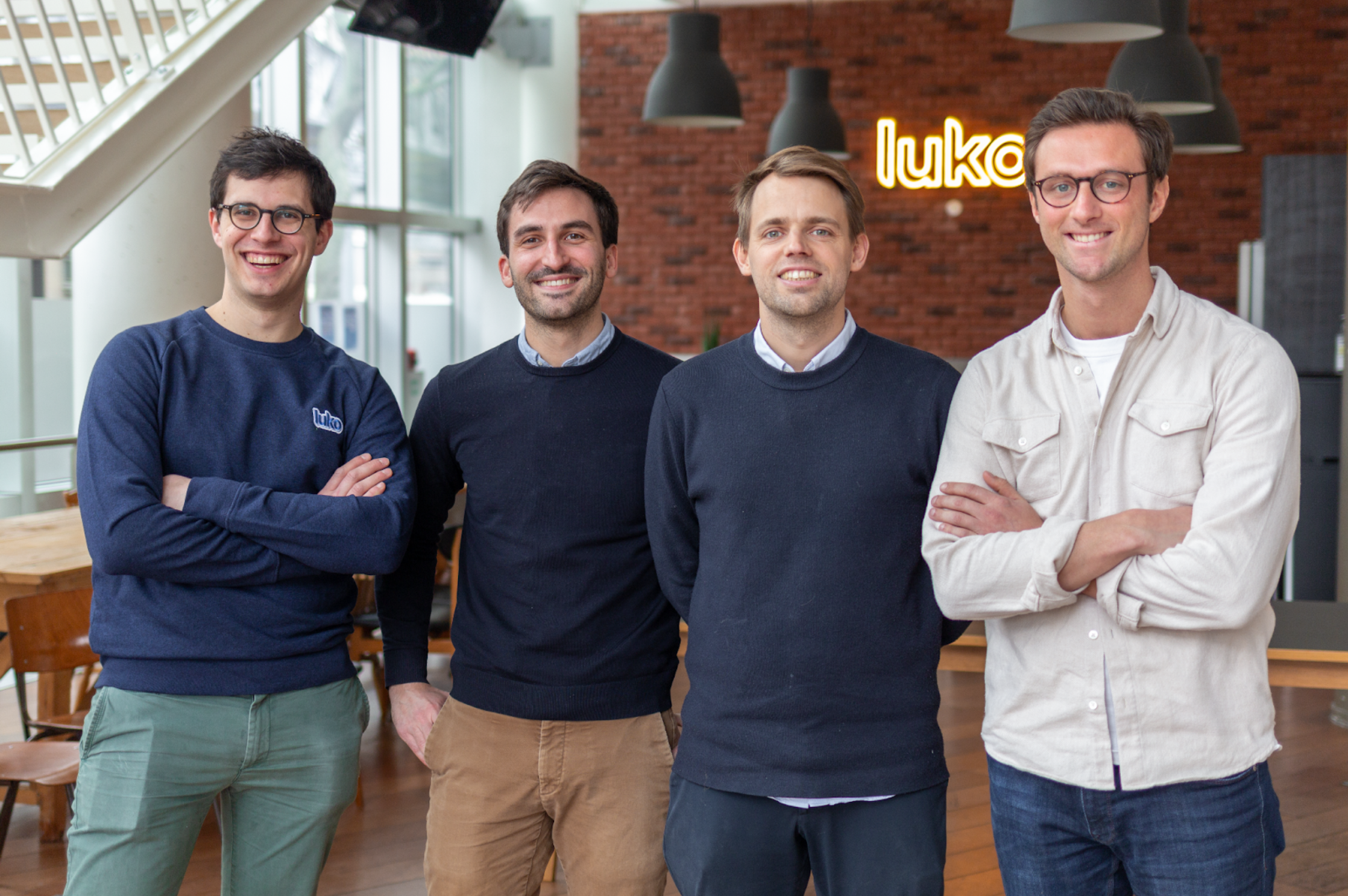
Luko began with connected devices for protecting homes and moved into online home insurance. Its parent, Demain ES, has registration records from 2016; its insurance business developed later. Raphaël Vullierme and Benoît Bourdel built an offer around simple contracts, fast service and prevention.[1][2]
Expansion added an insurer in Germany and rental guarantees in France. A financing shortfall and debt then pushed the group into restructuring. Allianz Direct acquired French operating assets and the Luko brand through proceedings in 2024. The regulated insurance portfolio transferred separately.[10][14][15]
Reviewed October 27, 2026, Luko remains an active Allianz Direct brand. The original venture’s financial distress did not erase its product or distribution value.[18]

Image 1 / 1
Founding Story
Luko’s earliest product monitored household consumption and potential damage. Vullierme told Goodassur: “Notre vision a toujours été de protéger les foyers.” In English, the aim was always to protect homes. He said selling the technology through insurers convinced the founders to build their own insurance service after about a year.[2]
The pivot changed the customer relationship. Hardware supplied to insurers depended on those companies reaching households. A direct insurance product let Luko own the interface, service and brand. Accel’s 2019 account describes that same shift from connected doors, pipes and meters toward insurance and home care.[3] How the founders met, their complete earlier employment histories and the exact incorporation day remain unresolved in this review.
The next expansion changed more than the interface. Explaining the Coya acquisition in January 2022, Vullierme told Maddyness: “L’agrément allemand nous permet d’opérer partout en Europe.” He argued that Coya’s German authorization would let the group carry risks internally rather than always use third-party insurers. This was the founder’s rationale; it did not mean Luko stopped using every external risk carrier.[5]
These decisions make a coherent sequence: sell prevention tools, own the insurance customer relationship, then bring more insurance capability inside the group. Each step promised more control and added obligations that an attractive app alone could not finance.
Timeline
- 2016: Demain ES was established, with Bourdel and Vullierme named in its published formation records.[1]
- 2019: Accel announced its Series A investment in the online home-insurance business.[3]
- December 2020: EQT Ventures announced a €50 million Series B and reported 100,000 policyholders.[4]
- January–March 2022: Luko acquired Coya and Unkle, broadening its geographic reach and housing products.[5][6]
- 2023: Safeguard proceedings accompanied a proposed Admiral agreement. That transaction did not become the eventual Allianz acquisition. Getsafe acquired the German policy portfolio separately.[10][12][13]
- January–February 2024: Court judgments preceded the French operating-asset transfer to Allianz Direct, with February 1 accounting effect.[15]
- July 2024: German regulatory approval enabled the separate French-risk insurance portfolio transfer.[16]
What They Built
A customer could buy home insurance online, obtain an insurance certificate, change coverage and report a claim through the same service. Luko also offered help finding tradespeople and caring for a property. The founder described a broader home-service relationship, rather than an app used only at purchase or loss.[2]
Its early commercial explanation divided premiums between operating costs and a claims pool, with unused claims money going to customer-selected charities. That Giveback model aimed to reduce suspicion that the company benefited by refusing claims. The promise described incentives; it did not by itself establish the adequacy of claims reserves or a profitable cost structure.[3][4]
Coya added a regulated insurer and a German customer base. Unkle added rental guarantees and remained a separate business unit in the announced structure. STATION F’s acquisition release described a widening system of housing search, financing, insurance and maintenance services.[6]
The wider product range created integration work. Kili Technology’s case account describes manual invoice processing in the acquired pet-insurance portfolio and Luko’s use of annotated training data to improve automation. The vendor’s performance claims were not independently audited, but the example shows that acquiring policies did not automatically integrate their service operations.[8]
Market Position
Target Customers
Luko addressed tenants, homeowners and landlords who wanted to manage cover online. It sought distribution through referrals, partnerships and adjacent housing needs. In March 2022, Selectra and Familles de France chose Luko for a group home-insurance offer after more than 10,000 preregistrations. The offer included three free months with a year’s commitment. Preregistration was interest in the campaign, not a count of new Luko policies.[7]
Contemporaneous trade reporting also documented scooter-insurance distribution through Decathlon. Its sales contribution was not established.[9]
Market Size
Insurance premiums are a poor proxy for a software startup’s addressable revenue. Luko had to pay claims, acquire customers and operate services before any remaining income could fund growth. This review found no comparable, independently verified home-insurance market series that establishes Luko’s attainable share.
Competition
Incumbents could combine underwriting capital, claims operations and several insurance lines. Luko competed through a direct interface and a distinctive brand. Accel’s investment memo acknowledged expensive distribution as a core obstacle before the later distress.[3]
Getsafe’s German portfolio purchase and Allianz’s French acquisition illustrate another form of competition: incumbents and other insurers could buy customers and technology when an independent growth plan became difficult to fund. Those purchases demonstrate buyer interest in selected assets, without establishing that Luko’s original economics worked.[13][14]
Business Model
Accel described a 30% operating allocation and 70% claims allocation in 2019. EQT later highlighted Giveback and customer referrals.[3][4] These dated descriptions should not be treated as universal terms for every product or year.
The group’s structure also changed. Allianz’s annual report identifies Luko Cover as an intermediary for four risk carriers, including Luko Insurance AG. The intermediary, parent, insurer and customer-facing brand therefore need separate treatment.[15] Consolidated audited revenue, customer-acquisition payback, loss ratios and full acquisition financing agreements were not established here. Fundraising, policy counts and premium volume cannot fill those gaps.
Traction
EQT reported 100,000 policyholders when announcing the 2020 financing. Selectra’s 2022 campaign release later described more than 350,000 insured people across France, Germany and Spain.[4][7] Acquisitions contributed to that wider footprint, so the figures are not a clean measure of organic customer growth.
The group-buying campaign supplies more concrete distribution evidence than a broad leadership claim: a named partner, an identified offer and a defined audience. Public evidence does not establish conversion, renewal or profitable customer acquisition for that campaign.
Outcome and evolution
AFP reporting linked the 2023 safeguard request to debt after the Coya and Unkle acquisitions and a planned fundraising that did not occur. Industry publication L’assurance en mouvement summarized the pressure: “Etouffé par sa dette, le néo-assureur français Luko a été contraint à la cession.” It attributed the forced sale to debt. Neither report supplies a complete audited causal accounting.[10][11]
The bounded diagnosis is that expansion commitments reduced Luko’s room to operate when new financing failed. A harder funding market is a credible contributing explanation, but it does not explain away the commitments already made. Conversely, distress does not prove that customers rejected the service. The later buyers retained meaningful parts of it.
Admiral’s counsel confirmed an agreement in June 2023, which is evidence of an intended transaction. The eventual French buyer was Allianz Direct. Its January 2024 announcement covered operations, brand and an announced 112 employees, while explicitly making the insurance portfolio transfer conditional. Its annual report records the operating-asset deal separately and counts 110 transferred Luko Cover employees, a narrower description than the original announcement.[12][14][15]
The official French notice records German approval of the French-risk portfolio transfer on July 24, 2024, with immediate effect. That approval date differs from later reports of a July 29 operational transfer; this report does not collapse them into one closing date.[16] Atlas reported €4.32 million for the distressed transaction. That figure is not the original company’s equity value and cannot produce an exact investor loss calculation.[17]
Today’s official site identifies Luko by Allianz Direct as a commercial brand, with current insurance offers. A reproduced January 2026 judgment extends Demain ES’s liquidation closure deadline into January 2027; estate completion remains unverified.[18][19][23]
Key Lessons
- Separate a useful product from its financing plan. Luko’s customer interface and brand survived a distressed sale. Those assets did not make its original financing structure sustainable.
- Price integration before acquiring breadth. Coya and Unkle added customers, risk capabilities and service work. Luko’s inherited pet-invoice workflow shows why portfolio growth also creates operating obligations.
- Treat a trust promise as a design choice. Giveback explained incentives in a memorable way. It did not replace evidence about claims, reserves, retention and acquisition costs.
- Name exactly what transferred. Luko’s operating assets, German portfolio, French-risk portfolio and parent estate followed different paths. Each requires its own buyer, date and scope.
Sources
- DEMAIN ES: registration and published proceedings
- Interview de Raphaël Vullierme, cofondateur et CEO de Luko
- Our Series A in Luko: Bringing customer love to home insurance
- On EQT Ventures’ investment in Luko, building the European home insurance leader
- Luko préfère un rachat à la création d’une filiale pour se lancer en Allemagne
- Luko acquires Unkle, the French specialist of insurance unpaid rent
- Luko, lauréat du premier achat groupé assurance habitation de Familles de France et Selectra
- Document Annotation Tool: Everything You Need to Know
- Partenariat Luko-Décathlon pour l’assurance
- In debt, the insurer Luko requests the opening of an accelerated safeguard procedure
- Qu’est-il arrivé à Luko ? La vraie raison ?
- Clifford Chance advises Admiral Group on the acquisition of Luko
- Getsafe Acquires Luko Insurance’s German Portfolio
- Allianz Direct übernimmt das französische Hausratversicherungsgeschäft von Luko
- Allianz Direct Versicherungs-AG Geschäftsbericht 2024
- Avis relatif au transfert par une entreprise d’assurance allemande de risques contractés en France
- Allianz acquires Luko
- Qui est Luko by Allianz Direct ?
- Assurance habitation: Luko by Allianz Direct
- Fixflo: Repairs and Maintenance Management
- Encircle: Restoration Field Documentation to Estimate
- Benoît Bourdel: Luko rejoint Allianz Direct
- Tribunal de commerce de Bobigny, 27 janvier 2026, n°2025L05110