Overview
Mindstrong tried to turn ordinary smartphone interactions into measurements useful for mental healthcare. It later combined that research with virtual therapy, psychiatry, and care coordination. The company attracted prominent scientific founders and a USD100 million funding round. Its original care operation ended in March 2023; SonderMind acquired technology and selected staff. The transfer preserved parts of the work while the original company stopped operating. SonderMind announcement
The central difficulty was connecting three different tasks: collecting reliable phone data, proving a useful clinical measurement, and paying for continuing care. Evidence for one task did not establish success at the others. Available studies and reporting support that distinction; they do not reveal audited unit economics or a single proven cause of closure.
Founding Story
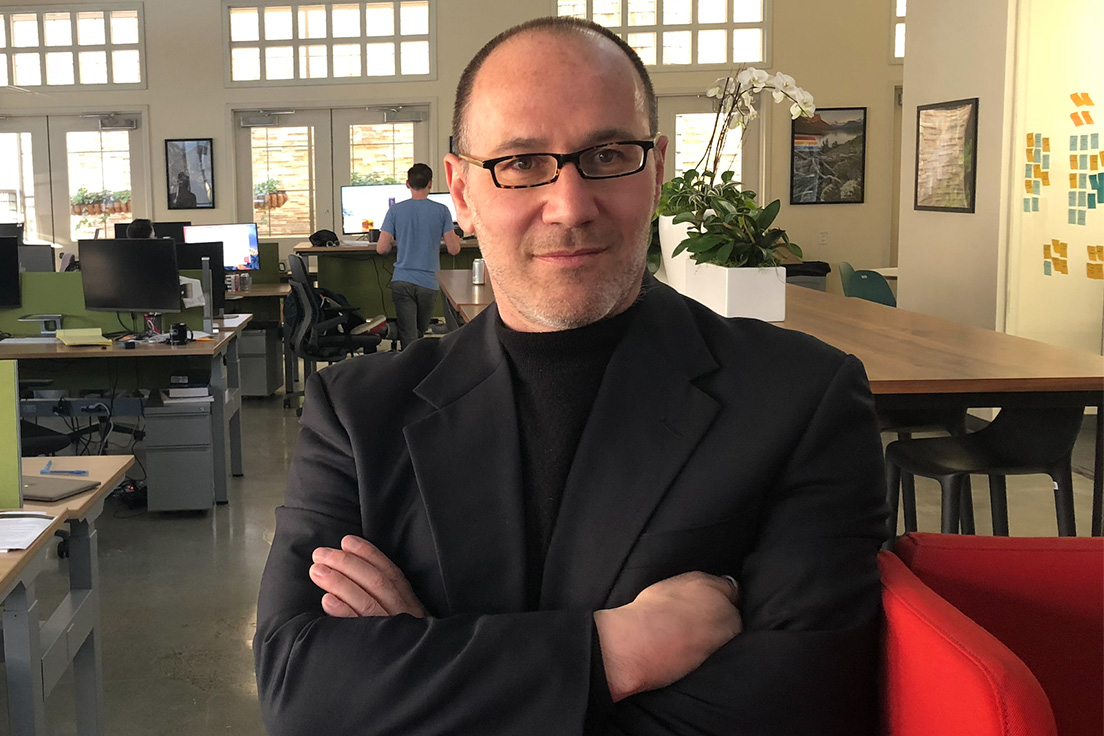
Mindstrong was founded in 2014. Its May 2017 announcement identified Paul Dagum as founder and CEO, Richard Klausner as executive chairman and co-founder, and newly joining Thomas Insel as president and co-founder. Insel previously directed the National Institute of Mental Health and worked at Verily. His later arrival does not move the company's founding date to 2017. 2017 company announcement SonderMind announcement
Insel expected that “the day-to-day management of mental health will look very different” within five years. This was a prediction about the technology's potential. Dagum expressed a similar ambition in a 2018 Harvard interview: “Our vision is to make this successful at a global scale.” Those statements describe the founders' intended reach, rather than demonstrated patient outcomes. 2017 company announcement Harvard Gazette
Timeline
- 2014: The company was founded. Research experiments conducted that year later appeared in its first published smartphone interaction study. SonderMind announcement 2018 research paper
- May 2017: Insel joined with the president and co-founder titles. The company described ongoing trials with research and healthcare partners. 2017 company announcement
- March 2018: Dagum published a preliminary study relating smartphone interaction patterns to cognitive assessments. 2018 research paper
- June 2018: Harvard reported a USD517,000 company gift supporting Jukka-Pekka Onnela's research on smartphone data analysis. Research funding did not itself validate a clinical product. Harvard Gazette
- May 2020: Mindstrong announced USD100 million in Series C financing to expand virtual care and its measurement technology. 2020 company financing release
- Early 2023: MobiHealthNews reported a headquarters closure and 128 planned layoffs. A patient email said services would end March 10. Contemporary closure reporting
- March 22, 2023: SonderMind announced the technology and staff transfer and confirmed that the rest of Mindstrong terminated operations. SonderMind announcement
What They Built
The original measurement idea used patterns in taps, swipes, and other phone interactions. A 2018 paper studied 27 adults aged 18–34 over seven days, following a clinical cognitive assessment. The author explicitly called the findings preliminary and identified the small sample as a limitation. Dagum disclosed a substantial ownership interest and related patents. This study did not establish reliable relapse prediction or prove that the later care service improved treatment outcomes. 2018 research paper
In 2020, the commercial offer included employed therapists, psychiatrists, and care coordinators. Members could use messaging, video, and phone care. The company said its measurements could help identify changes requiring attention. That was the company's clinical claim; the financing announcement was not independent validation. 2020 company financing release
Collection itself remained an engineering problem. A later military and veteran pilot described interruptions when Apple software and App Store policy changes affected Mindstrong's keyboard. Its indexed primary text says iPhone users stopped entering the optional phone-measurement portion. Missing observations can arise from technical compatibility rather than a patient's condition. Military Medicine pilot
Market Position
Target Customers
The original research targeted organizations studying mental health and cognition. The later care service focused on people with serious mental illness, working through health plans and other partners. Its paying customer and its patient were therefore not necessarily the same person. 2017 company announcement 2020 company financing release
Market Size
The founders described a broad need for better psychiatric measurement. Available sources do not establish a reliable addressable revenue estimate for this particular product. Smartphone ownership, mental health prevalence, enrolled patients, and reimbursable care contracts are different quantities. A commercial estimate would require eligible populations, contracted rates, staffing costs, and evidence that a purchaser would pay.
Competition
Clinicians already used interviews, standardized assessments, and ongoing observation. The proposed phone measurements had to add useful information within that care process. A 2018 interview also described research questions that remained open, including specific markers for particular symptoms. Broad press headlines about predicting depression exceeded the evidence a buyer could infer from an early study. 2018 research interview
Today SonderMind offers ongoing care as a separate company. Its self-pay page says rates vary with location, provider, and session details; it does not charge a monthly membership. That offer cannot be compared directly with Mindstrong's former health-plan arrangement. For researchers, Harvard's Beiwe provides open-source phone data collection and study management, so a new collection tool would enter an existing field. Current self-pay terms Beiwe primary repository
Business Model
Mindstrong's 2020 release described value-based arrangements with public and private payers and no out-of-pocket member charge. A free patient experience still left an organization paying for clinicians and operations. The reviewed sources do not disclose contract rates, margins, or a dependable series of patient counts. 2020 company financing release
MobiHealthNews reported USD160 million in lifetime funding. An undated company LinkedIn profile instead lists USD145 million. The USD100 million Series C has a primary announcement, but the lifetime difference is unresolved. None of these figures establishes cash consumed, investor recovery, or the acquisition price. Contemporary closure reporting Company profile 2020 company financing release
Outcome and evolution
SonderMind's announcement is explicit about scope: technology and selected technical employees transferred; the rest of Mindstrong ceased operations. It highlighted care journeys, clinical note templates, and measurement-based care capabilities. It did not announce that the original patient service would continue intact. SonderMind announcement
STAT's accessible reporting described tension over commercialization and the readiness of the measurement technology. Its full investigation was unavailable in this review, so it cannot support a detailed internal chronology. Separately, psychiatrist Roy Perlis argued in a published opinion that reimbursement and care delivery deserve attention alongside predictive technology. That is an interpretation of the wider business problem, rather than audited evidence about this company's final finances. STAT reporting Perlis opinion
The evidence supports an operational closure and a selective technology transfer. It does not establish that every research idea failed or that an acquirer clinically validated every measurement.
Key Lessons
A clinical claim needs evidence for the decision it will change. A short exploratory study cannot settle whether an alert should trigger care for a different patient population.
Reliable collection must precede interpretation. Researchers need to distinguish withdrawal, expected inactivity, delayed uploads, and unexplained gaps before treating a missing signal as meaningful.
Care delivery also needs its own operating model. Clinician capacity, response commitments, payer contracts, and continuity arrangements remain necessary even when phone measurements improve.
An asset sale can preserve useful tools while ending the original service. Product histories should name which capabilities transferred and which patient commitments stopped.
Sources
- Original company founder announcement, May 11, 2017.
- Company financing announcement, May 21, 2020; Business Wire text reproduced by MarketScreener.
- Dagum, npj Digital Medicine, 2018; original paper hosted by UCL.
- Harvard Gazette founder interview and portrait, June 12, 2018.
- University of Michigan reproduction of MIT Technology Review interview, 2018.
- MobiHealthNews, February 7, 2023.
- MobiHealthNews, March 22, 2023.
- SonderMind primary announcement, March 22, 2023; updated August 20, 2024.
- STAT, February 28, 2023; accessible opening only.
- STAT First Opinion, February 6, 2023.
- STAT, March 22, 2023; accessible opening only.
- Company LinkedIn profile; accessed October 23, 2026, stale funding amount.
- Military Medicine primary pilot; indexed abstract and technical discussion, online 2024.
- Onnela Lab Beiwe repository; accessed October 23, 2026.
- SonderMind current self-pay page; accessed October 23, 2026.