Overview
Modsy combined human interior designers with 3D models of customers' rooms and a furniture-shopping service. Its consumer design operation ended in 2022 despite substantial funding and visible retail partnerships. The remaining team and intellectual property joined Lennar in August 2023. The company therefore illustrates two different outcomes: an interrupted consumer service and technology that continued in a homebuilder's business.[2][7][8]
The central question is how much of the work a better visualization actually removes. Modsy helped customers see a furnished space before buying. It also took responsibility for design revisions, product selection, and shopping support. A convincing rendering did not complete those services or ensure their economics worked.
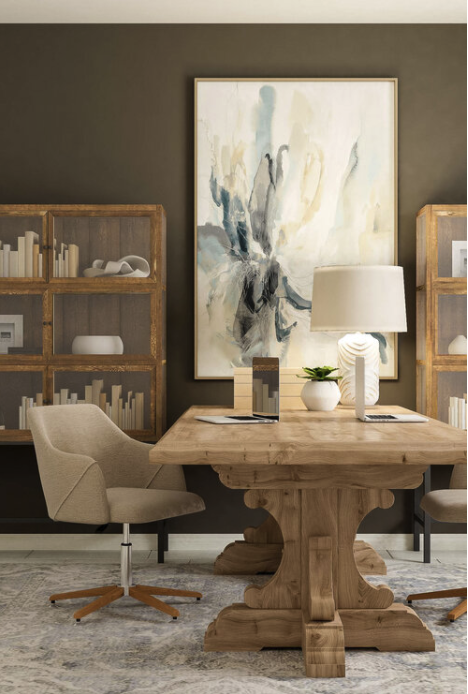
Image 1 / 1
Founding Story
Shanna Tellerman founded Modsy in 2015 after struggling to furnish her own home. In her account, online inspiration and store visits produced many possibilities but little confidence about the actual room. Her idea was a personalized catalog shown inside a virtual version of that space. Her earlier work in 3D software and venture capital gave her relevant technical and industry experience.[1][11]
Tellerman wrote that she had “no way to translate it to our real space.” Her ambition extended through delivery, “until all the pieces arrive at your door.” These excerpts connect the original visualization problem to the broader service Modsy undertook.[1]
The consumer promise tied the image to a decision. Customers supplied their room information, received designs, and could buy the depicted furniture. That made the product more useful than an attractive mood board, while connecting the technology to a substantial service and commerce operation.[2]
Timeline
- 2015: Tellerman founded Modsy around the problem of visualizing furniture in a real home.[1]
- 2017–2018: A Crate & Barrel pilot developed into a broader online and in-store 3D design offering.[3]
- 2019: Modsy raised a $37 million Series C. Its company release disclosed $70.75 million raised to that point, rounded to $71 million in the headline.[2]
- 2021: A Lennar partnership used the technology for virtual model homes, supported by a strategic investment relationship.[4]
- March 2022: Modsy launched a renovation-design service with introductory pricing from $999 per room.[5]
- June 2022: The consumer service closed and management described a corporate winddown after a failed acquisition effort.[7]
- August 2023: Lennar acquired the remaining team and intellectual property after an intervening successor entity.[8][9]
- September 2026: Tellerman launched the separate company Geom, focused on production-homebuilding workflows.[10]
What They Built
Modsy's 3D environment let customers examine designs and substitute products. The service joined that interface to designers and a catalog of purchasable furnishings. Crate & Barrel adopted the technology after a 2017 pilot, launching its 3D Room Designer more broadly in April 2018. This partnership placed visualization inside an established retailer's customer relationship.[2][3]
Lennar provided another context. In May 2021, Business of Home reported more than 150 virtual model homes created through the collaboration. These tours helped buyers inspect homes before construction. The company quoted a starting price below $2,000 at that time. Reported conversion improvements were partner observations, not controlled evidence that the tours alone caused additional sales.[4]
The March 2022 renovation launch expanded the scope again. It offered finish and fixture recommendations, virtual tours, and unlimited revisions across projects including kitchens and bathrooms. Such visualization could help a customer communicate a preferred result. It did not remove a contractor's responsibility to measure, plan, and execute the physical work.[5]
Market Position
Target Customers
Modsy addressed homeowners and renters seeking room-design help, retailers seeking purchase confidence, and builders selling homes. These were related uses of its visual engine, but they had different buyers, sales cycles, and support needs. The 2022 consumer service started at $159, according to contemporaneous reporting; the new renovation offering used a higher price.[6][5]
Market Size
Large furniture and housing markets did not establish the size of Modsy's profitable opportunity. A useful estimate would require design conversion, actual furniture purchases, labor per project, revisions, returns, and repeat demand. Those operating economics are not established in the evidence reviewed here. Images produced and projects executed are activity measures, rather than interchangeable measures of paying households or margin.
Competition
Current alternatives make a generic room-visualization rebuild difficult to justify. Crate & Barrel advertises free designer appointments, layouts, and 3D renderings linked to its furnishings. Floorplanner supports five free projects with limited designs and watermarked standard-definition exports. IKEA supports whole-room scans on compatible LiDAR-equipped iPhones and iPads, with continued design on app or web.[12][13][14]
These tools do not prove every planning problem is solved. They do establish a strong baseline. A paid new service needs a specific benefit beyond producing another attractive room image. The current Crate site does not establish which visualization technology it uses today.
Business Model
Modsy combined room-design fees with a shoppable furniture experience and expanded into retailer and builder relationships. In 2019, it planned investment in automation, its marketplace, and concierge shopping. Each expansion offered potential revenue but also involved different service work. A software engine embedded in a partner's existing sales process could have different economics from a company supplying the whole consumer experience.[2][3]
The eventual Lennar acquisition is consistent with continued value in that engine. It does not establish that the original service became profitable or that an asset transaction resolved every customer obligation. Purchase consideration, investor returns, and final recoveries remain unverified.[8][9]
Traction
Tellerman's 2019 account reported more than two million shoppable images and 450% customer growth during 2018. These were company claims about output and growth, not audited revenue. The Lennar program and Crate partnership provided concrete examples of the technology being used in commercial settings.[1][3][4]
By early 2022, reporting described hundreds of designers and thousands of projects. That scale showed a functioning service, while leaving open whether project revenue covered design, support, and commerce costs. No reliable final revenue series or contribution margin is established here.[6]
Outcome and evolution
Business of Home reported the service closure and failed acquisition effort in June 2022, based on internal communications. Tellerman said the company intended to fulfill merchandise orders. Internal hopes to preserve its Elsie design software were plans, rather than confirmation of a continuing standalone designer product. The final status of refunds and other claims is not established.[7]
Modsy's later announcement describes a new entity in 2022 followed by Lennar's acquisition of the remaining team and IP on August 30, 2023. Trade reporting corroborated the acquisition and the shift toward builder visualization.[8][9]
Geom is a separate continuation of Tellerman's work. Its September 2026 announcement describes software for existing production-homebuilding teams, including plan review and document preparation. The distinction is commercially meaningful: a tool sold to existing practitioners can leave service delivery with those practitioners. Geom's early claims do not yet establish durable profitability or validate a new competitor's opportunity.[10]
Key Lessons
- Count the work after the rendering. Revisions, sourcing, ordering, and support remain part of the customer's result.
- Separate technology from service economics. A visualization engine can retain value after the business delivering a complete consumer service ends.
- Keep growth measures specific. Rendered images and customer-growth percentages do not disclose revenue or contribution margin.
- Use existing tools before rebuilding them. A narrow paid service should prove its value against free design and planning options.
Sources
- Shanna Tellerman — Founder origin and financing account (2019-05-21).
- Modsy — Series C release (2019-05-21).
- Modsy / Crate & Barrel — Retailer partnership (2018-04-30).
- Business of Home — Lennar partnership interview and demonstration imagery (2021-05-12).
- Modsy — Renovation service release (2022-03-08).
- Business of Home — Founder podcast article (2022-03-21).
- Business of Home — Consumer service winddown (2022-06-29).
- Modsy — Lennar team and IP announcement (checked October 23, 2026).
- Business of Home — Lennar acquisition sequel (2023-08-31).
- Geom — Separate founder venture launch (2026-09-18).
- Geom — Founder current biography (checked October 23, 2026).
- Crate & Barrel — Current free design baseline (checked October 23, 2026).
- Floorplanner — Current free and credit baseline (checked October 23, 2026).
- IKEA — Current whole-room scan baseline (checked October 23, 2026).