Overview
Nerve tried to turn company context into completed work. It connected documents, conversations, and business systems, then let employees draft content or update records through an assistant. The useful product boundary was the move from finding information to proposing an action. In February 2026, its team announced a move to OpenAI to work on ChatGPT search. Public evidence confirms the team transition; it does not establish the transaction's legal structure.[1][2]
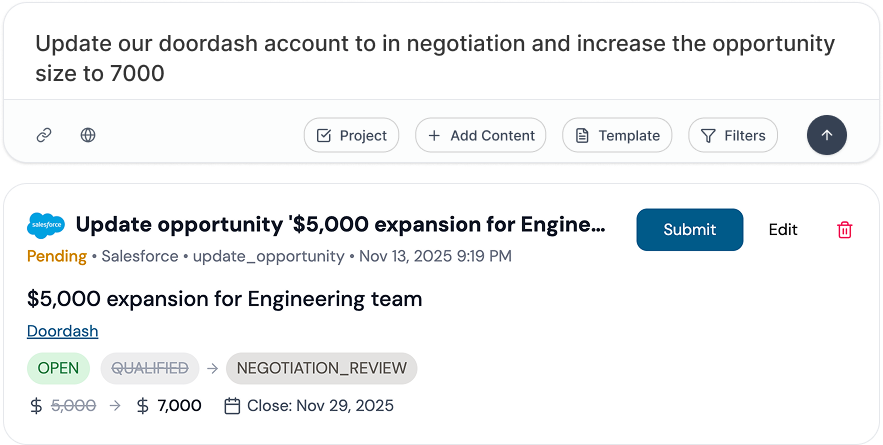
Image 1 / 1
Context from work people already did
Cofounders Aziz Pabani and Tanooj Luthra built Nerve around problems they encountered in enterprise work. At launch, Pabani described information silos and time spent writing documents or updating business systems. Luthra's personal site dates his Nerve CTO role to 2024–2026, following engineering work at Brex, Coinbase, and Box.[3][4]
Pabani's product account named Slack, Jira, Google Drive, Notion, and Gong as inputs. A product manager could turn a call transcript into a requirements document, use an existing template, and create or edit Jira tickets. Searching across old conversations could supply context that the current meeting omitted.[5]

This is a broader job than summarization. A useful draft must fit the company's format; a proposed ticket must carry the right project context; an update must reach the correct system. Each connector adds another permission model and another way a proposed action can be wrong. That is an architectural implication of the advertised workflow, rather than a measured account of Nerve's error rate.
A visible step before writing back
Nerve's promotional interface shows a Salesforce update waiting for submission. The user can inspect or edit a proposed opportunity change before applying it. That design makes an action reviewable at the point where it changes a business record. The image does not demonstrate how every connector handled approval or how the production service enforced permissions.[6]
The website also promoted personalized access controls and enterprise security. Those claims were part of its sales proposition. This research did not inspect audit reports, connector credentials, or live authorization behavior, so it cannot certify the implementation.[6]

Distribution through users and partners
Product Hunt supplied public launch feedback from identified users. Gabriel Denis-Arrue Munes described using Nerve at OpenSpace to draft a requirements document and recover context from older discussions. Product leader Michael Jones also described its value in daily work. These accounts establish specific reported usage; they do not establish contract size, retention, or representative customer satisfaction.[3]
Box was another route into enterprise buyers. Its own ecosystem article names Nerve among search and agent partners. Pabani separately announced a Box AI Partner Showcase award and described template-based drafting and file-change updates. Box's article corroborates the integration relationship, while the award remains attributed to Pabani's announcement.[7][8]
A company-shared promotional post also disclosed sponsorship. That is evidence of a paid creator distribution experiment, without evidence of its cost or conversion. Investor Cailen DSa identified Nerve as a VibeScaling portfolio company and confirmed the founders' move to OpenAI. Public material does not disclose the company's total funding.[9][2]
Pricing and outcome
Nerve's surviving marketing page lists Starter at $19 per user per month and Business at $49, both billed annually, plus an enterprise tier. Those prices describe the page's advertised model. They do not prove that new accounts remain available after the announced transition.[6]
Inc.'s February 18 account reported Luthra's announcement from the previous day and a planned product sunset about a month later. His personal site now lists him at OpenAI working on ChatGPT. A surviving marketing page cannot resolve whether the old service still accepts users, and this research did not create an account to test it.[1][4]
The strongest supported lesson concerns workflow scope. Connecting context to a reviewed write can remove a complete step from someone's day. Scaling that idea across every department multiplies connector and trust requirements. Glean currently sells overlapping company-context, assistant, and action capabilities, so a new entrant needs a narrower customer job than another universal work assistant.[10]
Timeline
- 2024–2026: Luthra's stated tenure as Nerve cofounder and CTO.[4]
- 2025: Product Hunt records the public launch.[3]
- February 17, 2026: Reported team-move and sunset announcement.[1]
- November 2026 check: Founder lists an OpenAI ChatGPT role; old marketing material remains accessible.[4][6]