Overview
Nikola tried to sell commercial fleets a cleaner truck and the energy service needed to run it. Its early promises outran its demonstrated technology. Later management delivered commercial trucks, but the business still could not sustain production and support. Its liquidation plan received written confirmation on September 12, 2025. [1][2]
Fraud findings explain a serious failure of trust. They do not, by themselves, explain every later operating loss. Nikola's history also shows the cost of combining vehicle development, manufacturing, fuel supply, and customer support before proving the whole system's economics.
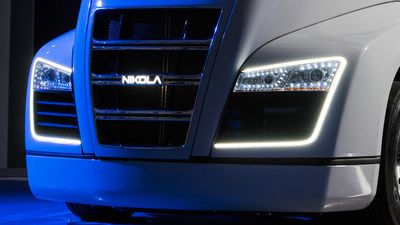
Founding Story
Nikola's 2020 listing announcement described the Phoenix company as founded in 2015. Trevor Milton was its founder. By the listing, he was executive chairman and Mark Russell was chief executive. [3]
The original proposition extended beyond replacing a diesel engine. At the December 2016 Nikola One unveiling, the company proposed a 72-month lease that included hydrogen fuel, warranty, and maintenance. It announced future stations and manufacturing capacity. These were plans, rather than evidence of an operating national network. Milton said, “Nikola will build a world-class advanced manufacturing facility.” [4]
The public listing supplied real capital. Nikola completed its combination with VectoIQ in June 2020 and reported more than $700 million raised from the transaction and associated private investment. Milton said, “Nikola is thrilled to complete the Nasdaq listing.” Unlike a proposed financing, this announcement concerned a completed transaction. [3]
Timeline
- 2015: Company-stated founding year. [3]
- December 2016: Nikola One unveiling and bundled lease proposal. [4]
- June 2020: VectoIQ combination completed; Nikola began trading publicly. [3]
- December 2021: Company agreed to a $125 million SEC penalty. [1]
- 2023: Iveco took full control of the European joint venture; Nikola recalled battery-electric trucks. [5][6]
- February 19, 2025: Chapter 11 filing. Asset sales followed. [2]
- September 12, 2025: Written liquidation confirmation order entered. [2]
- 2026: Separate asset buyer Hyroad pursued fleet service contracts; remaining estate matters continued. [9][10][12]
What They Built
The 2016 promotional vehicle and the later commercial product need separate treatment. Prosecutors said the Nikola One prototype was inoperable when Milton described it as functioning. They also described misleading statements about hydrogen production and reservations. That record should not be extended into a claim that Nikola never sold trucks. [7]
Its later Tre range included battery-electric and hydrogen fuel-cell trucks. The company reported $62.2 million of truck sales revenue for 2024. Real product sales provide an important counterargument to an account concerned only with the early demonstrations. They establish commercial activity, without establishing satisfactory margins or fleet reliability. [2]
Partners also had distinct roles. Iveco's June 2023 announcement confirmed its purchase of full control of the German joint venture, renamed EVCO. It did not describe a purchase of Nikola's whole company. The European venture's separation preceded Nikola's later US liquidation. [5]
Market Position
Target Customers
The intended buyer was a commercial fleet operator. Such a buyer needs more than vehicle specifications: routes, payload, fuel availability, maintenance, and downtime determine whether a truck can perform paid work. Nikola's original bundled lease proposal recognized that coordination problem. It also placed several costly obligations inside one offering. [4]
Market Size
The evidence supports a specific operating problem more clearly than a useful addressable-market estimate. A large freight market does not show how many routes have suitable fuel access or viable operating costs. The proposed replacement project below therefore starts with individual fleet routes, rather than treating all diesel trucks as immediate customers.
Competition
Conventional fleets already have vehicles and service arrangements they understand. An alternative must justify a switch with operating evidence. Current software also reduces the need to build another generic fleet dashboard: Geotab offers fleet packages with electric-vehicle monitoring and analysis, using sales quotes rather than a public dollar price on the reviewed package page. [11]
Hyroad illustrates another approach. It describes itself as an independent, manufacturer-neutral operator that combines trucks, fuel arrangements, maintenance, and software. Its FAQ says it acquired Nikola trucks and related assets in August 2025. These are the buyer's own descriptions, not evidence that every service contract is profitable. [9]
Business Model
The early lease idea would have combined vehicle and operating services into a predictable fleet payment. Its attraction was simplicity for the customer. Its difficulty was the supplier's exposure to truck cost, fuel availability, repairs, and utilization. The 2016 announcement did not prove that those obligations could be delivered at the proposed economics. [4]
Later financial results show the scale of the problem. For calendar 2024, Nikola reported $68.9 million of total revenue, a $230.4 million gross loss, and a $958.2 million net loss. The net loss included substantial noncash impairment charges and does not measure cash spent. Sales alone did not cover the reported cost of the business. [2]
Outcome and evolution
Two failures overlapped. First, the SEC said Nikola misled investors about technology and commercial prospects. In December 2021, the company agreed to a $125 million civil penalty without admitting or denying the findings. That settlement concerns the company; it is distinct from Milton's criminal case. [1]
A jury convicted Milton in 2022, and he received a four-year prison sentence in December 2023. President Donald Trump granted him a full and unconditional pardon on March 27, 2025. The warrant grants clemency; it does not validate the technology claims. [7][8][13]
Second, the later operating company faced product and support costs. The 2023 battery recall letter identified a short-circuit and fire risk in affected Tre battery-electric trucks. Nikola subsequently reported that it notified NHTSA on June 5, 2025 that it had completed the required recall campaign actions. That is the company's reported completion, rather than an independent certification of every truck's condition today. [6][2]
Following Chapter 11, Nikola sold substantially all assets and ceased truck manufacturing and sales. Lucid's April 2025 announcement covered selected facilities and equipment and explicitly excluded Nikola's hydrogen truck business, customer base, and technology. Lucid's subsequent quarterly filing recorded an April acquisition. The buyer acquired particular assets. [2][14][15]
The remaining assets also need careful labels. A January 2026 Iveco objection contested a proposed addition of patents to the Hyroad sale schedule. A later court agenda recorded withdrawal of that amendment matter. Neither document establishes that the original sale was reversed or that a particular party won final ownership of every disputed patent. [16][12]
In May 2026, Toyota announced an agreement with Hyroad to deploy 40 hydrogen trucks in Southern California. The official indexed announcement supports a continuing fleet-service effort, not a verified count of delivered trucks or measured operating returns. Nikola's former domain now redirects to Hyroad. The original manufacturer and this separate asset operator should remain distinct. [10][9]
Key Lessons
Demonstrate the claim investors are buying. A prototype display, a reservation, and a completed operating system support different statements. Independent verification must precede claims about all three.
Price the whole service obligation. Bundling equipment, energy, and maintenance can simplify purchasing while concentrating cost risk in the supplier. Test one route with actual service commitments before expanding the promise.
Keep commercial progress separate from viability. Nikola eventually recorded truck sales. Its gross losses show why real shipments cannot substitute for sustainable delivery and support costs.
Follow assets after closure. Factories, trucks, staff offers, patents, and customer obligations can move separately. An asset buyer's continuing operation does not mean the original business survived intact.
Sources
[1] SEC company settlement, December 2021 [2] Nikola 2024 Form 10-K, filed October 2025 [3] Completed listing announcement, June 2020 [4] Nikola One unveiling release, December 2016 [5] Iveco confirms full joint-venture ownership, June 2023 [6] NHTSA manufacturer recall letter, October 2023 [7] DOJ sentencing account, December 2023 [8] Official pardon warrant [9] Hyroad company FAQ [10] Toyota Hyroad agreement, May 2026 [11] Geotab current software packages [12] January 2026 court agenda: amendment withdrawn [13] DOJ clemency grants: March 27, 2025 [14] Lucid asset agreement, April 2025 [15] Lucid first-quarter 2025 Form 10-Q [16] Iveco objection, January 2026