Overview
Nino Foods built a restaurant portfolio by buying an existing Mumbai pizzeria, improving its delivery operations, and adding new brands. Shared kitchens and staff offered a way to spread fixed costs, while distinct menus addressed different customer tastes. Its later move toward partner kitchens and fried-chicken outlets shows a business adapting its operating format rather than remaining a pure cloud-kitchen experiment.[1][2]
YC labels the company inactive. Yet the brand storefront still lists outlets, and the founders describe KHA’s expansion. No observed source establishes a shutdown or acquisition. The useful question is therefore how Nino converted acquired demand into a repeatable restaurant operation, and which claims still lack independent financial evidence.[3][4]
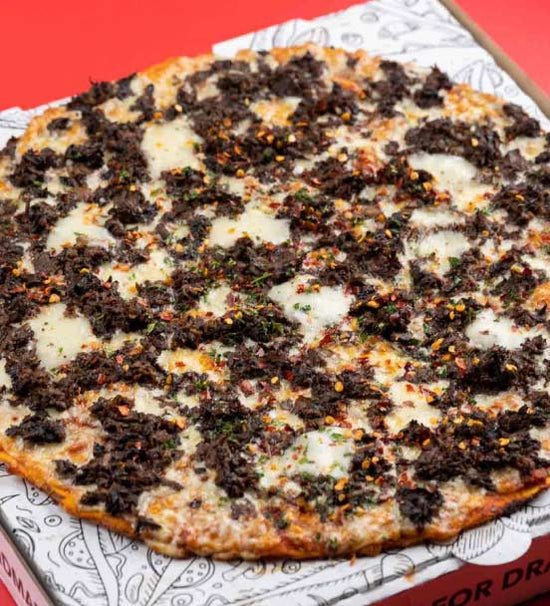
Image 1 / 1
Founding Story
Nishant Jhaveri and Pranav Mehra started the company in 2020. Jhaveri brought retail-operations experience and an INSEAD MBA; Mehra had led online revenue at Disney UTV and Condé Nast India. Their first proposal was to build kitchen space and lease it to other operators. In a later interview, Jhaveri explained that its capital needs and thin margins pushed them toward owning food brands instead. He later described the premium strategy as “we focus on deep versus wide.”[1][5]
They acquired Francesco’s Pizzeria, retained staff, and changed its dine-in operation to delivery. This gave them an existing menu and customer history before they attempted a new brand. Jhaveri’s December 2020 account reported threefold revenue growth over four months and marketing spending below 5%. These are founder-reported operating results, not audited company accounts.[6]
The launch dates describe different milestones: Jhaveri’s account says May 2020; contemporary reporting places company formation in August, and a later interview dates the pizzeria acquisition to September. The public record supports a 2020 start without resolving every legal and operating date.[7][5]
Timeline
- 2020: Acquired Francesco’s and introduced Nino Burgers.[6]
- Summer 2021: Joined YC. October reporting described three Mumbai kitchens.[7]
- December 2021: Announced a $1.6 million seed round and the Kudo rolls-and-bowls brand.[8]
- March 2022: Reported five Mumbai locations and three in Delhi NCR, with further city expansion planned.[5]
- September 2023: Described a central-kitchen operation and a growth-partner model for existing kitchens.[2]
- Later founder update: Claimed KHA reached 24 locations in twelve months; the long-term target was 1,000 by 2030.[4]
What They Built
Francesco’s offered thin-crust pizza and custom alphabet, number, and symbol shapes. Jhaveri reported more than 700 custom-pizza customers in two months. That gave an ordinary delivery order an occasion-specific reason to choose the brand. His account credits Swiggy and Zomato insights alongside operating changes; it does not describe an exclusive partnership.[6]
Nino Burgers followed customer research and chef-led food trials. The founders said customers wanted a fuller premium burger meal. Packaging encouraged social posts, while pop-up events put products in customers’ hands and gathered feedback. Distribution therefore combined aggregator discovery with direct product sampling.[7]
The portfolio expanded beyond pizza and burgers. A 2023 interview described six brands, central preparation of base ingredients, and a partner model that used other kitchens’ existing space and labor. KHA later became a prominent fried-chicken format. The inference is that Nino sought more ways to reuse operating knowledge without building every kitchen itself; partner economics and realized returns remain unavailable.[2][4]
Market Position
Target Customers
Nino initially targeted premium urban delivery customers. October 2021 reporting gave a ₹900 average basket; a March 2022 interview put average order value at ₹750–800. These observations concern different periods and do not establish a sustained average.[7][5]
Market Size
A large food-delivery category does not define Nino’s serviceable market. Dense local demand, premium basket size, and outlet contribution matter more than a national total. Reliable current revenue, paid customer cohorts, and geographic unit economics were not found.
Competition
Premium brands compete with chains and local restaurants inside the same aggregators. Sharing infrastructure can reduce fixed costs, but does not remove the need to earn repeat orders. Nino’s growth-partner proposal also competes with kitchen owners’ ability to run their own menus.[2]
Business Model
Revenue came from food sales. The founders’ portfolio thesis depended on sharing infrastructure and manpower. The December 2021 seed round included YC, Soma Capital, Uncommon Capital, and Harry Hurst; YourStory said it inspected a signed investor document. Jhaveri described the initial goal as being able to “run one food brand successfully.” That supports the financing event and intended expansion, not subsequent profitability.[6][8]
Traction
Contemporary reporting attributed 12,000 monthly orders and 50–60% repeat purchasing to the founders. Later YC copy claims 40,000 monthly orders, twenty Mumbai locations, profitability, and sub-year store payback. Neither source supplies dated consolidated accounts or a common repeat-customer definition. KHA’s reported outlet growth is a separate brand measure, not directly comparable with cloud-kitchen counts.[7][1][4]
Post-Mortem
The observed trajectory supports a change in format, not a demonstrated corporate ending. The initial landlord idea exposed a capital problem; acquiring an existing restaurant provided demand evidence; shared production supported additional menus; partner kitchens and KHA introduced another route to expansion.
The unresolved test is whether this reuse improves outlet economics after food cost, waste, labor, discounts, and commissions. More brands can spread rent while also adding inventory and preparation complexity. That mechanism explains what operators should measure; it does not establish why Nino received its inactive label.
As checked in October 2026, the official storefront still advertises brands and lists outlet addresses. Founder expansion statements strengthen the evidence for product continuity, but neither an online menu nor a growth target verifies current fulfillment or financial health.[3][4]
Key Lessons
- Buy evidence before adding brands. An existing pizzeria provided recipes, staff, and customer history.
- Separate shared costs from shared success. Each menu still needs its own contribution calculation.
- Make distribution concrete. Sampling, packaging, custom shapes, and aggregator placement served different customer-acquisition jobs.
- Measure format changes separately. Partner kitchens, QSR outlets, and delivery kitchens cannot share a single ambiguous growth count.