
Oolu
Summer 2015AcquiredOolu is one of the fastest growing off-grid solar firms in West Africa
Pressure-test this opportunity
Explore the risks and possibilities with a prompt for ChatGPT, Claude, or your agent.
Oolu is one of the fastest growing off-grid solar firms in West Africa
Explore the risks and possibilities with a prompt for ChatGPT, Claude, or your agent.
Oolu made solar electricity affordable through equipment financing, local distribution, installation, maintenance, and recurring payments. Founded in Senegal in 2015 by Nilmi Senaratna and Dan Rosa, it joined YC's Summer 2015 batch. Its customer needed usable electricity and a way to pay over time, rather than a panel alone. [1]
Ignite announced its acquisition of Oolu on April 12, 2024. The announcement emphasized Oolu's distribution network and local knowledge. A June 2026 BGFA case study documents a customer using an Oolu by Ignite system in Burkina Faso. The outcome is a continuing acquired operation; the reviewed announcement does not disclose consideration or investor returns. [2][7]
The central operating lesson is that financed hardware depends on both service and payment access. Customers can owe money on a working system yet struggle to reach a payment point. Oolu's experience shows why an energy distributor must understand those causes before treating every delayed payment as a credit problem.
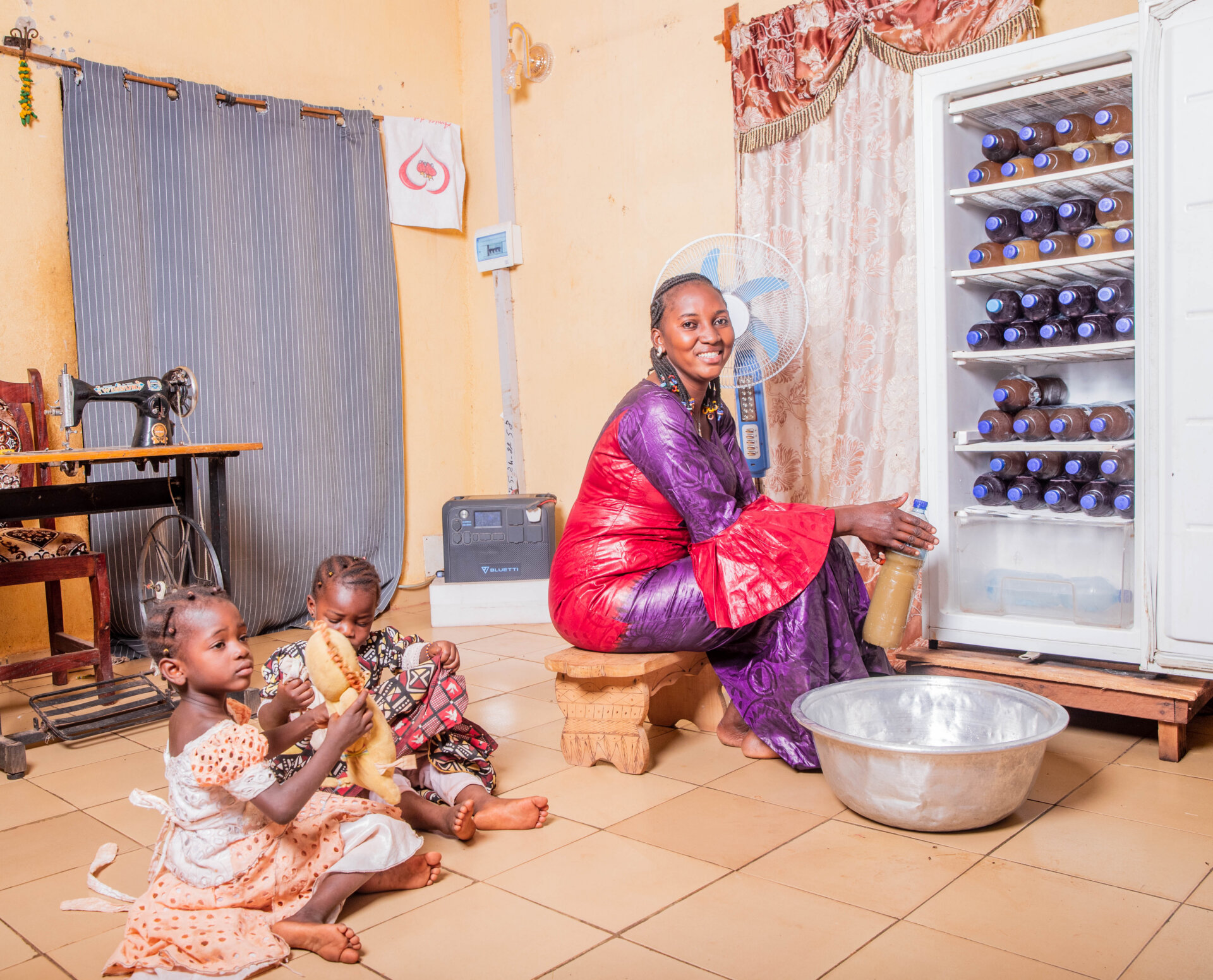
Image 1 / 1
Senaratna told Disrupt Africa that a year in a rural Senegalese community, working on a United Nations Environment Programme renewable-energy project, exposed everyday energy poverty. She left that work and formed the company. YC identifies her and Rosa as founders and explains that Oolu means “trust” in Wolof. Their meeting and exact division of initial responsibilities are not documented in the reviewed accounts. [3][1]
The initial service leased home solar systems for a monthly fee. Maintenance and battery replacement were included, and mobile-money payment attracted a discount. Senaratna described work with mayors and village chiefs alongside customer service. The company therefore built local relationships into distribution, rather than assuming customers would adopt unfamiliar financed equipment through advertising alone. [3]
The service joined a physical installation with an ongoing customer account. Local teams sold and supported solar systems while customers paid in installments. The 2020 investor announcement describes a proprietary management platform, distribution and service network, and operations in Nigeria, Senegal, Mali, Burkina Faso, and Niger. It reports more than 250 full-time employees at that time. [4]
The portfolio widened beyond lights and phone charging. Westa.Solar's 2021 launch release describes designing, financing, installing, and maintaining commercial and industrial solar. Its first named project served Petrichor Industries in Nigeria, with a 500kWp installation jointly financed by Westa.Solar and a UK Foreign & Commonwealth Development Office grant. This is a delivered project in the release, not merely a future pipeline. [6]
BGFA's 2026 case follows Tinta Setou in Bobo-Dioulasso. Oolu assessed her family's needs and installed a Power Hub; the family separately bought an efficient refrigerator from savings. Refrigeration supported her juice business. This distinguishes the financed energy system from the appliance purchase and illustrates productive use without turning one customer's result into a portfolio-wide return. [7]
Oolu began with rural households lacking reliable grid access and the ability to purchase equipment upfront. It also served peri-urban customers and businesses. The product addressed several constraints together: electricity availability, purchase timing, payment access, and maintenance. Larger appliances changed the possible use from evening lighting to earning income during the day. [3][4][7]
The investor-reported 60,000 systems sold by December 2020 is cumulative distribution, not active accounts, revenue, or profit. BGFA's 2,700-connection figure is a program target, not completed installations. Neither establishes the market a new operator could profitably serve. That market also depends on customer affordability, capital availability, service routes, and reliable collection. [4][7]
Customers could continue with candles, charging services, small informal solar systems, or wait for grid service. A financed installed system had to improve that daily experience while remaining payable. Other financed-solar operators also compete for customers and capital: Sun King's July 2025 announcement describes converting future Kenyan customer repayments into long-term local-currency debt. [7][12]
Supporting software is already specialized. Angaza offers payment histories, mobile-money collection, and portfolio trends. PaygOps describes contract records, repayment tracking, portfolio-at-risk measures, cohort analysis, and investor exports, including integrations with Odyssey and Prospect. A new evidence product must complement or outperform these existing workflows; joining payments and operations is not an empty category. [10][11]
Recurring payments spread customer cost while leaving the distributor to fund equipment and provide service before full recovery. The early leasing model included maintenance and battery replacement. Those obligations made uptime and collections important together: a working asset creates value, while inaccessible payments delay receipts even when the customer wants to pay. [3]
The December 2020 $8.5 million Series B was company investment, not customer loan principal, annual revenue, or a valuation. RP Global led, with Persistent Energy Capital, All On, Gaia Impact Fund, and DPI Energy Ventures participating. The release describes expansion of products and operations. It does not establish a loss, financing emergency, or why shareholders later accepted the acquisition. [4]
No reviewed source provides a consistent audited revenue series, default rate, contribution margin, or acquisition payout. Working-capital exposure follows from financing equipment before collections; the claim that this exposure forced Oolu to sell would require evidence beyond the business model.
UNCDF's February 2020 case study describes distant Wari points and connectivity problems delaying payments. The Oolu/Wizall pilot sought a closer rural payment network, but Wizall lacked an operational liquidity-management mechanism there. Oolu would have needed to support that network. Low commissions and limited transaction volume produced deficit projections for Oolu; these were pilot projections, not company-wide losses. [5]
The study reports that Oolu instead operationalized an Orange distribution contract, using a more established rural network. Late and manually processed payments fell, without a quantified effect in that passage. Choosing a provider with local coverage addressed a collection constraint that another application interface alone could not solve. [5]
Gaia’s 2019 customer study adds a related limit: 64% of respondents still traveled solely to fund mobile-money accounts. This is a survey result, rather than a measure of every customer’s payment access. Digital payment capability and nearby cash-in access are different parts of the service. [9]
Ignite's acquisition announcement identifies distribution and local knowledge as assets it wanted to scale. Its current history says Oolu's installed base and infrastructure would have taken years to recreate. That supports a strategic rationale for buying an established network rather than entering each community from scratch. [2][8]
Consolidation could share procurement, management, and systems across countries, but the reviewed record does not quantify Oolu's savings after integration. Ignite's history describes an integrated platform after the later ENGIE transaction; its platform-wide people-served figures must not be attributed to Oolu alone. [8]
The Burkina Faso customer case and current program target provide concrete evidence of continuing service. They do not establish whether every historical country or product line remains intact. The strongest conclusion is that Oolu's distribution and service operation survived acquisition, while its standalone financial endpoint remains undisclosed.