
Orchata
Winter 2020InactiveGroceries delivered in 20 min in Latinamerica
Pressure-test this opportunity
Turn this teardown into a decision-ready prompt for ChatGPT, Claude, or your agent.
Groceries delivered in 20 min in Latinamerica
Turn this teardown into a decision-ready prompt for ChatGPT, Claude, or your agent.
If you only have a few minutes to spare, here’s what investors, operators, and founders should know about Orchata (W20).
Orchata began in 2020 as commerce software for Latin American food shops, then became a vertically integrated quick-commerce retailer promising groceries in 15 to 20 minutes, supermarket prices, and no substitutions. Luis Mario Garcia and Javier Gonzalez built consumer, driver, and warehouse software around a network of dark stores. The company raised a $4 million seed round and later reported $6.3 million in revenue, 30,000 customers, and 300,000 deliveries.[1][2]
The pivot solved inventory accuracy and delivery control by taking both onto Orchata's balance sheet. Every new neighborhood then required inventory, workers, picking capacity, and enough nearby orders to cover them. Better-funded rivals copied the speed promise, while Mexican consumers still ranked low prices above fast delivery. Orchata generated real volume, but its revenue came through a thin-margin retail operation whose complexity rose with growth.[3]
An investor still described the business as operating in January 2024. Later that year he wrote that Orchata had not worked out, and the founders joined YC's Summer 2024 batch with Seals AI. No acquisition was announced.[4][5][6]
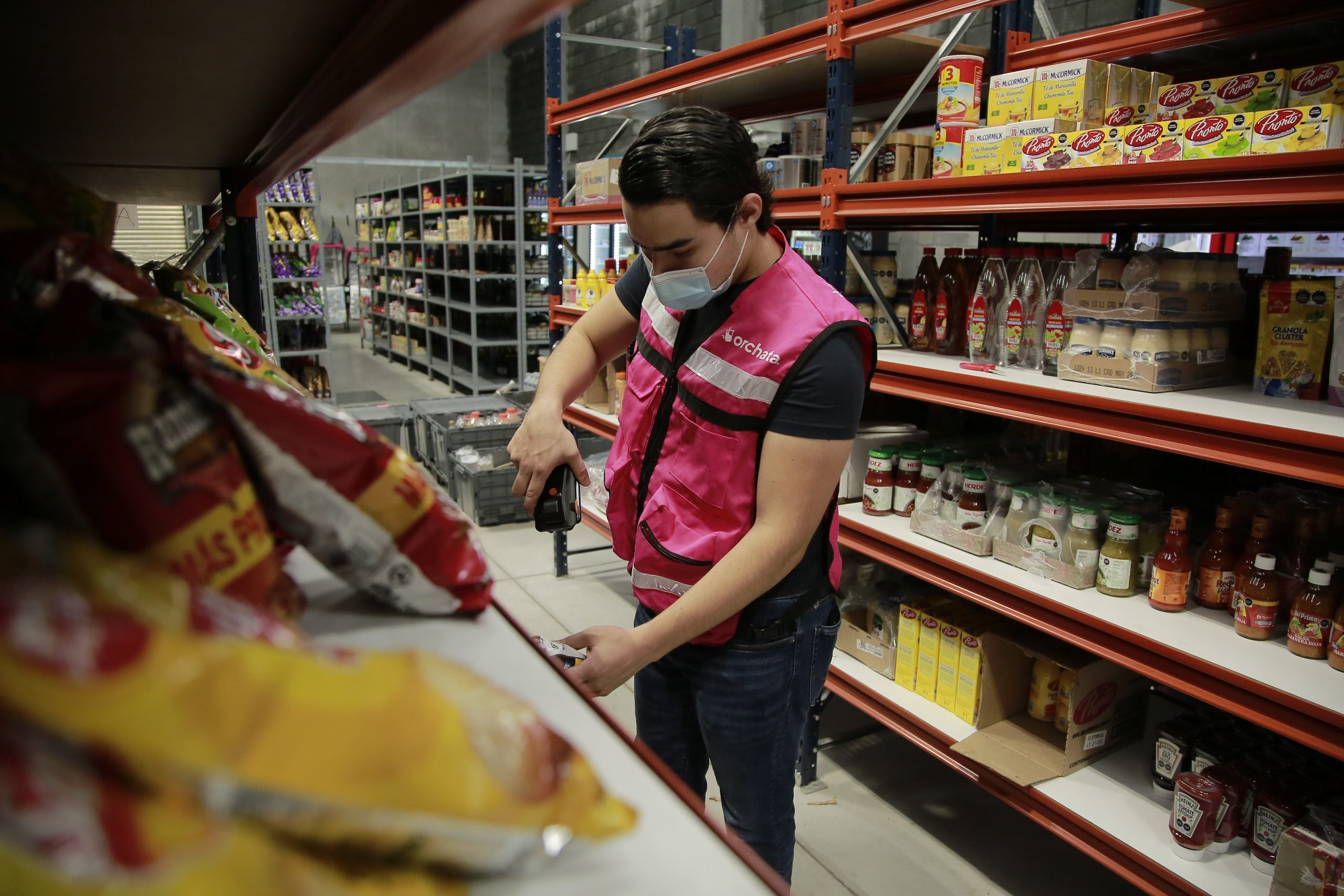
Image 1 / 1
Garcia grew up making deliveries for neighborhood grocery stores in Mexico. He later worked with startups in San Francisco and returned home intending to build a software company. He met Gonzalez, a computer-science graduate who says he had coded since age 12 and built an earlier app that reached 500,000 users. The pair started Orchata in 2020.[1][2]
The first product served independent butchers, grocers, seafood sellers, and other local food merchants. Orchata gave each business a direct online storefront, payments, mobile order management, promotions, referrals, route planning, and customer analytics. The merchant kept its inventory, customer relationships, storage, and delivery operation. WhatsApp supplied much of the traffic. By September 2020, a Contxto profile said the software was present in eight Latin American cities.[7]
The founders had a crisp distribution thesis. Local stores already possessed trust, infrastructure, and repeat customers; Orchata could digitize those assets without rebuilding them. Garcia told Contxto: “Hay millones de negocios que vamos a llevar online con la plataforma de venta directa.” He also explained why the company had barely promoted its YC participation: “Seguimos creciendo, progresando.”[7]
That thesis changed. Investors believed the merchant-operated model did not fully solve availability or customer experience. Orchata began holding inventory and running fulfillment itself. By August 2021 it had launched the consumer service in two cities, promising a complete basket within 15 minutes at supermarket prices with no substitutions. Garcia framed the ambition as a Latin American version of Gopuff.[2]
Garcia stayed close to the work. YC's later profile says he personally delivered 1,000 orders while acquiring customers, operating warehouses, hiring engineers, launching cities, and raising capital. The fieldwork taught the team how grocery operations broke while binding it to a harder business than the software network it had started with.[1]
Read the complete post-mortem, the rebuild playbook, and the exact reasons Orchata is still worth studying now.