
Pina Earth
Winter 2022AcquiredUnlocking carbon markets for European forest owners
Pressure-test this opportunity
Explore the risks and possibilities with a prompt for ChatGPT, Claude, or your agent.
Unlocking carbon markets for European forest owners
Explore the risks and possibilities with a prompt for ChatGPT, Claude, or your agent.
Pina Earth turned European forest adaptation into a carbon-market product. Founded in Munich in 2021, the company built digital twins, climate simulations, certification workflows, and buyer dashboards so forest owners could finance the conversion of vulnerable monocultures into mixed forests.[1]
Its July 2025 exit took the form of a merger with Tree.ly. Pina Earth had proved the method, raised seed capital, certified projects, and won corporate customers. Yet forest carbon remained a business of local standards, costly project work, scarce supply, and buyer trust. The deal added geographies, methodologies, and distribution that neither platform had alone. The combined company kept the Pina Earth brand, while Tree.ly's founders took operational control and Pina Earth's founders became advisers.[2]
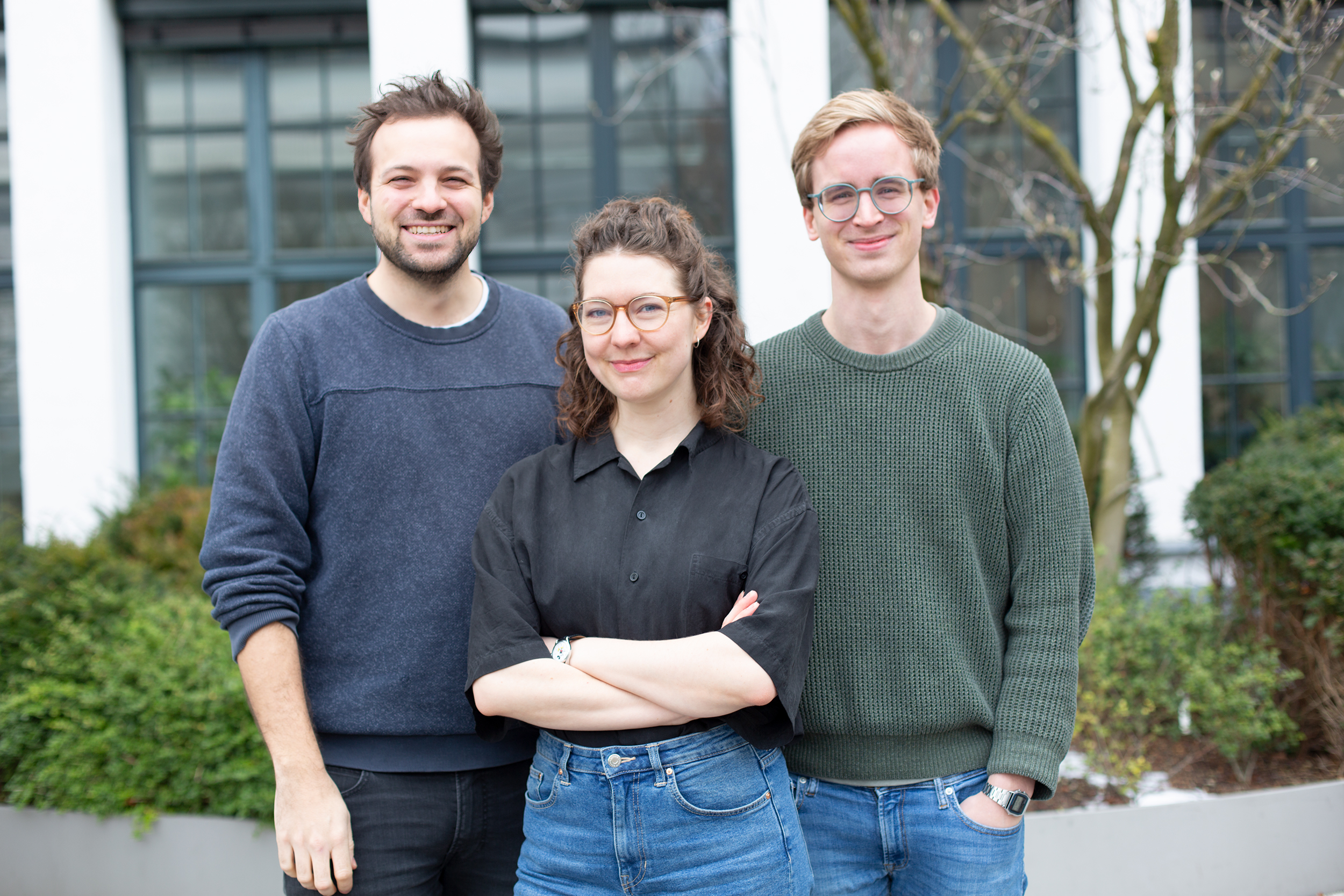
Image 1 / 2
Gesa Biermann came to climate technology through environmental research. She studied Sustainable Resource Management at the Technical University of Munich, worked briefly in strategy consulting, joined the management team at the Center for Digital Technology and Management, and completed an LMU doctorate on sustainable food systems. She met software engineer Florian Fincke at CDTM in 2017. Jonas Kerber, whose background spanned robotics and ecosystem modeling, joined them as the third co-founder and CTO.[3]
The team did not begin with a forest-carbon epiphany. Biermann said the founders mapped roughly 150 social and environmental problems, then used design sprints and interviews to test whether each problem was real. They conducted more than 100 early interviews before choosing carbon markets. Those interviews exposed the opening. Forests needed expensive adaptation, but smaller owners could not justify the cost or navigate carbon certification. Biermann described the product plainly to TechCrunch: “Essentially we’re building an online platform where we’re connecting forest owners and carbon credit buyers.” She added, “Our goal is to make it as easy as possible for forest owners to be rewarded for the ecosystem services they provide.”[1]
The founders also made a specific ecological choice. Instead of paying only to plant trees or stop logging, they focused on converting commercially managed monocultures into forests with more species and age diversity. That fit Germany, where land for new forests is limited and timber remains economically important. The resulting carbon credits paid for interventions now whose benefits would accumulate over decades.
Pina Earth joined Y Combinator's Winter 2022 batch.[4] Kerber left the company after 2022 and began a doctorate at TUM in 2023; public materials do not explain his ownership or the terms of that departure.[5] Biermann and Fincke continued to lead the company through the merger.
Pina Earth was part project developer, part measurement system, and part carbon-credit marketplace. A forest owner began with an eligibility check and inventory. The platform converted those measurements into a digital twin, then simulated two futures over 30 years: a baseline under existing management and a project scenario with interventions such as natural regeneration, new tree species, or adjusted wildlife management. The difference in modeled carbon, after accounting for project rules, became the basis for credits. An outside auditor visited the site and reviewed the project report before issuance.[13][22]
The original system processed 2D and 3D forestry data collected through aircraft-mounted sensors. Machine-learning models detected individual trees and forecast how climate change could alter forest growth.[1] The customer-facing layer translated that work into a certification workflow and dashboard.

The software mattered because a project still carried heavy expert labor. Biermann described the final documentation as roughly 100 technical pages, “eine Art Doktorarbeit pro Wald,” or a dissertation for each forest. Software made steps repeatable, but did not eliminate field data, forestry judgment, audit work, contracts, or monitoring.[3]
The product eventually supported forest adaptation, improved forest management, reserves, and reforestation across different standards. Buyers received retirement certificates, registry access, audit material, project updates, and communications assets. Forest owners received project development and access to corporate demand. The Schlegel project shows the unit of work: 471 hectares of spruce monoculture in Thuringia, a 30-year term, and 27,187 modeled tonnes of CO₂ impact.[14]
Pina Earth sat between two fragmented groups. On the supply side were European forest owners who needed money, technical modeling, and certification. In 2023, the company still needed about 100 hectares for a project to work economically, despite the prevalence of much smaller holdings.[3] On the demand side were companies willing to pay a premium for regional, visible, audited projects. Yello's contract-level contribution showed how credits could become part of a consumer product rather than a one-off sustainability purchase.
Germany's 2024 federal inventory counted 11.5 million hectares of forest, almost half privately owned.[15] That is a large physical base but not an instantly addressable software market. Each parcel has ownership, inventory, baseline, methodology, and audit constraints.
The wider voluntary carbon market contracted in 2024: transaction volume fell 25% and prices 5.5%, though retirements stayed fairly steady.[16] Improved forest management moved the other way. Ecosystem Marketplace recorded volume rising from 2.6 million tonnes in 2023 to 8.8 million in 2024, with value reaching $132.3 million and an average price of $14.97.[17] Pina Earth charged much more for some regional avoidance credits: €71.40 to €83.20 per tonne including VAT.[18] The premium reflected local provenance, certification, and buyer services, but it also narrowed the customer pool.
Pina Earth competed with international forest-monitoring and credit platforms such as Pachama, NCX, and Sylvera, plus European project developers. Arbonics launched in 2022 and said by late 2023 that it had raised €7.3 million, worked with 4,000 landowners, and supported more than four million trees.[19] Tree.ly overlapped most directly in the DACH region but brought a broader certification platform, more geographies, and different project methodologies.
Regulation increased both opportunity and overhead. The EU adopted Regulation 2024/3012 in November 2024, creating a voluntary Union framework for permanent removals, carbon farming, and carbon storage in products.[20] Standardization could improve buyer trust, yet developers still had to translate new rules into methodology, evidence, and audits. That favored larger platforms with more projects over narrow software vendors.
Pina Earth developed projects with forest owners, certified the incremental carbon, and sold credits to companies. Public pages say most purchase proceeds went into the forest, but they do not disclose the developer's take rate, gross margin, contract structure, or revenue recognition. The online store offered smaller purchases, while enterprise buyers received project selection, retirement records, dashboards, audit documentation, and communications support.[13]
The model mixed software with project development. Revenue depended on creating and selling a scarce, verified asset. Every project required forestry work and third-party validation before the platform could monetize it. Forward-looking credits also created long monitoring obligations. Software lowered project cost, but the company still needed enough hectares per project and enough trusted supply for each buyer.
The $2.5 million seed round financed automation and expansion.[6] No standalone revenue or burn figures were published, so the margin profile remains unknown. The merged company later claimed fivefold annual revenue growth, but gave no absolute baseline.[2]
Pina Earth progressed from two pilots covering 1,200 hectares in early 2022 to certified projects and named corporate buyers. Its methodology survived TÜV scrutiny and entered a national standard process. The Schlegel project alone covered 471 hectares, while the company said more than 30 million square meters of German forest were under conversion by the merger.[8][10]
The combined entity reported more than 80,000 hectares under contract, over 500,000 tonnes of certified regional credits, and about 100 corporate buyers across six countries.[2] Those figures combine both companies and remain unaudited, so they should not be treated as Pina Earth's standalone performance.
The core insight was correct: certification was too manual for smaller forest owners. The structural problem was that digitization removed only part of the cost. In 2022, Biermann said the team was “translating our learnings into replicable processes, automating the bottlenecks of carbon project development.”[6] By late 2023, however, the company still needed roughly 100 hectares to make a project economical. Field inventories, baseline choices, contracts, audits, and decades of monitoring remained attached to each forest.
Pina Earth addressed the problem with remote sensing, digital twins, and standardized methodology. It achieved certification and commercial projects, so the remedy worked technically. It did not make each new country, standard, and project type free. Scale still required a larger portfolio over which to spread carbon expertise, auditor relationships, software, and sales.
The company charged a premium for regional credits at a moment when the wider market was losing liquidity and defending its credibility. Its response was unusually concrete: TÜV audits, ISO 14064-2 alignment, public project pages, retirement records, and dashboards. That supported deals with buyers such as Yello, but corporate customers also wanted volume, geographic choice, multiple methodologies, and long-lived supply.
A focused German forest-adaptation platform could deliver depth. Tree.ly brought broader DACH supply and certification coverage. The merger combined those assets and integrated Pina Earth's simulation software into Tree.ly's platform. It was a direct answer to a market where trust came from detailed project evidence, while sales efficiency came from portfolio breadth.
The merger was a company-level exit even though no price was announced. The combined business retained the Pina Earth name, but Tree.ly founders Jodok Batlogg and Christian Lutz took operational leadership. Biermann and Fincke moved into strategic roles. The current legal notice places Pina Technologies GmbH, Tree.ly Deutschland GmbH, and Silvaconsult AG under Austrian parent Pina Technologies FlexCo, managed by Batlogg and Lutz.[21]
The strongest counterargument is that the merger was simply an expansion by a healthy startup. The evidence supports part of that view: the brand survived, founders stayed involved, and projects continued. The leadership handoff and legal consolidation establish a deeper transaction than a sales partnership. Pina Earth exchanged standalone control for a larger operating system. Because the ownership split, consideration, and investor returns were never disclosed, the financial quality of the exit cannot be judged.