
Overview
Pippin tried to manufacture housing the way a modern factory makes a repeatable product. Its consumer brand, Rent the Backyard, sold compact accessory dwelling units to Bay Area homeowners and handled design, permits, factory construction, delivery, and installation. The company began with an even broader offer: it would finance the home, manage the tenant, and split rent with the homeowner for 30 years.
Demand arrived faster than production learning. By December 2022, Pippin reported more than $10 million in contracted annual run rate but only ten completed homes. Its factory needed volume to specialize labor and absorb fixed costs, while every presold home pulled cash forward for materials and exposed the company to price increases before customer financing closed. Pippin shut down after four years and delivered a home or full refund to every customer.[1]
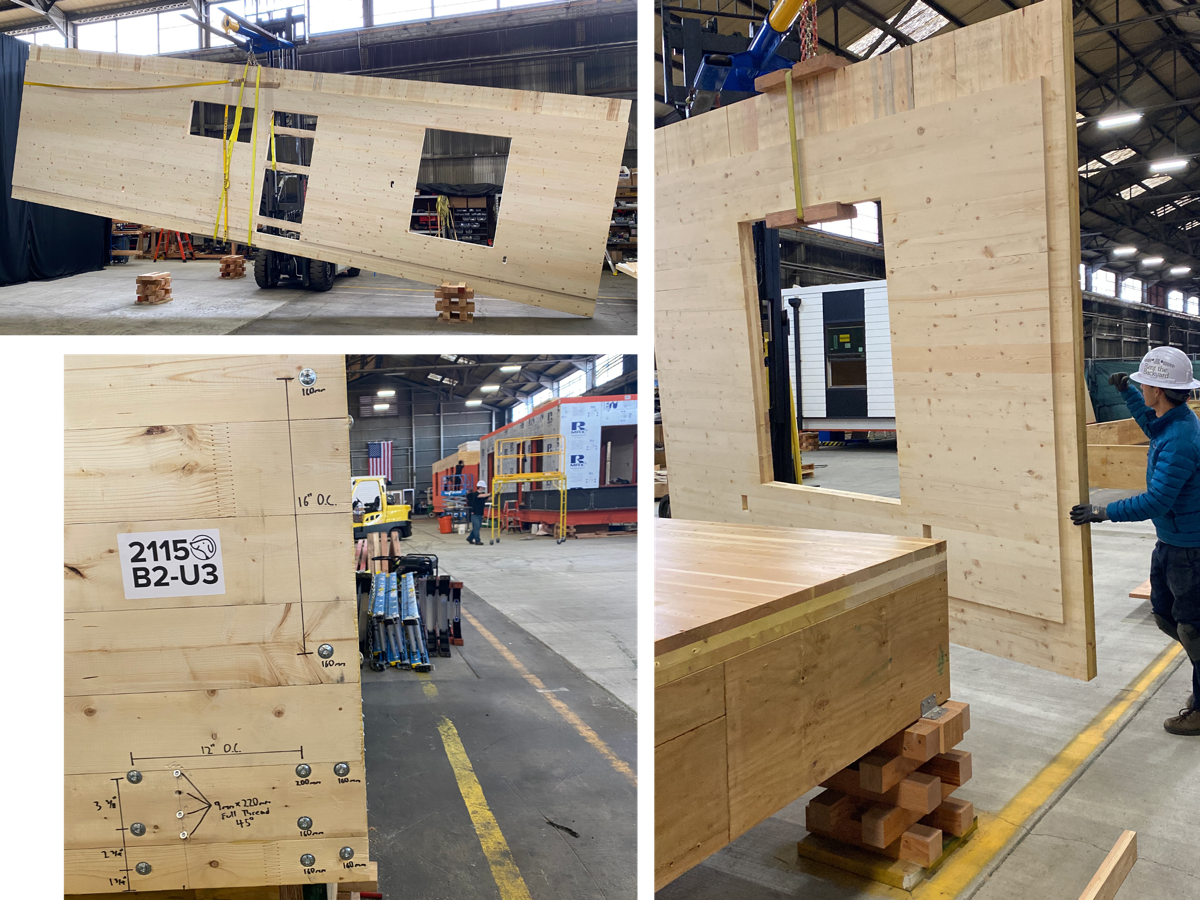
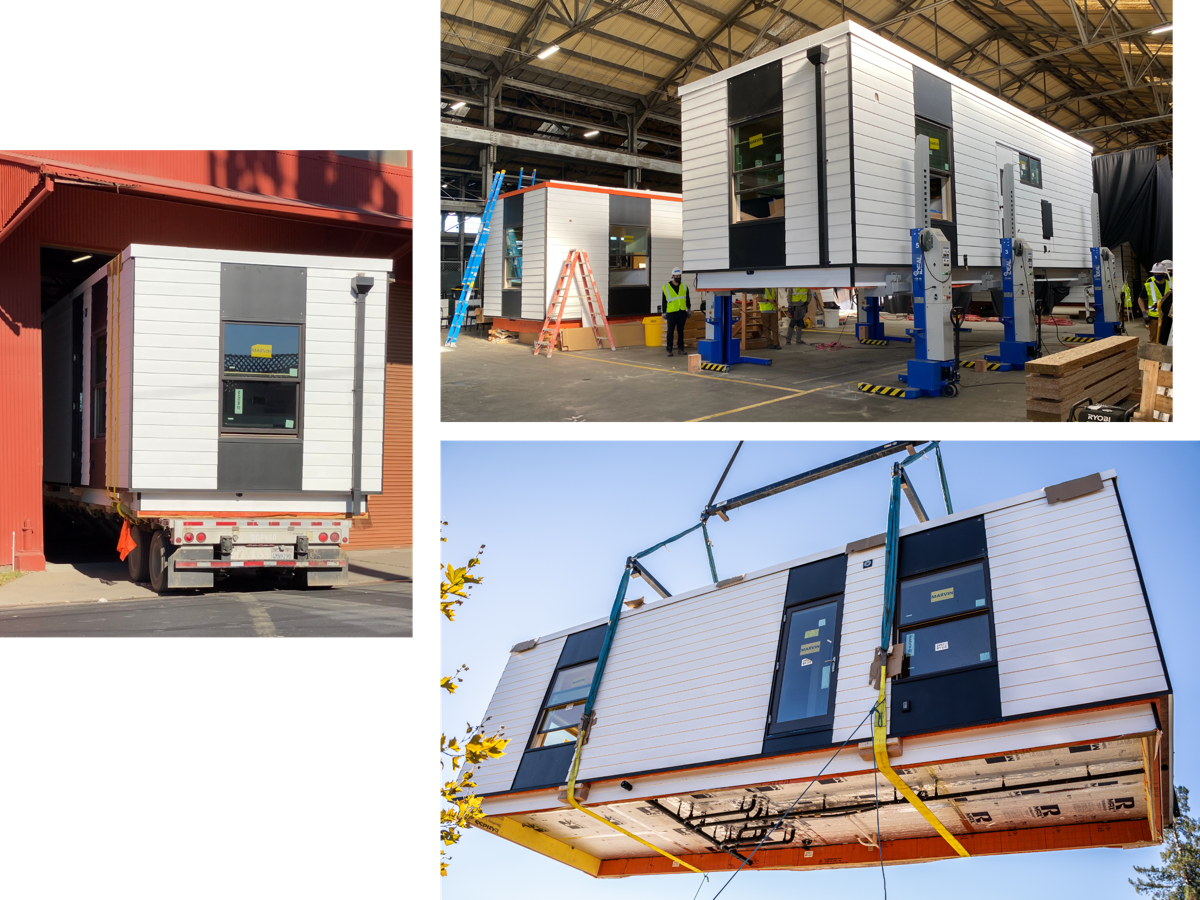
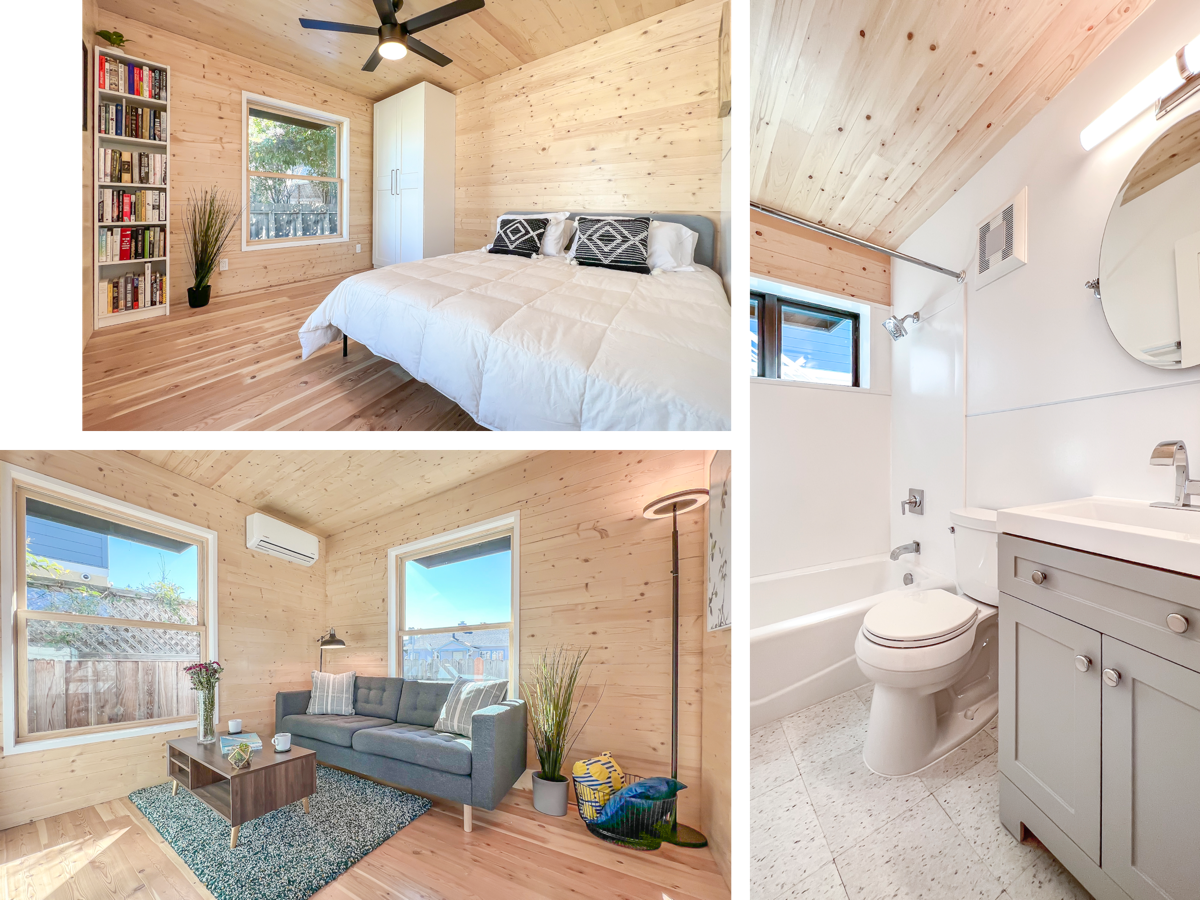
Image 1 / 3
Founding Story
Brian Bakerman and Spencer Burleigh met at Carnegie Mellon, where Bakerman studied electrical and computer engineering and Burleigh studied statistics and computer science. They applied to Y Combinator's Early Decision program while finishing school. Their friends in the Summer 2018 batch made the program feel attainable; acceptance in October 2018 gave them a reason to abandon conventional recruiting and work on the company before the Summer 2019 batch began.[2]
The policy opening was clear. California had begun stripping away barriers to accessory dwelling units, but a homeowner still had to find a designer, navigate a city, finance construction, hire a builder, and manage a rental. The founders combined those tasks into one offer. Rent the Backyard would pay for a prefabricated studio, install it, find a tenant, collect rent, and split the proceeds with the homeowner. The owner contributed land and received increasing equity until owning the unit after 30 years.
Bakerman summarized the promise to TechCrunch: “The goal is to have no headaches for the homeowners.”[3] That sentence also described how much the company put on its own balance sheet: construction capital, permits, tenant selection, maintenance, property management, and a contract that could outlast the homeowner's tenure.
Early manufacturing came from partners. Contemporary reports named prefabADU and Node, while Rent the Backyard owned the homeowner relationship and project orchestration.[4] The founders later opened their own Oakland factory under the Pippin name. ADUs were supposed to be “minimum viable housing,” a small cross-laminated-timber module that would produce repetitions before Pippin combined and stacked modules into duplexes, quadplexes, and apartments.[5]
Burleigh credited YC with changing their commitment level: “YC helped give us the confidence (both personally and financially) to go all in and focus most of our time on our company during school, and all our time on our company during the summer.”[2] That confidence got a factory built. It also made the founders believe they could learn a mature manufacturing discipline quickly enough to survive.
Timeline
- October 2018–Summer 2019: Bakerman and Burleigh enter YC through Early Decision while finishing Carnegie Mellon, then complete the Summer 2019 batch.
- November 2018: Pippin XYZ incorporates and begins developing Rent the Backyard.[6]
- July 2019: Rent the Backyard launches its no-upfront-cost, 50/50 rental-share offer. It has construction partners and homeowner interest but has yet to complete a unit.
- September 2019: The San Francisco Chronicle reports about a dozen site visits, plans for an initial ten to twenty units, and unresolved questions around the 30-year homeowner agreement.
- 2020–2021: The company opens an Oakland factory and moves toward direct sales. A March 2021 neighborhood report lists a 418-square-foot unit at an all-inclusive $185,000.[7]
- 2021–2022: Pippin manufactures cross-laminated-timber ADUs on a six-station line and delivers them by truck and crane.
- December 21, 2022: Burleigh announces the shutdown after four years and ten completed homes.
- 2023: A separate prefab marketplace acquires the rentthebackyard.com domain; the current site describes the Oakland manufacturer in the past tense.[8]
What They Built
Rent the Backyard began as a financing and operations company wrapped around someone else's prefabricated home. A homeowner needed roughly 30 by 30 feet of clear yard. The company evaluated the site, handled design and permits, financed the unit, coordinated installation, found a tenant, collected rent, maintained the property, and split the proceeds. A homeowner could buy out the company's equity when selling the main house or wait 30 years to own the ADU.
The structure removed the largest customer objections in one pass. An ADU was expensive, unfamiliar, and administratively heavy; the homeowner supplied land while Rent the Backyard supplied money and execution. It also created a long contract touching lending, real-estate value, local rental rules, and consumer protection. The San Francisco Chronicle quoted a real-estate lawyer who called the potential terms “frightening” and warned that state review might be needed.[4]
The product changed as Pippin internalized manufacturing. By 2021, it sold a roughly 418-square-foot home for $185,000, including project management, permits, foundation, installation, utility connections, appliances, and light landscaping. The factory assembled solid cross-laminated-timber panels, insulation, exterior systems, windows, mechanical equipment, fixtures, and cabinetry. The finished box traveled by truck and was lifted over the main house or fence onto a prepared foundation.
Inside the factory, work moved through six stations. This was a real line, but the work content per station remained broad: each worker had to learn about one-sixth of an entire house. Pippin also built an operations team of nearly twenty people in the Philippines for procurement, proposals, payroll, and other coordination.[9]
The Pippin vision extended beyond ADUs. The 400-square-foot home was intended to generate fast repetitions, standardize materials and work, and eventually become a module for larger buildings. The central product was therefore the factory system, with Rent the Backyard as its first demand channel. Ten delivered units proved that the company could build a house. Those ten cycles were insufficient to prove that the system could manufacture housing profitably.
Market Position
Target Customers
The first offer targeted Bay Area homeowners with valuable but unused land, limited appetite for a development project, and enough future rent to support a 30-year profit split. That customer supplied the scarce input for free: a permitted residential lot. Renters received a compact unit in a supply-constrained market.
The direct-sale model targeted a simpler buyer. Burleigh called them cash-flow-focused customers who accepted one standardized, quality home and were easy to serve relative to the purchase size. They traded customization for speed and a predictable rental asset.
Market Size
The policy tailwind was large. San Jose estimated in 2019 that more than 100,000 homeowners could add an ADU, while a regional housing coalition estimated room for 300,000 across the Bay Area.[10] Eligible yards remained abundant. Burleigh later described the business as a deep “gold mine”: each household bought once, but the initial seam was extensive.[11]
California has since made ADU rules easier again. Local agencies must operate preapproved-plan programs, and the state's March 2026 handbook incorporates new rules effective January 1, 2026.[12] Demand and permission remain. Financing is less forgiving: Freddie Mac put the average 30-year fixed mortgage at 6.69 percent on August 6, 2026.[13]
Competition
Rent the Backyard entered a field with local contractors, prefabADU, Cover, Dweller, Blu Homes, and other modular builders. Local builders knew city reviewers, subcontractors, soil, utilities, and construction sequencing. Prefab companies promised repeatability but still had to adapt foundations and connections to each site.
Pippin tried to own both ends: homeowner acquisition and the factory. That offered control over price, design, lead time, and learning. It also made the company compete with experienced contractors for trade knowledge and established manufacturers for production scale. The low-volume factory sat between custom builders, who could price site-specific work, and mature manufactured-home companies, which spread fixed costs across far more units.
The software advantage has also narrowed. Offsight now sells production, quality, materials, labor, forecasting, and analytics tools specifically for prefab factories.[14] Higharc connects design, customer configuration, estimating, procurement, and construction documents for homebuilders.[15] A new entrant gains better tools; those tools no longer create a unique reason to own a factory.
Business Model
The original company invested in each ADU and kept half its rent. That paired a 30-year asset return with immediate construction spending, property management, and homeowner buyout obligations. It promised recurring cash flow, but required substantial capital for every sale.
Pippin later sold homes. A 2021 public price was $185,000, and Burleigh's later writing uses roughly $200,000 per ADU. No public source discloses recognized revenue, gross margin, unit contribution, monthly burn, or total funding. The reported $10 million-plus annual run rate measured contracted sales; recognized revenue remains unknown.
Ancillary revenue was too small to rescue the model. Burleigh wrote that $50 monthly insurance commissions or $200 monthly property-management commissions were immaterial beside a $200,000 one-time purchase. The core transaction had to carry the business.[11]
That transaction paid slowly. Customers often spent months arranging home-equity financing, while Pippin bought long-lead materials to protect the schedule. The company therefore financed inventory and work before collecting most of the home price.
Traction
The YC profile records a team of 45.[5] Burleigh says the company reached more than $10 million in contracted annual run rate and completed ten homes across the Bay Area. Sales proved customer interest. Ten finished units exposed limited factory throughput.
Pippin also built capabilities that most software startups never touch: licensed construction, an Oakland production floor, cross-laminated-timber assembly, state and city approvals, utility coordination, trucking, crane installation, and a distributed operations team. Customers entrusted it with large deposits borrowed against home equity.
No public source gives recognized revenue, backlog count, delivery time across all units, gross margin, or repeatable monthly output. The evidence establishes demand and a finished product while leaving profitable production unproved.
Post-Mortem
The factory's learning loop was underfunded
Burleigh's diagnosis was direct: “Our company died from not reaching a profitable scale and having a fragile cash cycle.”[1] The six-station line explains the first half. Each station held so many tasks that workers rarely repeated one task enough to become fast specialists. Much of payroll paid for on-the-job learning, while low output left fixed factory and research costs spread across few homes.
The expected remedy was scale. More units would create narrower jobs, experienced crews, faster movement, and lower costs. Yet the factory had to become efficient before the company had cash to increase output. Ten completed homes across four years generated too little repetition to cross that gap.
The labor thesis postponed expertise
Pippin deliberately hired workers with less experience, expecting an assembly line to make their labor comparable to tradespeople who cost twice as much. Burleigh later called the decision a mistake. Experienced trade leaders at each station would have designed the work, trained staff, and caught problems sooner.
The company eventually recognized the need for specialists and equipment such as an overhead crane. Undercapitalization made those remedies difficult to fund. Planning and expertise were treated as costs to defer, then became prerequisites the factory could no longer afford.
The shutdown discussion on Hacker News was harsher. Construction workers and operators argued that the team imported software's learn-by-shipping cadence into a regulated physical product where errors consume materials and can endanger occupants. Others suggested starting with experienced general contractors or an existing manufacturer, then internalizing production after demand and process were proven.[16]
Each new sale increased working-capital exposure
The backlog looked like traction but behaved like a liability. Customer financing often took months. Pippin bought cross-laminated timber, rigid-board insulation, appliances, and other long-lead items in advance to keep production moving. Some materials rose as much as 30 percent, and unit labor cost increased nearly 50 percent during the factory's two years. Homes sold at an earlier price arrived on the line with later costs.
Large purchases protected schedules and inflation exposure on one dimension while pulling cash out of the company. Production scale required more orders and inventory. Those orders increased cash and margin risk before the factory had learned to build profitably.
Capital arrived in the wrong amount and form
The founders projected too little capital for the seed round. When they sought venture debt, inventory finance, accounts-receivable finance, and other facilities, lenders declined. Equity fundraising also struggled because a housing factory sat outside many venture portfolios. The initial rental-share model would have demanded even more project capital; direct sales simplified the customer relationship but left Pippin financing materials and factory overhead.
Interest rates and inflation accelerated the failure. Burleigh later wrote that small-scale production and rates killed the business.[11] The counterargument is that an adequately financed company could have survived the shock and reached scale. That may be true, but it leaves the sequencing problem intact: Pippin opened a factory before it had the expert operating plan, equipment, and capital required to learn safely at low volume.
The shutdown treated deposits as obligations
As cash tightened, the team modeled what closure would cost. Customer progress payments were tied to home-equity borrowing; undelivered projects could leave households with debt and no home. Most of the cash in Pippin's account therefore belonged economically to customers or the shutdown process.
The company stopped while it could still honor those obligations. Burleigh says every customer received a completed home or a 100 percent refund. Pippin closed, and a separate marketplace bought its domain in 2023. The orderly shutdown kept its production failure from becoming a homeowner loss.
Key Lessons
- Pippin's backlog concealed a throughput problem. More than $10 million in contracted annual run rate proved demand. Ten completed homes meant the six-station factory lacked the repetitions needed to specialize labor, improve cycle time, and spread fixed cost.
- Experienced tradespeople were production infrastructure. Pippin treated expensive expertise as something an assembly line could replace later. At low volume, those leaders were the people most able to design the stations, train workers, and prevent costly learning.
- A presale can consume cash before it creates revenue. Customer financing took months while Pippin bought long-lead materials and absorbed price increases. Each order required a dated bill of materials, locked capacity, financing certainty, escalation terms, and a cash downside test before acceptance.
- The original promise bundled incompatible capital horizons. A 30-year rent split funded an immediate physical build and ongoing management. Direct sales removed part of that burden, but the factory still carried inventory, labor, and delivery risk before collection.
- Pippin's shutdown reserve was a real operating achievement. The founders separated cash on hand from cash available to spend and counted refunds, severance, and closure work. That decision let every customer leave with a home or all of their money.
Sources
- Spencer Burleigh: What happened to Pippin / Rent the Backyard
- Y Combinator: Applying to YC Early Decision
- TechCrunch: Rent the Backyard wants to build a studio apartment in your yard
- San Francisco Chronicle: Give them your backyard
- Y Combinator: Pippin / Rent the Backyard
- Better Business Bureau: Rent the Backyard business profile
- Rockridge News: Rent the Backyard factory and product
- Rent a Backyard: current domain history
- Spencer Burleigh: Founder’s Guide to Hiring an Operations Team in the Philippines
- Fast Company: This startup wants to put a free tiny house in your backyard
- Spencer Burleigh: Gold Mines & Self-Terminating Business Models
- California HCD: ADU Handbook
- Freddie Mac: Mortgage Market Survey archive
- Offsight: offsite construction production platform
- Higharc: homebuilding software
- Hacker News: Pippin / Rent the Backyard shutdown discussion