
Playment
Winter 2017AcquiredMechanical Turk for enterprises.
Pressure-test this opportunity
Explore the risks and possibilities with a prompt for ChatGPT, Claude, or your agent.
Mechanical Turk for enterprises.
Explore the risks and possibilities with a prompt for ChatGPT, Claude, or your agent.
Playment began in Bengaluru in 2015 as a mobile marketplace for small human data tasks. The founders first applied it to e-commerce catalog work, then narrowed the company around managed training data for computer vision. By the time of its exit, Playment combined annotation software, project design, quality control, and a secure workforce for image, video, and LiDAR projects.
This was a successful capability sale. Playment learned that enterprise labeling required much more than a large crowd. Customers bought workflow design, security, specialist labor, and accountable quality. TELUS International already had global sales and more than one million annotators, so buying Playment accelerated its computer-vision product depth.[1] The acquisition completed on July 2, 2021; its price was not disclosed.[2]
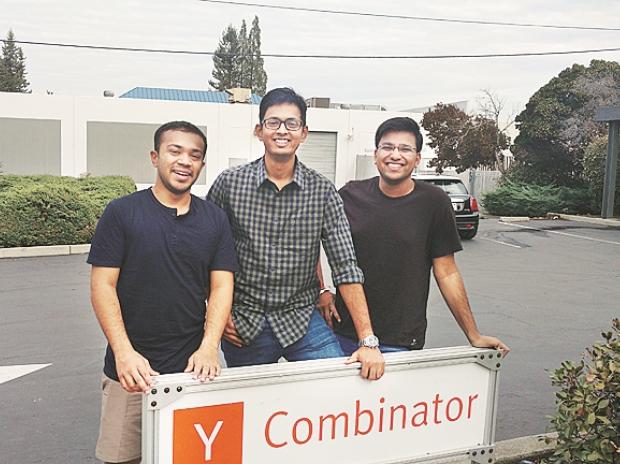
Image 1 / 1
Siddharth Mall, Ajinkya Malasane, and Akshay Lal met through India's IIT network and later worked at Flipkart. Akshay worked on catalog products; Siddharth and Ajinkya helped build Flipkart's crowdsourced hyperlocal delivery operation. At Flipkart, they watched a captive business-process-outsourcing team of more than 500 people handle catalog operations while product volume changed unpredictably. Siddharth told YourStory: "We struggled to scale the team as millions of products got added to the catalogue."[3]
They started Playment in 2015 with Himanshu Sahu, an IIT Kharagpur classmate who had worked at Babajob. The first idea was a mobile app that broke catalog cleanup, content moderation, and other data operations into short tasks. Contributors, called players, chose work on their phones and earned rewards. Enterprises sent data through APIs; Playment split a project into microtasks, routed them to qualified workers, and aggregated the results.
The consumer crowd supplied elasticity, but enterprise buyers needed accuracy. Ajinkya told VentureBeat: "Legacy crowdsourcing platforms such as [Amazon's Mechanical Turk] don't assure quality."[4] Playment therefore sold a managed outcome instead of access to workers. Its software encoded task design, worker qualification, redundancy, and checking.
Customer demand then pulled the company toward computer vision. In 2017, Playment added bounding boxes, 3D cuboids, points, lines, and polygon segmentation. Autonomous-driving teams needed people to identify pedestrians, lanes, vehicles, and unusual road objects across large image and video sets. By November 2017, about 70% of Playment's roughly 30 customers were in autonomous driving.[4] The company had found a narrower, higher-value use for the operating system it first built for retail catalogs.
Playment sold a full labeling operation. A customer uploaded images, video, or sensor data and described the model behavior it wanted to teach. Playment's team translated that goal into label definitions and instructions, configured a project, trained workers, and returned checked annotations through files or APIs.
The earliest workflow supported small judgments on a phone: validate a product attribute, moderate content, or draw a simple box. The platform divided larger jobs into independent units and matched them to contributors. Multiple answers and hidden checks helped detect low-quality work. This let a buyer add or remove capacity without staffing a permanent operations team.[10]
Computer vision changed the work. Playment built browser tools for bounding boxes, cuboids, key points, polylines, polygons, semantic segmentation, object tracking, and later LiDAR. A road scene might require the annotator to identify each vehicle across frames, map lane boundaries, classify occlusion, and align 2D imagery with 3D sensor points. Playment's 2017 review said one project consumed 50,000 annotation hours in ten days and targeted 99% recall; those are company claims, not audited measures.[7]
The operating model matured with the product. A broad crowd worked for low-sensitivity tasks, while secure BPO partners handled confidential customer data. Project managers and quality specialists built the workflow and checked delivery. By acquisition, Playment described itself as SaaS plus managed services, no longer a labor exchange.[1]
Open marketplaces supplied cheap clicks but left task design and quality risk with the customer. Traditional BPOs offered control but scaled in fixed teams. Playment combined elastic capacity, specialized annotation interfaces, and a single accountable vendor. TELUS later folded those computer-vision capabilities into Ground Truth Studio, evidence that the product layer survived the acquisition even as the standalone brand disappeared.[11]
Playment initially served Indian e-commerce companies such as Flipkart, Myntra, Paytm, and ShopClues. The computer-vision pivot moved the center of gravity to autonomous vehicles, mapping, drones, robotics, agriculture, and visual search. Those buyers generated large data volumes and required annotation types that a general crowd platform did not provide. They also cared about confidentiality, repeatable instructions, and measurable acceptance criteria.
No reliable public figure isolates Playment's serviceable market during 2015–2021. The company attached itself to the expanding computer-vision category, but only the portion of model development requiring outsourced human labeling was addressable. TELUS cited a third-party forecast that computer vision would grow from nearly $16 billion in 2021 to more than $50 billion in 2026; that is category context, not Playment revenue potential.[1]
Playment competed across two axes: workflow depth and delivery capacity. Amazon Mechanical Turk offered a large open marketplace but little assurance for complex labels. Dedicated firms such as Scale AI, Appen, iMerit, and Mighty AI combined software with managed labor. In-house BPO teams offered security and control but created fixed cost. Tool vendors let ML teams annotate themselves but did not own staffing or delivery.
Playment's strongest position was high-complexity computer vision delivered from India. Its weakest point was global enterprise distribution. Automotive and large-technology customers often wanted local contracting, security review, domain-specific labor, and the ability to expand across countries. TELUS already had those relationships and a workforce of more than one million annotators. The acquisition joined Playment's product depth to the buyer's procurement reach.
The category kept moving toward automation. CVAT now includes model-assisted annotation and consensus review, while Roboflow versions datasets and links them to trained models.[12][13] Drawing tools became easier to reproduce. Workflow history, edge-case adjudication, security, and the ability to deliver a checked dataset became the harder product.
Playment charged enterprises per unit of work or through annual contracts. It kept part of the customer payment and paid the remainder to contributors or delivery partners. Managed projects added task design, project management, worker training, and quality control to the software.
Public reports confirm at least a $700,000 seed round and a later $1.6 million financing, but funding databases disagree on whether the later figure was incremental or cumulative. Revenue, gross margin, customer concentration, and the purchase price were never disclosed. Any exit-return calculation would therefore be invented.
The hybrid model improved trust but added labor cost. A software-only tool could earn high gross margins, while a managed annotation contract had to fund project managers, quality reviewers, and worker payouts. Playment's reported profitability in 2020 suggests it found workable contract economics, but the claim lacks audited figures.[8] Its strategic value to TELUS came from both recurring software and the operating knowledge required to turn ambiguous model goals into accepted data.
Playment's metrics show a company that reached enterprise scale. In early 2017 it reported 65,000 profiled players, capacity equivalent to a 3,000-seat BPO, and 300,000 tags per day.[3] By the end of that year, it said 300,000 qualified players completed more than one million annotations each week.[7]
At acquisition, Siddharth Mall reported more than two billion labels for over 200 customers, including Fortune 500 companies and startups.[14] TELUS described the full product and engineering team as a reason for the deal. The team-count evidence varies by definition: YC currently lists 50, while Forbes counted 1,000 full-time workers and more than 300,000 freelancers in 2020. The smaller figure likely reflects Playment employees; the larger reflects delivery labor. Neither should be treated as payroll headcount without qualification.
Playment began with a broad claim: enterprises could call human capacity through an API. That framing produced early e-commerce customers, but simple microtasks were easy for marketplaces and BPO vendors to copy. The team responded by concentrating on computer vision and building task-specific interfaces. By late 2017, autonomous driving accounted for about 70% of the customer base.
The move worked because complex labels created room for software and operating knowledge. A cuboid, tracked object, or LiDAR annotation could not be reduced to anonymous clicks without detailed rules and review. Every difficult project taught Playment how to define edge cases, qualify workers, and measure disagreement. Those lessons compounded inside the workflow while raw crowd size became easier to match.
The consumer crowd supplied elasticity, but automotive and enterprise imagery could not always leave controlled environments. Playment shifted most sensitive work to more than 10,000 annotators at secure BPO partners from 2019, according to Inc42.[8] That preserved access to large contracts, but it also made the company more operationally complex. It had to manage facilities, partners, training, security, and worker quality alongside software.
The remedy worked at the price of higher operating complexity. Each large customer required sales, procurement, security review, custom workflow work, and delivery capacity. Product revenue and services revenue became intertwined.
TELUS bought Lionbridge AI in 2020 and Playment in 2021. The combination gave it a global workforce, customer contracts, and Playment's computer-vision tools. Siddharth wrote at the exit: "The entire Playment team is joining the TELUS International."[14] The wording and subsequent product history support a capability acquisition, not a distressed asset sale.
For Playment, TELUS solved a distribution constraint that more funding alone would not automatically remove. A global buyer could cross-sell annotation into existing accounts, contract in more jurisdictions, and spread security infrastructure across many programs. Remaining standalone would have required Playment to recreate those advantages while competing with better-capitalized vendors.
It would be misleading to write Playment as a startup that failed because its brand disappeared. The company reportedly became profitable, retained a large customer base, and sold into an active consolidation wave. TELUS still lists Playment in its company history, and its current Ground Truth Studio offers computer-vision annotation, automated checking, and global managed labor.[11][15]
The unresolved question is price. Without consideration, preference terms, or investor distributions, the outcome cannot be scored financially. What can be said is narrower: Playment found a valuable product, proved enterprise demand, and exchanged standalone upside for the reach of a strategic owner.
Workflow depth outlasted crowd size. Playment's early contributor count created capacity, but complex computer-vision workflows produced the durable value. Task definitions, reviewer calibration, and secure delivery made the service difficult to replace.
Customer trust changed the organization. Moving confidential work into secure BPO partners won higher-value contracts and increased operating overhead. A startup selling managed AI data should model security and quality labor as core cost of goods, not temporary implementation work.
A narrow vertical sharpened the product. The shift from catalog cleanup to autonomous-driving and computer-vision data justified specialized tools and annual enterprise relationships. It also concentrated Playment in a market where large customers expected global contracting and delivery.
Strategic distribution can be an exit thesis. TELUS did not buy a generic marketplace. It bought computer-vision product depth and a team that complemented its global workforce. Founders building services-heavy infrastructure should know whether they are creating an independent platform or a valuable capability for a consolidator.
Strategic fit leaves returns unknown. Public evidence supports a successful operating exit, but the price and ownership structure remain private. Product survival inside the acquirer proves utility; it does not reveal the financial outcome for founders or investors.