Overview
Runhouse tried to shorten the loop between changing machine learning code and seeing it run on real infrastructure. Its flagship Kubetorch let researchers call Python code on Kubernetes clusters without treating every edit as a fresh deployment project. The team joined Anthropic in 2026; investor Hetz Ventures confirms an acquisition. Founder Donny Greenberg said Kubetorch would remain open source with community maintainers.[1][2]
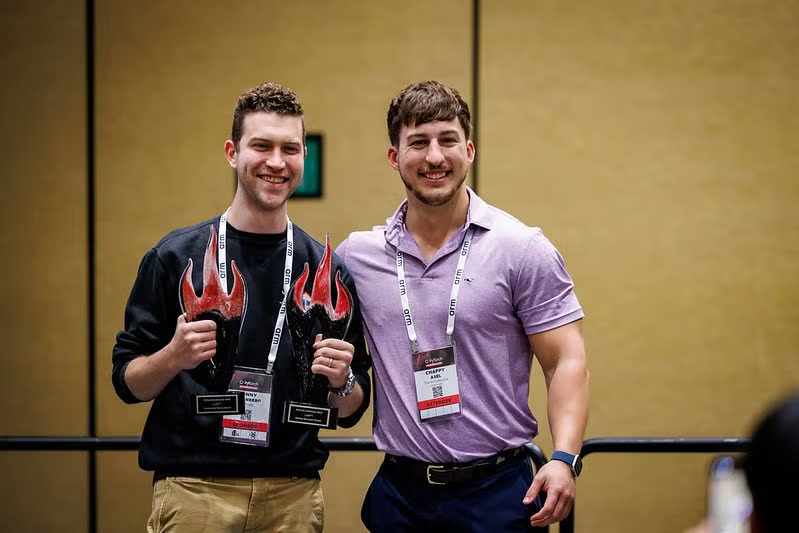
Image 1 / 1
Building for the research loop
Founders Donny Greenberg and Josh Lewittes approached the problem from different sides. Greenberg had led product for PyTorch at Meta and worked on quantum computing at IBM. Lewittes had worked on applied ML and backend systems, including at SecuredTouch, KPMG, and Gloat. Investor Work-Bench framed their common problem as the delay between research ideas and production execution.[3]
Kubernetes can coordinate many machines, but a researcher often needs those machines before testing a code change. Rebuilding an image, restarting workers, waiting for resources, and loading data can make a small edit expensive. In their PyTorch article, Greenberg and Paul Yang explained how Kubetorch kept resources and cached work available so edits could propagate to remote execution quickly. The mechanism was a Python client paired with an operator inside the customer's cluster.[4]
A researcher specified compute and sent a function or class to it. Calls returned logs and exceptions to the driving program. Stateful classes and programmatic exception handling supported workloads that needed to combine training, inference, and evaluation. The product aimed to keep infrastructure compatible with familiar Python workflows.[4]
The public repository still provides the Python client, deployment charts, and examples under an Apache 2.0 license. Its performance claims describe the project's own benchmarks and positioning. They should not be read as guaranteed savings for another team's cluster.[5]
A narrow infrastructure audience
Work-Bench announced a $5 million seed round on October 9, 2025, with Hetz Ventures and Fathom Capital participating. Its investment thesis emphasized enterprise post-training: organizations adapting models with private data need flexible infrastructure for mixed workloads. It claimed production use at large enterprises and AI labs without naming those customers. That supports investor interest and positioning, but leaves customer concentration and revenue unverified.[3]
The PyTorch ecosystem offered a more specific distribution route than a general cloud marketplace. Runhouse won the 2025 Startup Showcase, presented by Greenberg. The Foundation's account described its support for distributed training and work connecting PyTorch libraries to Kubernetes. Kubetorch joined the ecosystem landscape in February 2026. These events put the product before its intended technical audience; public evidence does not measure how many became paying users.[6][4]
An AWS Marketplace listing advertises software charges of $0.05 per GPU-hour and $0.01 per CPU-hour, with infrastructure costs potentially additional. Those units describe a usage-based software layer, rather than the full rental price of a GPU. The listing remains visible, but its presence does not confirm current commercial support after the team transition.[7]
Outcome and evolution
Calcalist reported the acquisition in April 2026, describing consideration primarily in Anthropic shares and an undisclosed valuation. Its account quoted Hetz partner Guy Fighel on the value of the team's infrastructure expertise. That is an attributed strategic explanation. The founder's announcement and Hetz portfolio corroborate the move, but disclose no purchase price or investor return.[8][1]
Runhouse's website now redirects to Kubetorch's repository. The surviving open-source project means a rebuild would compete with the original software as well as alternatives such as SkyPilot. A more defensible starting hypothesis is support for one existing Kubernetes workflow, with deployment, recovery, and cost evidence that a platform team can inspect. Demand for that service still needs testing.[5][9]
Timeline
- October 9, 2025: Work-Bench announced the $5 million seed round.[3]
- December 3, 2025: PyTorch published its Startup Showcase winner profile.[6]
- February 27, 2026: Kubetorch's PyTorch ecosystem article appeared.[4]
- April 2026: Acquisition publicly reported; the founder confirmed the team's move and open-source continuation.[8][2]