
Segment
Summer 2011AcquiredSoftware and APIs to collect, clean, and control customer data.
Pressure-test this opportunity
Explore the risks and possibilities with a prompt for ChatGPT, Claude, or your agent.
Software and APIs to collect, clean, and control customer data.
Explore the risks and possibilities with a prompt for ChatGPT, Claude, or your agent.
Segment turned a failed classroom product into customer-data infrastructure. Its software let developers collect events once, then send consistent data to analytics, marketing, and other tools. Four people founded the company: Peter Reinhardt, Calvin French-Owen, Ilya Volodarsky, and Ian Storm Taylor.[1]
Twilio announced an approximately $3.2 billion stock transaction on October 12, 2020. It completed the acquisition on November 2. Segment continues as a Twilio product. The announced transaction value differs from the approximately $3.0 billion acquisition purchase price later reported under accounting rules, which included stock and cash consideration.[2][3]
Segment’s early growth came from a specific developer problem. Its wider platform later struggled with implementation and retention.

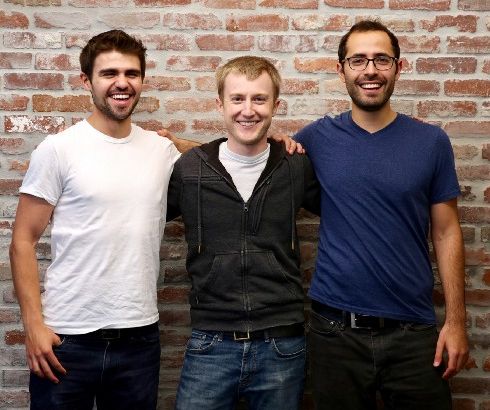
Image 1 / 2
Reinhardt, French-Owen, and Volodarsky knew each other at MIT. Taylor joined the founding team. ClassMetric measured classroom engagement, but students used Facebook instead. A second analytics product also failed to gain demand. The integration code behind it proved more useful than either application.[4]
Taylor argued for turning analytics.js into a business. Reinhardt recalled his response: “That is, literally, the worst idea I’ve ever heard.” The team nevertheless published a landing page and shared the small open-source library on Hacker News. Developer interest changed the argument. Rather than another analytics dashboard, users wanted a simpler way to connect existing tools.[4]
Reinhardt later described the origin differently from a grand platform plan: “So it was effectively something we built for ourselves.” That account matters because the founders had direct experience maintaining integrations. Their own frustration supplied a concrete starting point; the public launch supplied evidence that other developers shared it.[5]
| Date | Event |
|---|---|
| 2011 | The team joined YC’s Summer batch; classroom and analytics experiments preceded the infrastructure product. [4] |
| October 8, 2014 | Segment announced a $15 million Series A led by Accel; total funding reached $17.6 million. [6] |
| October 9, 2015 | A $27 million Series B led by Thrive funded team and platform expansion. [7] |
| July 13, 2017 | A $64 million Series C led by YC Continuity and GV brought total funding to $109 million. [8] |
| April 2, 2019 | A $175 million Series D co-led by Accel, GV, and Meritech brought total funding to $284 million. [9] |
| October 12 / November 2, 2020 | Twilio announced, then completed, the acquisition. [2][3] |
| March 5, 2024 | Twilio concluded an operational review and retained Segment while changing its operating priorities. [10] |
| 2025 | Twilio dissolved its separate business-unit structure; by the third quarter it reported one operating segment. [11] |
Segment’s initial promise was a stable collection interface. A developer instrumented events once; Segment translated and routed them into other services. This reduced repeated integration work when a team added or changed tools. The managed platform added operational work beyond the open-source library: delivering events reliably, maintaining destination integrations, and giving teams a shared data format.[6]
The product expanded into collecting, unifying, and activating customer data. Today, Twilio sells Connections, tracking-plan governance, unified profiles, audiences, and journeys. These layers address different jobs: moving an event, deciding which records belong together, and selecting customers for a business action. They also introduce different owners and implementation requirements.[12]
IBM’s published customer story illustrates that work. IBM started with a single product line, standardized its events, then used consistent data across product analysis and customer communication. It expanded after its pilot. This is a vendor-published example, rather than evidence that every installation produces the same results.[13]
Developers could adopt the collection layer to solve an immediate integration problem. Wider deployments needed product, growth, and data teams to agree on event meaning and customer identity. A functioning connector did not itself establish those agreements. IBM’s staged rollout shows why a narrow first use case can matter as much as the connector catalogue.[13]
Twilio’s acquisition announcement named more than 20,000 companies using Segment, including Intuit and Levi’s. That figure describes usage; it does not establish the number of paying customers or support an average-revenue calculation.[2]
The opportunity is no longer an empty space between raw events and useful audiences. Twilio Segment already offers natural-language audience creation. RudderStack Profiles builds customer profiles and identity graphs in the customer’s data cloud. Hightouch AI Decisioning uses customer data to choose campaign actions against defined goals.[14][15][16]
A new entrant needs evidence of a narrower advantage: faster deployment for a specific team, better explanations for audience membership, or less manual review. Adding an AI label to another general CDP does not demonstrate that advantage.
Segment combined a developer entry point with paid infrastructure and enterprise capabilities. Its current Connections pricing separates a free tier, a Team tier starting at $120 per month, and negotiated Business pricing. The listed entry allowances are 1,000 monthly visitors for Free and 10,000 for Team. Advanced profile and activation capabilities have separate purchasing requirements; an entry-tier price does not describe the whole platform.[17]
Funding paid for expansion, but neither financing nor the exit price establishes historical unit economics. The company’s 2019 release reported $284 million in total funding. The available sources do not establish a comparable pre-acquisition ARR figure, burn rate, or investor proceeds, so an acquisition-to-ARR multiple would imply more precision than the evidence supports.[9]
The successful pivot followed a public test. The founders changed course when developers responded to the integration library.
In its 2024 review, Twilio management said it had invested ahead of growth, spread the team across too many priorities, and left customers waiting too long to get started. The review materials reported elevated churn and contraction. These are management’s diagnoses, rather than independently isolated causes.[10][18]
For 2023, those materials reported 7% Segment revenue growth and a $72 million non-GAAP operating loss. Revenue growth measures revenue change; non-GAAP operating loss measures operating performance with specified accounting adjustments. Neither alone measures retention. The reported churn and contraction provide the separate retention context. Together, they complicate a claim that developer adoption created an enduring, self-sustaining moat.[18]
The 2024 annual report separates the measures more clearly: Segment revenue was $297.7 million, up 1% year over year, while its dollar-based net expansion rate was 92%. That expansion measure compares spending from existing customers across periods. Twilio attributed the reduction in existing-customer usage to churn and contraction; new-customer revenue partly offset it.[22]
The next result was mixed. In the second quarter of 2025, Segment reported $75.5 million in revenue, flat year over year, and approximately $6 million in non-GAAP operating income. Its net expansion rate was 95%. Operating profitability improved while existing-customer revenue still contracted. The segment measure also excluded unallocated corporate costs, so it was not standalone GAAP profit.[23][24]
Independent coverage also described activist pressure over Segment’s future. That pressure supplied context for the review, rather than proving why customers left.[19]
Twilio retained Segment and pursued closer integration with its broader customer-engagement offering. Its 2025 filing records the move to one reporting segment. Consolidated Twilio results cannot track Segment’s subsequent standalone performance. The continuing product does establish that a rebuild would compete against an active platform, including AI-assisted audiences.[10][11][14]
TechTarget’s May 2026 coverage described a refreshed Twilio platform connecting customer data with communications and AI. The buyer could increasingly be a business or customer-experience leader. That broader pitch offers a route beyond the original developer entry point, while making a narrow entrant’s differentiation harder to establish.[25]
The practical hypothesis is to make one customer-data action easier to implement and verify. For example, a product team should be able to see which observed events put a customer into an onboarding audience before approving an export. That hypothesis needs customer testing; Segment’s exit does not validate a new product’s demand or price.
[1] Accel: Segment founders and investment history [2] Twilio acquisition announcement, October 12, 2020 [3] Twilio 2021 annual report: acquisition date and purchase-price accounting [4] YC: Peter Reinhardt on finding product-market fit [5] MCJ: Peter Reinhardt interview [6] Segment’s 2014 Series A announcement [7] Segment’s 2015 Series B announcement [8] Segment’s 2017 Series C announcement [9] Segment’s 2019 Series D announcement [10] Twilio concludes its Segment operational review, March 5, 2024 [11] Twilio 2025 annual report: organizational and reporting changes [12] Current Twilio Segment product [13] Twilio’s IBM customer story [14] Segment Generative Audiences documentation [15] RudderStack Profiles [16] Hightouch AI Decisioning documentation [17] Current Connections pricing [18] Twilio Segment operational-review presentation [19] TechCrunch: activist pressure on Twilio’s Segment business [20] BBC founder-profile provenance, preserved in a contemporaneous republication
[21] Your Tech Story: provenance for the second retained founder portrait
[22] Twilio 2024 annual report: Segment revenue and net expansion
[23] Twilio second-quarter 2025 results: Segment revenue and operating income [24] Twilio second-quarter 2025 presentation: Segment net expansion and operating measures [25] TechTarget: Twilio’s refreshed platform, May 7, 2026